
After the 2026 vendor shakeout, one document separates the real from the fake.
Health · Research · Consumer Field Guide
coa-hero

How to read a peptide COA: the 60-second check that tells you if a vial is real

Claims are free. The Certificate of Analysis is where they hold up or fall apart, line by line, for the exact batch in your hand. Here is how to read one.

reviewer
Daniel HayesResearch Correspondent · Updated June 2026
★★★★★
4.6 · 10,000+ reviews

You have been burned before, or you know someone who has. You did the research, you found a vial, and a month later the source went dark or the powder did nothing.

After the 2025 to 2026 shakeout, when one of the largest vendors closed overnight and warning letters went out across the category, the question stopped being "do these work." It became something colder. Can I actually tell which vial is real, and is this seller going to be here next quarter.

The honest answer is that you can tell, and it takes about a minute. The whole answer lives in one document the seller should hand you before you ever pay: the Certificate of Analysis, or COA.

Why this matters more than it used to

The market just lived through a vendor extinction event. The resident feeling is not curiosity, it is suspicion. If any of this sounds familiar, you are the reason this guide exists.

The failure rate is real. A 2026 community report, compiled from independent lab testing and widely circulated among researchers, found that nearly one in three peptide products tested off target: wrong identity, purity under the threshold, or the wrong amount in the vial. A separate New Yorker lab test of one popular vendor found roughly one in ten vials had purity, dosage, or sterility problems, including endotoxins. These are field reports, not peer-reviewed studies, and we will not pretend otherwise. But they line up with what people say out loud.
"The worst was getting bunk product, and that was on me for not researching." Reading the COA is the research. It is the step that moves the odds out of that one in three.
pen-paper
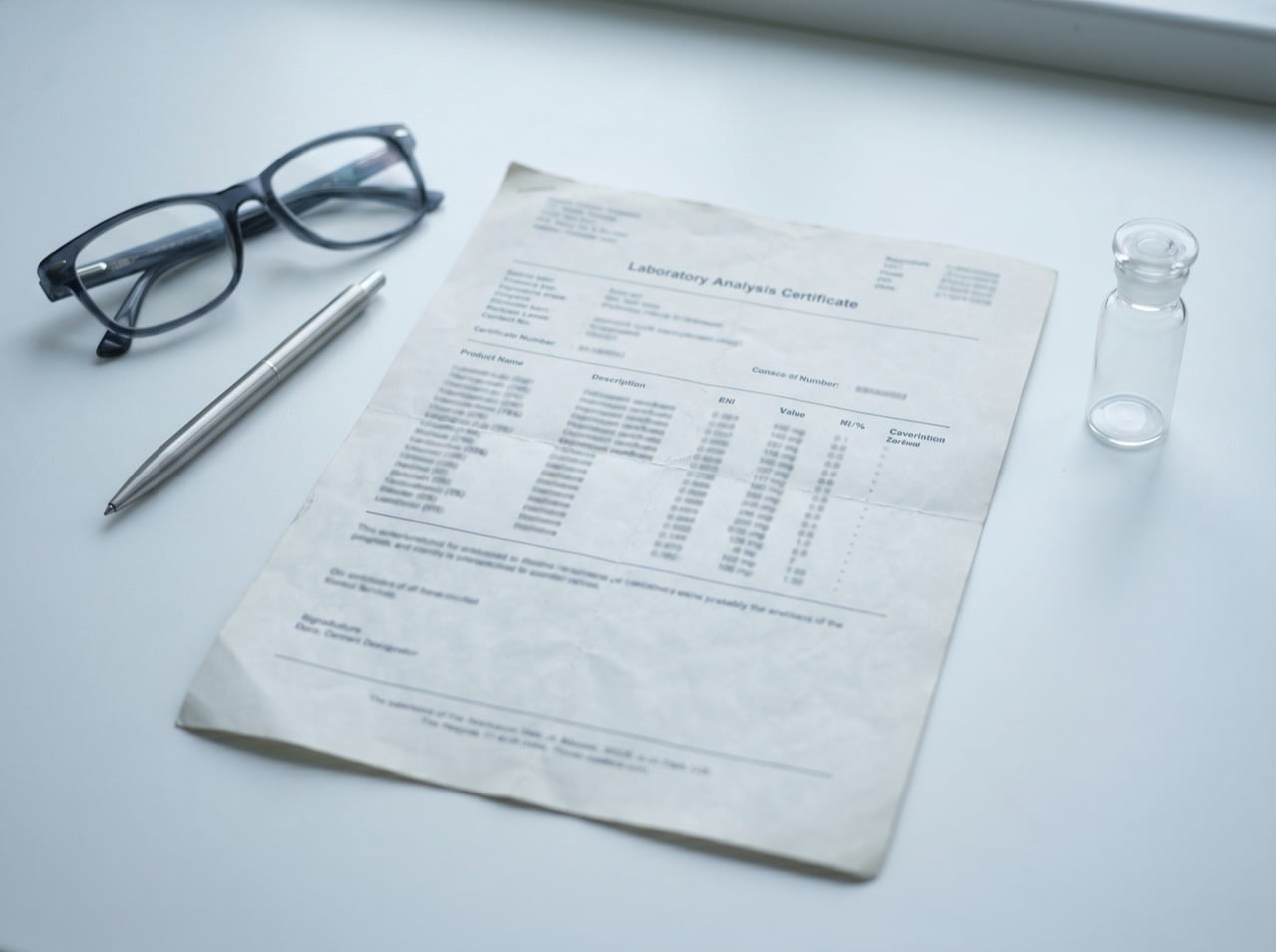
A real Certificate of Analysis is written for one specific batch. Six lines on it decide everything.

Here is what most buyers get wrong

The problem was never that COAs lie. Every vendor now says the same four words, USA made, third-party tested, published COAs, big discount, and that sentence has become wallpaper. The real problem is that most buyers do not know which lines on the report actually matter, and which are the easiest things in this market to fake.

ISO/IEC 17025 Lab · Certificate of Analysis Lot #LP-2406
Identity (Mass Spec)Confirmedmatches stated compound
Purity (HPLC)99.2%method + chromatogram attached
Content / Net Amount10.1 mgmatches the label
Endotoxin (LAL)< 0.5 EU/mg tested
SterilityPass tested
Lot & DateCurrent verifiable

The six lines that actually matter

The first three confirm the molecule is what it claims to be. The last three confirm it is clean, and that the report itself is real.

1

Identity

Confirms the powder is the compound on the label, usually by mass spectrometry. Without it, purity is meaningless. You can have 99 percent pure of the wrong molecule.

Look for: "Mass Spec: Confirmed."
2

Purity

The HPLC percentage, ideally with the chromatogram attached. A bare number with no method and no graph is a claim, not a result.

Look for: a percentage plus the HPLC trace.
3

Content

The actual milligrams in the vial, which should match the label. This is the line that catches underdosing, the most common quiet defect.

Look for: net mg that equals the label.
4

Endotoxin

The test most reports leave off. It measures bacterial toxin load, the thing that maps to the contamination buyers actually fear. Its absence is the loudest red flag on the page.

Look for: an EU/mg value, not a blank.
5

Sterility

A pass or fail on microbial contamination. It pairs with endotoxin. Cheap to skip, which is exactly why it gets skipped.

Look for: "Sterility: Pass."
6

Lot, Date and Lab

A named accredited lab, a lot number, and a recent date. These three turn the page from a brochure into a record you can verify against the vial in front of you.
Look for: lab name, lot #, and a date.

How to spot a fake or templated COA in 30 seconds

glass-bottle
One vendor built for this

The lab that proves it, line by line

If you want a source that already reads this way, Licensed Peptides publishes the full report for every lot, including the lines other vendors leave off. Five years in, still standing after the shakeout, with 10,000+ researchers served.

  • Every lot tested six ways, not purity alone
  • Endotoxin and sterility screened, with a 0% endotoxin tolerance
  • Scan-to-verify QR on every vial pulls up that exact lot's report
  • 100% of COAs published, from an ISO/IEC 17025 accredited lab

What researchers say once they stop guessing

★★★★★

"Been scammed a couple times, so it feels good to finally find a source that actually shows the endotoxin number instead of dodging the question."

Verified researcher, FL Verified Buyer
★★★★★

"I am the guy who reads the paperwork first. Their COA had the lot number, the date, and the HPLC graph, and the batch matched the vial. That is the whole reason I switched."

Verified researcher, AZ Verified Buyer
★★★★★

"I almost did not order because I had been burned once already. The thing that got me was being able to scan the vial and pull up that exact lot. No faith required."

Verified researcher, NV Verified Buyer

The 60-second read, in order

Next time a vendor hands you a COA, run these five steps top to bottom. If any one fails, stop.

  1. Find the lab and the date.A named accredited lab and a recent date. No lab name, no deal.
  2. Match the lot to the vial.The lot number on the report should match the one on the vial in your hand.
  3. Read identity, then purity.Mass-spec confirmed first, then an HPLC percentage with the chromatogram attached.
  4. Check the content in mg.The amount should equal the label. This is where underdosing hides.
  5. Look for endotoxin and sterility.If those two lines are missing, treat the silence as the answer.

A complete COA versus a flattering one

Complete COA
Templated / fake
Named accredited lab
Lot-specific number and date
HPLC purity with chromatogram
Mass-spec identity
Endotoxin and sterility lines
Verifiable against the vial
2 for 1 storewide sale on all peptides

Stop investigating vendors. Read the COA instead.

The next vial you buy should arrive with the report that proves it, for the specific lot in your hand. Browse the published COA library and see every line before you order.

View the published COA library
Same-day USA dispatch, Mon–Fri · 10,000+ researchers served
🔍

Proof in your hand, no faith required

Every Licensed Peptides lot ships with its own third-party COA, and every vial carries a scan-to-verify QR code that pulls up that exact lot's report, endotoxin line and all. You verify it yourself, in seconds, before and after you buy.

You have done the research. Now you can read the proof.

Browse the catalog and COAs

Five years in. Still standing. Every line, published.

Research Use Only

By entering this website you understand that all products are sold in powder (lyophilized) form and require reconstitution with a suitable diluent for research purposes only.

Research supplies (e.g., syringes, bacteriostatic water) are not included. No dosing instructions are provided.

We adhere to all local and state laws around Research Only Chemical sales.

We are not a pharmacy, nor do we promote or provide any advice for human or animal consumption.

Please review our terms and conditions carefully before making a purchase on our website.

You cannot copy content of this page