
99%+ Purity
Guaranteed per batch

4.9 847 verified reviews



4.9 847 verified reviews
99%+ HPLC Purity —
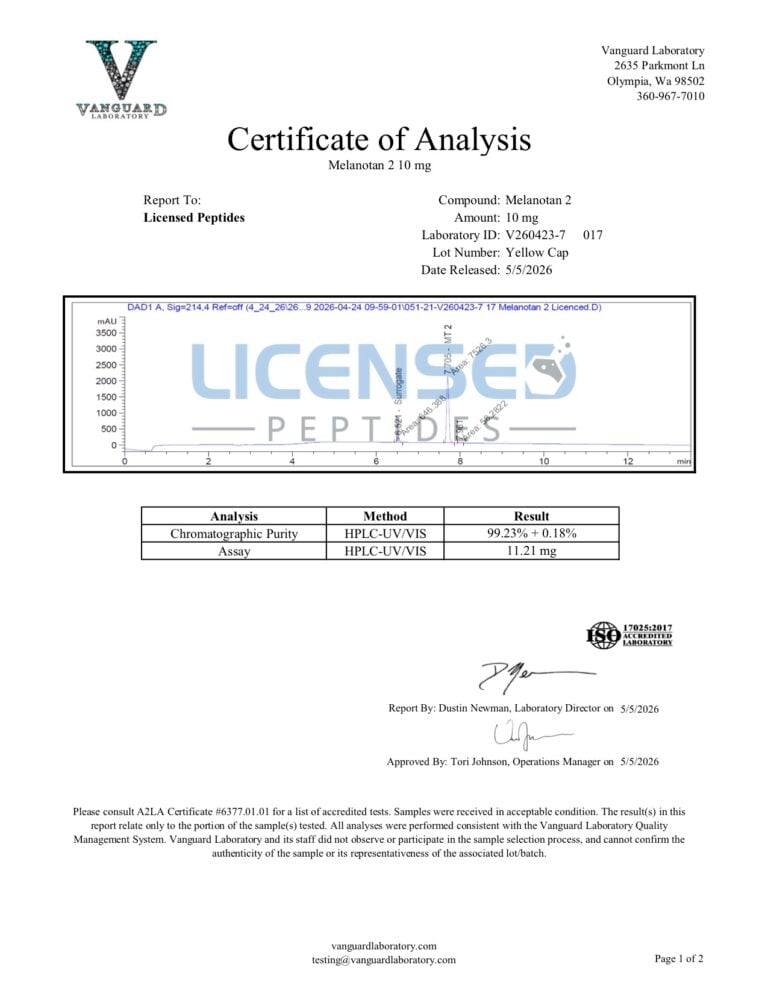
Independently verified by accredited US laboratory
Endotoxin-Screened —
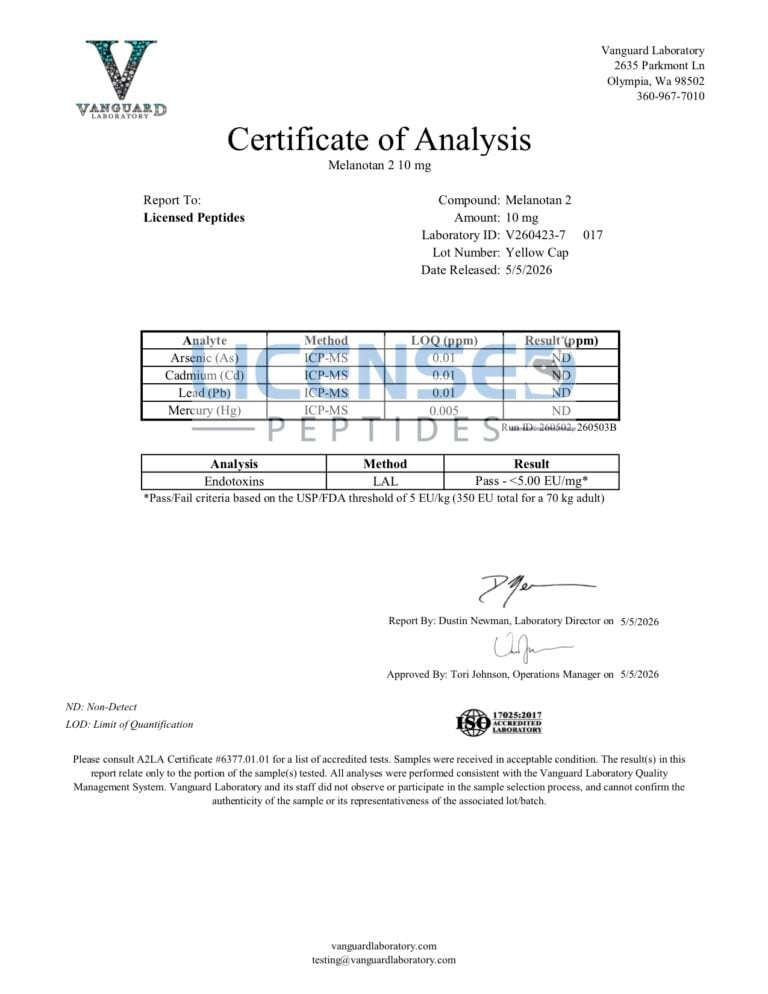
LAL tested, LPS-free, endotoxin report available
GMP-Certified Manufacturing —
USA facility, ISO 9001:2015
Lyophilized for Stability —
Shipped cold-packed, intact for reconstitution
MTII (Melanotan 2) is a synthetic peptide used in laboratory research to study melanocortin receptor signaling, peptide-receptor interactions, and pigment-related pathway behavior in controlled experimental systems. This product is supplied strictly for research use only. It is not approved or intended for human or animal use, and any discussion of biological activity refers only to preclinical or in vitro research.
For research integrity and reproducibility, MTII supplied for laboratory use is commonly produced as a high-purity peptide, manufactured to meet stringent analytical standards. Research-grade MTII is typically prepared as an LPS-free peptide and verified as an endotoxin-free peptide, helping minimize confounding variables in sensitive experimental assays. Additionally, research peptides are endotoxin tested to ensure consistency and reliability across in vitro and non-clinical investigative studies.
This material is designated for research purposes only and is not for human or animal use. Any reference to MTII remains strictly within the context of scientific investigation and experimental analysis. MTII Melanotan 2 10mg from Licensed Peptides.
| Application | Research use only |
|---|
What Is Melanotan 2?
Melanotan 2 is a peptide made up of seven amino acids, which is where it gets its name as a cyclic heptapeptide. It is a synthetic peptide related to alpha-melanocyte-stimulating hormone, or a-MSH. Its amino-acid sequence is:
A lactam bridge (an amide bond between two amino acid side chains) connects one part of the chain back to another, constraining the peptide into a ring. This reduces its flexibility and, because the amino acids can no longer move freely, makes MTII useful for investigating how peptide conformation influences pathways such as receptor affinity, selectivity, and intracellular signaling.
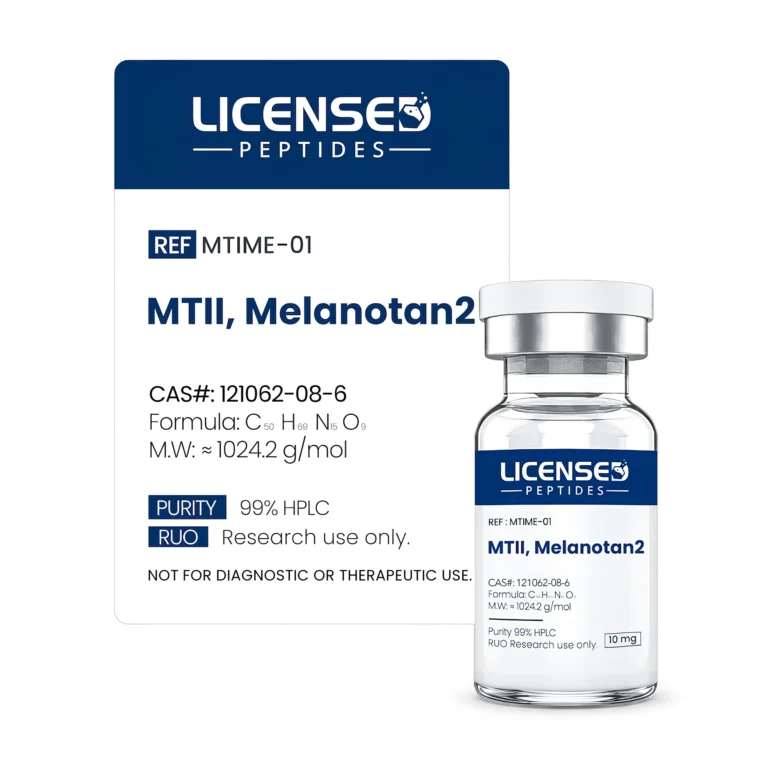
PubChem lists Melanotan II with the molecular formula C50H69N15O9 and a molecular weight of approximately 1,024.2 g/mol.
Melanotan 2 belongs to the family of synthetic melanotropins built from the α-MSH pharmacophore His-Phe-Arg-Trp. Chemists became interested in this series because the native hormone is short-lived and conformationally floppy, and constraining it with a lactam bridge produced analogues far more potent than α-MSH itself in classical melanotropin bioassays.1 The peptide is also studied as a naming and identity problem in its own right: the label "melanotan" has been applied to more than one distinct structure in the literature, so analytical confirmation of sequence and mass is part of any reference-standard workflow.2
Mechanistic work with this class is receptor-level work. The cyclic heptapeptide is used in laboratory systems as a non-selective melanocortin receptor ligand, and cell-based melanotropin bioassays — the amphibian skin assay among the oldest of them — remain the standard way to rank an analogue’s potency and duration against α-MSH.1
Lactam-bridged α-MSH analogues of this type have been reported to show superpotent and prolonged activity relative to the native hormone in frog-skin melanotropin bioassays, which is the assay system in which the series was originally characterised.1
A 2011 review in Acta Dermato-Venereologica set out the chemical differences between the peptides that have circulated under the "melanotan" name, and is the reference normally cited when establishing which structure a given record refers to.2
The material is supplied as a lyophilized (freeze-dried) powder. Freeze-drying is used for peptides because removing water suppresses the hydrolysis and aggregation routes that dominate degradation in solution, and the resulting amorphous solid is far more stable on storage than the corresponding liquid.3 Reported degradation routes for peptides in the solid state include deamidation of asparagine and glutamine residues, oxidation of methionine and tryptophan, and physical aggregation, all of which are accelerated by residual moisture, elevated temperature and repeated freeze-thaw cycling.4 Sealed vials are therefore held at −20 °C, protected from light, and reconstituted material is kept cold and used within a short working window. For laboratory research use only.
For laboratory research use only. Products on this website are intended solely for in-vitro research. They are not medicines, have not been evaluated by the FDA, and are not intended to diagnose, treat, cure, or prevent any disease. Any administration to humans or animals is strictly prohibited.

Storing Melanotan 2 properly within laboratory inventory will preserve the stability of the peptide.
When storing for near-term laboratory work, keep to the following recommendations:
To preserve unopened lyophilized vials of Melanotan 2, it’s important to store them at -20°C or below.
Laboratories should always make a record of the following information:
Lower archival temperatures may suit validated institutional procedures.
For laboratory research use only. Not for human or veterinary use.

MTII acts as a nonselective agonist at several melanocortin receptors instead of one single receptor. Due to its broad receptor activity and constrained cyclic structure, this peptide is a useful comparator for pharmacology and peptide-design studies.
During an experiment, Dr. Haskell-Luevano and colleagues compared α-MSH, MTI, and MTII at the cloned human MC1 receptor. Their assays measured receptor binding and cAMP buildup. This gave a direct comparison of how three melanocortin peptides interacted with MC1R.²
The study established MTII as a useful reference compound for examining MC1R pharmacology, and showed why researchers should assess binding strength and functional response separately. A peptide can bind strongly without causing the same signaling response. Researchers should test both properties independently to stop them from mistakenly assuming that tight binding always equals strong biological action.
MTII also interacts with the MC3, MC4, and MC5 receptor subtypes.
Bednarek and colleagues changed the N-terminal region of MTII (the starting end of the amino acid chain) and compared the new analogues across three human receptors. They made small structural changes that altered both potency and selectivity of the peptide, demonstrating that closely related cyclic peptides can produce different receptor profiles.³
These comparisons help researchers use MTII as the control group when evaluating compounds. These compounds are highly selective, which means they’re designed to favor one melanocortin receptor over another.
The lactam bridge in MTII is what limits conformational movement and lets researchers change individual residues while retaining the cyclic framework of the peptide. Because of this, researchers are able to tweak the properties of this peptide.
Made up of four amino acids (Histidine, D-Phenylalanine, Arginine, and Tryptophan), studies have identified the central His-D-Phe-Arg-Trp sequence as an important part of melanocortin receptor recognition. When researchers make changes to this region, the N-terminus, or the ring geometry can affect the following properties:
In order for Bednarek, Grieco, and their colleagues to explore these relationships above, they used modified MTII analogues. Their findings were interesting because they showed that even small substitutions could change receptor activity substantially.
MTII is a broad-spectrum agonist and doesn’t selectively activate one melanocortin receptor – rather, laboratory studies report activity at MC1R, MC3R, MC4R, and MC5R.²
It’s worth drawing attention to MC2R, which differs from the other family members. It controls the release of cortisol and is activated almost exclusively by adrenocorticotropic hormone (ACTH). ACTH acts as its principal endogenous ligand. This distinction is important to keep in mind when researchers are comparing compounds across the melanocortin receptor family.
Because MTII interacts with several subtypes, it provides a practical reference point that allows researchers to evaluate more selective melanocortin ligands.⁶
1. National Center for Biotechnology Information. PubChem Compound Summary for CID 92432, Melanotan-II. Accessed August 5, 2026.
2. Haskell-Luevano C, Miwa H, Dickinson C, et al. Binding and cAMP studies of melanotropin peptides with the cloned human peripheral melanocortin receptor, hMC1R. Biochemical and Biophysical Research Communications. 1994;204(3):1137–1142. doi:10.1006/bbrc.1994.2581.
3. Bednarek MA, MacNeil T, Kalyani RN, Tang R, Van der Ploeg LHT, Weinberg DH. Analogs of MTII, lactam derivatives of alpha-melanotropin, modified at the N-terminus, and their selectivity at human melanocortin receptors 3, 4, and 5. Biochemical and Biophysical Research Communications. 1999;261(1):209–213.
4. Bednarek MA, Silva MV, Arison B, et al. Structure-function studies on the cyclic peptide MT-II, lactam derivative of alpha-melanotropin. Peptides. 1999;20(3):401–409. doi:10.1016/S0196-9781(99)00048-0.
5. Grieco P, Cai M, Han G, et al. Further structure-activity studies of lactam derivatives of MT-II and SHU-9119: their activity and selectivity at human melanocortin receptors 3, 4, and 5. Peptides. 2007;28(6):1191–1196. doi:10.1016/j.peptides.2007.02.012.
6. Cai M, Hruby VJ. The melanocortin receptor system: a target for multiple degenerative diseases. Current Protein & Peptide Science. 2016;17(5):488–496. doi:10.2174/1389203717666160226145330.
For laboratory research use only. Not for human or veterinary use.
At Licensed Peptides, we deliver high-quality research material that undergoes controlled manufacturing and independent analytical testing. With batch-specific documentation, you never have to second-guess our quality.
All our peptide batches are made by U.S. manufacturers through standardized peptide-synthesis and quality-control procedures.
Independent laboratories use HPLC to assess chromatographic purity. Each batch comes with a Certificate of Analysis for verification, so researchers can purchase with peace of mind.
Our products undergo mass spectrometry that verifies the molecular identity of each peptide. All batches also have laboratory reports that document endotoxin, LPS, and heavy-metal screening.
Licensed Peptides supplies MTII in a lyophilized form (freeze-dried powder). This removes most of the material’s water content and supports stability while the peptide is transported and stored before use.
Our expert support team is available to assist researchers with questions regarding product availability, analytical reports, manufacturing information, shipping, and order inquiries.
For laboratory research use only. Not for human or veterinary use.
At Licensed Peptides, we process orders through a U.S.-based fulfillment operation.
Paid, in-stock orders placed before our 4:00 PM PST cut-off are typically shipped the same business day from within the United States.
Delivery is handled by expedited carriers throughout the United States, and transit times can vary depending on destination, carrier service, and order date.
Our warehouse team stores research materials in the correct conditions until shipment. This helps to preserve the stability of your chosen research materials.
Our fulfillment team takes care to package orders. This limits exposure to:
Customers receive tracking information after dispatch.
For laboratory research use only. Not for human or veterinary use.
| pack | 1 pack, 3 pack, 5 pack, 10 pack |
|---|
MTII (Melanotan 2) is a synthetic peptide used in laboratory research to study melanocortin receptor signaling, peptide-receptor interactions, and pigment-related pathway behavior in controlled experimental systems. This product is supplied strictly for research use only. It is not approved or intended for human or animal use, and any discussion of biological activity refers only to preclinical or in vitro research.
For research integrity and reproducibility, MTII supplied for laboratory use is commonly produced as a high-purity peptide, manufactured to meet stringent analytical standards. Research-grade MTII is typically prepared as an LPS-free peptide and verified as an endotoxin-free peptide, helping minimize confounding variables in sensitive experimental assays. Additionally, research peptides are endotoxin tested to ensure consistency and reliability across in vitro and non-clinical investigative studies.
This material is designated for research purposes only and is not for human or animal use. Any reference to MTII remains strictly within the context of scientific investigation and experimental analysis. MTII Melanotan 2 10mg from Licensed Peptides.
| Application | Research use only |
|---|
What Is Melanotan 2?
Melanotan 2 is a peptide made up of seven amino acids, which is where it gets its name as a cyclic heptapeptide. It is a synthetic peptide related to alpha-melanocyte-stimulating hormone, or a-MSH. Its amino-acid sequence is:
A lactam bridge (an amide bond between two amino acid side chains) connects one part of the chain back to another, constraining the peptide into a ring. This reduces its flexibility and, because the amino acids can no longer move freely, makes MTII useful for investigating how peptide conformation influences pathways such as receptor affinity, selectivity, and intracellular signaling.
PubChem lists Melanotan II with the molecular formula C50H69N15O9 and a molecular weight of approximately 1,024.2 g/mol.
Melanotan 2 belongs to the family of synthetic melanotropins built from the α-MSH pharmacophore His-Phe-Arg-Trp. Chemists became interested in this series because the native hormone is short-lived and conformationally floppy, and constraining it with a lactam bridge produced analogues far more potent than α-MSH itself in classical melanotropin bioassays.1 The peptide is also studied as a naming and identity problem in its own right: the label "melanotan" has been applied to more than one distinct structure in the literature, so analytical confirmation of sequence and mass is part of any reference-standard workflow.2
Mechanistic work with this class is receptor-level work. The cyclic heptapeptide is used in laboratory systems as a non-selective melanocortin receptor ligand, and cell-based melanotropin bioassays — the amphibian skin assay among the oldest of them — remain the standard way to rank an analogue’s potency and duration against α-MSH.1
Lactam-bridged α-MSH analogues of this type have been reported to show superpotent and prolonged activity relative to the native hormone in frog-skin melanotropin bioassays, which is the assay system in which the series was originally characterised.1
A 2011 review in Acta Dermato-Venereologica set out the chemical differences between the peptides that have circulated under the "melanotan" name, and is the reference normally cited when establishing which structure a given record refers to.2
The material is supplied as a lyophilized (freeze-dried) powder. Freeze-drying is used for peptides because removing water suppresses the hydrolysis and aggregation routes that dominate degradation in solution, and the resulting amorphous solid is far more stable on storage than the corresponding liquid.3 Reported degradation routes for peptides in the solid state include deamidation of asparagine and glutamine residues, oxidation of methionine and tryptophan, and physical aggregation, all of which are accelerated by residual moisture, elevated temperature and repeated freeze-thaw cycling.4 Sealed vials are therefore held at −20 °C, protected from light, and reconstituted material is kept cold and used within a short working window. For laboratory research use only.
For laboratory research use only. Products on this website are intended solely for in-vitro research. They are not medicines, have not been evaluated by the FDA, and are not intended to diagnose, treat, cure, or prevent any disease. Any administration to humans or animals is strictly prohibited.
Storing Melanotan 2 properly within laboratory inventory will preserve the stability of the peptide.
When storing for near-term laboratory work, keep to the following recommendations:
To preserve unopened lyophilized vials of Melanotan 2, it’s important to store them at -20°C or below.
Laboratories should always make a record of the following information:
Lower archival temperatures may suit validated institutional procedures.
For laboratory research use only. Not for human or veterinary use.
MTII acts as a nonselective agonist at several melanocortin receptors instead of one single receptor. Due to its broad receptor activity and constrained cyclic structure, this peptide is a useful comparator for pharmacology and peptide-design studies.
During an experiment, Dr. Haskell-Luevano and colleagues compared α-MSH, MTI, and MTII at the cloned human MC1 receptor. Their assays measured receptor binding and cAMP buildup. This gave a direct comparison of how three melanocortin peptides interacted with MC1R.²
The study established MTII as a useful reference compound for examining MC1R pharmacology, and showed why researchers should assess binding strength and functional response separately. A peptide can bind strongly without causing the same signaling response. Researchers should test both properties independently to stop them from mistakenly assuming that tight binding always equals strong biological action.
MTII also interacts with the MC3, MC4, and MC5 receptor subtypes.
Bednarek and colleagues changed the N-terminal region of MTII (the starting end of the amino acid chain) and compared the new analogues across three human receptors. They made small structural changes that altered both potency and selectivity of the peptide, demonstrating that closely related cyclic peptides can produce different receptor profiles.³
These comparisons help researchers use MTII as the control group when evaluating compounds. These compounds are highly selective, which means they’re designed to favor one melanocortin receptor over another.
The lactam bridge in MTII is what limits conformational movement and lets researchers change individual residues while retaining the cyclic framework of the peptide. Because of this, researchers are able to tweak the properties of this peptide.
Made up of four amino acids (Histidine, D-Phenylalanine, Arginine, and Tryptophan), studies have identified the central His-D-Phe-Arg-Trp sequence as an important part of melanocortin receptor recognition. When researchers make changes to this region, the N-terminus, or the ring geometry can affect the following properties:
In order for Bednarek, Grieco, and their colleagues to explore these relationships above, they used modified MTII analogues. Their findings were interesting because they showed that even small substitutions could change receptor activity substantially.
MTII is a broad-spectrum agonist and doesn’t selectively activate one melanocortin receptor – rather, laboratory studies report activity at MC1R, MC3R, MC4R, and MC5R.²
It’s worth drawing attention to MC2R, which differs from the other family members. It controls the release of cortisol and is activated almost exclusively by adrenocorticotropic hormone (ACTH). ACTH acts as its principal endogenous ligand. This distinction is important to keep in mind when researchers are comparing compounds across the melanocortin receptor family.
Because MTII interacts with several subtypes, it provides a practical reference point that allows researchers to evaluate more selective melanocortin ligands.⁶
1. National Center for Biotechnology Information. PubChem Compound Summary for CID 92432, Melanotan-II. Accessed August 5, 2026.
2. Haskell-Luevano C, Miwa H, Dickinson C, et al. Binding and cAMP studies of melanotropin peptides with the cloned human peripheral melanocortin receptor, hMC1R. Biochemical and Biophysical Research Communications. 1994;204(3):1137–1142. doi:10.1006/bbrc.1994.2581.
3. Bednarek MA, MacNeil T, Kalyani RN, Tang R, Van der Ploeg LHT, Weinberg DH. Analogs of MTII, lactam derivatives of alpha-melanotropin, modified at the N-terminus, and their selectivity at human melanocortin receptors 3, 4, and 5. Biochemical and Biophysical Research Communications. 1999;261(1):209–213.
4. Bednarek MA, Silva MV, Arison B, et al. Structure-function studies on the cyclic peptide MT-II, lactam derivative of alpha-melanotropin. Peptides. 1999;20(3):401–409. doi:10.1016/S0196-9781(99)00048-0.
5. Grieco P, Cai M, Han G, et al. Further structure-activity studies of lactam derivatives of MT-II and SHU-9119: their activity and selectivity at human melanocortin receptors 3, 4, and 5. Peptides. 2007;28(6):1191–1196. doi:10.1016/j.peptides.2007.02.012.
6. Cai M, Hruby VJ. The melanocortin receptor system: a target for multiple degenerative diseases. Current Protein & Peptide Science. 2016;17(5):488–496. doi:10.2174/1389203717666160226145330.
For laboratory research use only. Not for human or veterinary use.
At Licensed Peptides, we deliver high-quality research material that undergoes controlled manufacturing and independent analytical testing. With batch-specific documentation, you never have to second-guess our quality.
All our peptide batches are made by U.S. manufacturers through standardized peptide-synthesis and quality-control procedures.
Independent laboratories use HPLC to assess chromatographic purity. Each batch comes with a Certificate of Analysis for verification, so researchers can purchase with peace of mind.
Our products undergo mass spectrometry that verifies the molecular identity of each peptide. All batches also have laboratory reports that document endotoxin, LPS, and heavy-metal screening.
Licensed Peptides supplies MTII in a lyophilized form (freeze-dried powder). This removes most of the material’s water content and supports stability while the peptide is transported and stored before use.
Our expert support team is available to assist researchers with questions regarding product availability, analytical reports, manufacturing information, shipping, and order inquiries.
For laboratory research use only. Not for human or veterinary use.
At Licensed Peptides, we process orders through a U.S.-based fulfillment operation.
Paid, in-stock orders placed before our 4:00 PM PST cut-off are typically shipped the same business day from within the United States.
Delivery is handled by expedited carriers throughout the United States, and transit times can vary depending on destination, carrier service, and order date.
Our warehouse team stores research materials in the correct conditions until shipment. This helps to preserve the stability of your chosen research materials.
Our fulfillment team takes care to package orders. This limits exposure to:
Customers receive tracking information after dispatch.
For laboratory research use only. Not for human or veterinary use.
| pack | 1 pack, 3 pack, 5 pack, 10 pack |
|---|
Guaranteed per batch

Independent lab verified

Vanguard Laboratory · ISO/IEC 17025

USA-manufactured

Free FedEx on $200+
Every batch is independently tested before it ships. Full documentation available for every product.
 99%+ — Passes ≥99%
Confirmed — 1419.6 m/z
<1.0 EU/mg — LPS-Free
No growth detected
White lyophilized powder
All 15 residues confirmed
±0.2% — Within spec
Vanguard Laboratory · ISO/IEC 17025 · A2LA #6377.01.01
GMP / ISO 9001:2015
2026
Verified
99%+ — Passes ≥99%
Confirmed — 1419.6 m/z
<1.0 EU/mg — LPS-Free
No growth detected
White lyophilized powder
All 15 residues confirmed
±0.2% — Within spec
Vanguard Laboratory · ISO/IEC 17025 · A2LA #6377.01.01
GMP / ISO 9001:2015
2026
Verified
 Download Full COA / HPLC Report (PDF)
Verify With Vanguard Laboratory
Download Full COA / HPLC Report (PDF)
Verify With Vanguard Laboratory

Not all peptide vendors hold themselves to the same verification standards.
| Verification Standard | Licensed Peptides | Generic Vendors |
|---|---|---|
| HPLC Purity Analysis |  99%+ Every Batch 99%+ Every Batch |
 Often Not Disclosed Often Not Disclosed |
| Mass Spectrometry Identity | Sequence Confirmed |
Rarely Available |
| Endotoxin Screening (LAL) | Every Product |
Industry Exception |
| GMP-Certified USA Manufacture | ISO 9001:2015 |
Often Overseas |
| COA Published & Downloadable | Every Lot |
Inconsistent |
| Same-Day USA Fulfillment | Before 4PM PST |
3-10 Day Lead Time |
Melanotan 2 is a synthetic cyclic heptapeptide (made up of seven amino acids) related to a-MSH. Researchers are interested in using it to investigate melanocortin receptor pharmacology, cAMP signaling, and peptide structure–activity relationships.
Yes. Scientific literature and commercial catalogs commonly use these names for the same cyclic research peptide.
No, Melanotan 2 does not selectively target one receptor, which is why scientists are so interested in researching it. MTII interacts with several melanocortin receptor subtypes, including MC1R, MC3R, MC4R, and MC5R.
MTII has a cyclic structure because a lactam bridge constrains the peptide’s conformation. This allows scientists to overcome the natural limitations of linear peptides such as low potency and structural flexibility. Researchers can then use this structure to examine how molecular shape affects receptor affinity, potency, and selectivity.
The percentage of 99% is a measure of relative chemical purity within the peptide. It’s derived using High-Performance Liquid Chromatography (HPLC).
A result of 99%+ HPLC purity indicates that the target chromatographic peak accounts for at least 99% of the detected peak area under the stated test conditions.
It’s worth noting that HPLC purity does not replace identity or contaminant testing – it’s important for additional tests to be carried out, as well. At Licensed Peptides, we ensure all our peptide batches are screened.
Depending on the product and batch, the testing may include HPLC purity analysis, mass spectrometry, endotoxin and LPS screening, heavy-metal analysis, and content verification. It’s important for researchers to review the batch report for exact results.
Storing peptides like Melanotan 2 is important to maintain the quality and stability of the material for research purposes. If you need to preserve a batch long-term, store unopened lyophilized (freeze-dried) vials at -20°C or below. Keep the material sealed and protect it from light, moisture, and repeated temperature changes, as exposure can begin the degradation process and impact the repeatability of your results.
No. Licensed Peptides supplies Melanotan 2 exclusively for laboratory, analytical, and scientific research.
Disclaimer: Licensed Peptides supplies all products exclusively for laboratory, analytical, and scientific research. Do not use these products for human or animal consumption, administration, cosmetic applications, medical purposes, therapeutic applications, clinical procedures, or diagnostic testing.
Background articles from the Licensed Peptides research library. All products are supplied for laboratory research use only.
Not all peptide vendors hold themselves to the same verification standards.
99.4% HPLC Verified · Endotoxin-Screened · GMP-Certified ·
Free FedEx 2-Day on $200+
You cannot copy content of this page
Third-party tested peptides, shipped cold from the U.S. in 1–2 days.
Shop all peptides