
99%+ Purity
Guaranteed per batch

4.9 847 verified reviews


4.9 847 verified reviews
99%+ HPLC Purity —
Independently verified by accredited US laboratory
Endotoxin-Screened —
LAL tested, LPS-free, endotoxin report available
GMP-Certified Manufacturing —
USA facility, ISO 9001:2015
Lyophilized for Stability —
Shipped cold-packed, intact for reconstitution
5-Amino-1MQ is a common abbreviation for 5-amino-1-methylquinolinium. It’s a small-molecule research compound investigated in studies involving Nicotinamide N-Methyltransferase (NNMT). Unlike peptides, 5-Amino-1MQ belongs to the methylquinolinium class of compounds. It’s studied as a selective NNMT inhibitor in laboratory settings.
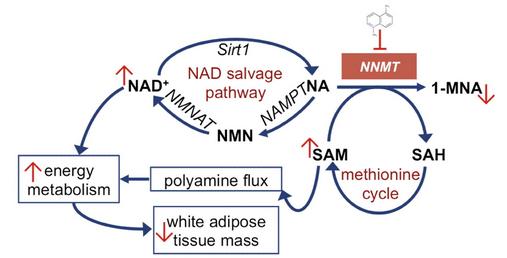
NNMT is an enzyme that catalyzes the transfer of a methyl group from S-adenosylmethionine (SAM) to nicotinamide (NAM), producing 1-methylnicotinamide (MNA) and S-adenosylhomocysteine (SAH). NNMT participates in nicotinamide metabolism through this activity. It may influence cellular methylation balance, metabolic signaling, and NAD⁺-related biochemical pathways.
Scientific interest in 5-Amino-1MQ comes from the research into NNMT biology and its contribution to cellular metabolism.
Published studies have investigated NNMT and NNMT inhibitors across areas of laboratory and preclinical research, including
NNMT influences multiple interconnected biochemical pathways. Researchers investigate how selective NNMT inhibition affects cellular processes under controlled laboratory conditions.
A widely cited study by Kraus and colleagues used genetic knockdown in mice. They investigated the biological role of NNMT. The researchers reported that lowering NNMT expression changed metabolic pathway activity and energy use. This helped to show that NNMT is a key target in metabolic research.¹
Neelakantan and colleagues then expanded research involving small-molecule NNMT inhibitors. Their work found and described several selective NNMT inhibitors, including 5-amino-1-methylquinolinium derivatives. They tested these inhibitors in cell and animal models.² They reported changes in intracellular nicotinamide-related metabolites and examined the biological effects of NNMT inhibition under experimental conditions.²
These outcomes have increased scientific interest in NNMT biology. They still support lab studies on its role in cell metabolism. They also support research on biochemical regulation.
Current evidence involving 5-Amino-1MQ and NNMT inhibition is predominantly preclinical. Most published findings originate from cell-based studies and animal models.
Although NNMT may affect nicotinamide levels and NAD+ pathways, the real impact in the body is still unclear. Research is ongoing. Changes in NNMT activity shouldn’t be interpreted as producing predictable changes in NAD+ levels across all biological systems.
Human safety, efficacy, dosing, and clinical utility haven’t been established. Further research is required to characterize the biological mechanisms associated with NNMT inhibition and the broader implications of these findings.
Licensed Peptides supplies 5-Amino-1MQ strictly for laboratory research purposes. It isn’t approved for human or animal use.
This product is supplied strictly for research use only. It is not approved or intended for human or animal use, consumption, therapeutic use, clinical application, or diagnostic purposes. Any discussion of biological activity refers solely to laboratory, in vitro, or preclinical research.
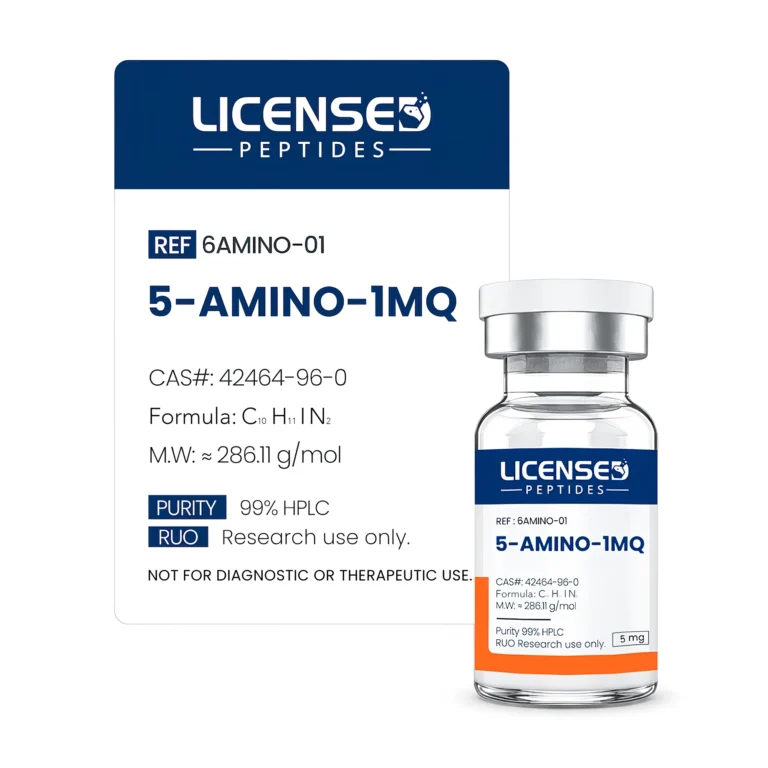
| Molecular formula | C₁₀H₁₁N₂ |
|---|---|
| Molecular weight | 159.21 g/mol |
| CAS number | 42464-96-0 |
| PubChem CID | 950107 |
| Form supplied | Lyophilized powder |
| Purity | Research-grade, high-purity standard |
| Application | Research use only |
5-Amino-1MQ is a laboratory research material used to study NNMT-related metabolic pathways, nicotinamide handling, NAD+ homeostasis, and cellular energy regulation in controlled experimental systems. References to metabolic activity are limited to nonclinical research context only. This product is not offered for diagnosis, treatment, prevention, or any human or veterinary use.
Published laboratory studies have examined 5-Amino-1MQ as an NNMT inhibitor in experimental models. The compound is used to investigate nicotinamide metabolism, NAD+ regulation, and related metabolic pathways under controlled research conditions. Any references to obesity, glucose regulation, adiposity, liver function, or related biological outcomes are for research context only and must not be interpreted as medical, therapeutic, or clinical claims.
NNMT catalyzes the methylation of nicotinamide, a key precursor in the NAD+ salvage pathway. Increased NNMT activity has been observed in several metabolic research models and is associated with altered energy expenditure and disrupted NAD+ recycling.
5-Amino-1MQ functions as an NNMT inhibitor in experimental environments. By reducing NNMT catalytic activity, the compound allows researchers to evaluate how limiting nicotinamide methylation influences:
In vitro and in vivo experimental models (non-clinical, non-human) have demonstrated that NNMT suppression leads to measurable changes in cellular energy markers and adipocyte behavior. These findings have positioned 5-Amino-1MQ as a useful molecular tool for probing upstream metabolic regulation.
5-Amino-1MQ may be used in laboratory studies involving:
All applications are limited to research settings only and do not imply any approved human or animal use.
For laboratory research use only. Products on this website are intended solely for in-vitro research. They are not medicines, have not been evaluated by the FDA, and are not intended to diagnose, treat, cure, or prevent any disease. Any administration to humans or animals is strictly prohibited.


Proper storage conditions help preserve the integrity, stability, and analytical consistency of 5-Amino-1MQ throughout laboratory handling and long-term storage.
5-Amino-1MQ is supplied in a lyophilized (freeze-dried) form to support stability during transportation and storage. Lyophilization is a specialized preservation process. It removes water under controlled low temperature and low-pressure conditions. This leaves a stable, dry compound that is suitable for research applications.
This approach helps reduce degradation during shipping and allows the material to maintain its quality under appropriate storage conditions.
For near-term laboratory use, lyophilized 5-Amino-1MQ should be kept in a cool, dry environment protected from direct light, excessive heat, and moisture exposure.
Refrigerated storage below 4°C (39°F) is generally appropriate for short-term preservation when the material will be utilized within weeks or months of receipt.
For extended storage periods, we recommend freezer conditions to maintain long-term stability.
Researchers storing 5-Amino-1MQ for several months or longer may consider deep-freeze storage at approximately -80°C (-112°F) when consistent long-term preservation is required.
To minimize environmental exposure, containers should remain tightly sealed when not in use and handled according to established laboratory protocols. Maintaining stable storage conditions can help support consistency across analytical and experimental workflows.
For additional handling recommendations and laboratory best practices, please refer to our Peptide Storage Guide.
For laboratory research use only. Not for human or veterinary use.

Each batch of 5-Amino-1MQ undergoes rigorous analytical verification designed to support reproducibility and consistency in laboratory environments.
Researchers seeking reliable analytical materials often prioritize consistency and documented quality-control procedures. Licensed Peptides supports these requirements through batch-specific testing and accessible quality documentation.
For laboratory research use only. Not for human or veterinary use.
At Licensed Peptides™, every batch of 5-Amino-1MQ undergoes analytical testing designed to verify compound identity, purity, and consistency before release. From manufacturing and quality control through to packaging and fulfillment, our processes are structured to support reliable laboratory research.
5-Amino-1MQ is produced under controlled manufacturing conditions designed to promote consistency across production lots and reduce variability between batches.
Each batch undergoes analytical testing to verify purity specifications and support reproducible laboratory research.
Products are evaluated according to established quality-control procedures before release, helping ensure consistency, identity verification, and batch traceability.
Manufacturing begins with carefully sourced starting materials selected to meet strict quality standards for research applications.
The lyophilized format supports storage stability, laboratory handling, and long-term preservation under appropriate conditions.
Products are packaged using controlled processes designed to help maintain compound integrity during storage and transit.
Every lot is supported by batch-specific Certificates of Analysis, providing researchers with transparent access to testing and verification data.
For laboratory research use only. Not for human or veterinary use.
Reliable fulfillment is an important component of research planning. Licensed Peptides maintains domestic inventory and fulfillment operations to support efficient delivery and product integrity throughout the shipping process.
We process and dispatch orders from within the United States. We typically prepare in-stock products submitted before the daily shipping cutoff (4 PM PST) for carrier collection the same business day.
We work with established shipping partners to facilitate efficient nationwide delivery. Most domestic orders arrive within standard expedited transit windows, depending on destination and carrier routing.
All research compounds are stored under appropriate storage conditions before shipment. Inventory is stored in monitored environments designed to preserve product quality and batch consistency until fulfillment occurs.
We package every shipment to reduce the risk of environmental exposure during transit. We choose packaging materials to protect against handling-related damage, moisture exposure, and transportation stress.
We provide tracking information once an order enters the carrier network, allowing researchers to monitor shipment progress and estimated delivery timelines.
Orders are supported by batch-specific quality documentation, including Certificates of Analysis where applicable. This provides transparency regarding product identity, testing, and verification standards.
Our fulfillment process supports laboratories, researchers, and analytical facilities that require dependable access to research materials without unnecessary shipping delays or fulfillment uncertainty.
For laboratory research use only. Not for human or veterinary use.
| pack | 1 pack, 3 pack, 5 pack, 10 pack |
|---|
5-Amino-1MQ is a common abbreviation for 5-amino-1-methylquinolinium. It’s a small-molecule research compound investigated in studies involving Nicotinamide N-Methyltransferase (NNMT). Unlike peptides, 5-Amino-1MQ belongs to the methylquinolinium class of compounds. It’s studied as a selective NNMT inhibitor in laboratory settings.
NNMT is an enzyme that catalyzes the transfer of a methyl group from S-adenosylmethionine (SAM) to nicotinamide (NAM), producing 1-methylnicotinamide (MNA) and S-adenosylhomocysteine (SAH). NNMT participates in nicotinamide metabolism through this activity. It may influence cellular methylation balance, metabolic signaling, and NAD⁺-related biochemical pathways.
Scientific interest in 5-Amino-1MQ comes from the research into NNMT biology and its contribution to cellular metabolism.
Published studies have investigated NNMT and NNMT inhibitors across areas of laboratory and preclinical research, including
NNMT influences multiple interconnected biochemical pathways. Researchers investigate how selective NNMT inhibition affects cellular processes under controlled laboratory conditions.
A widely cited study by Kraus and colleagues used genetic knockdown in mice. They investigated the biological role of NNMT. The researchers reported that lowering NNMT expression changed metabolic pathway activity and energy use. This helped to show that NNMT is a key target in metabolic research.¹
Neelakantan and colleagues then expanded research involving small-molecule NNMT inhibitors. Their work found and described several selective NNMT inhibitors, including 5-amino-1-methylquinolinium derivatives. They tested these inhibitors in cell and animal models.² They reported changes in intracellular nicotinamide-related metabolites and examined the biological effects of NNMT inhibition under experimental conditions.²
These outcomes have increased scientific interest in NNMT biology. They still support lab studies on its role in cell metabolism. They also support research on biochemical regulation.
Current evidence involving 5-Amino-1MQ and NNMT inhibition is predominantly preclinical. Most published findings originate from cell-based studies and animal models.
Although NNMT may affect nicotinamide levels and NAD+ pathways, the real impact in the body is still unclear. Research is ongoing. Changes in NNMT activity shouldn’t be interpreted as producing predictable changes in NAD+ levels across all biological systems.
Human safety, efficacy, dosing, and clinical utility haven’t been established. Further research is required to characterize the biological mechanisms associated with NNMT inhibition and the broader implications of these findings.
Licensed Peptides supplies 5-Amino-1MQ strictly for laboratory research purposes. It isn’t approved for human or animal use.
This product is supplied strictly for research use only. It is not approved or intended for human or animal use, consumption, therapeutic use, clinical application, or diagnostic purposes. Any discussion of biological activity refers solely to laboratory, in vitro, or preclinical research.
| Molecular formula | C₁₀H₁₁N₂ |
|---|---|
| Molecular weight | 159.21 g/mol |
| CAS number | 42464-96-0 |
| PubChem CID | 950107 |
| Form supplied | Lyophilized powder |
| Purity | Research-grade, high-purity standard |
| Application | Research use only |
5-Amino-1MQ is a laboratory research material used to study NNMT-related metabolic pathways, nicotinamide handling, NAD+ homeostasis, and cellular energy regulation in controlled experimental systems. References to metabolic activity are limited to nonclinical research context only. This product is not offered for diagnosis, treatment, prevention, or any human or veterinary use.
Published laboratory studies have examined 5-Amino-1MQ as an NNMT inhibitor in experimental models. The compound is used to investigate nicotinamide metabolism, NAD+ regulation, and related metabolic pathways under controlled research conditions. Any references to obesity, glucose regulation, adiposity, liver function, or related biological outcomes are for research context only and must not be interpreted as medical, therapeutic, or clinical claims.
NNMT catalyzes the methylation of nicotinamide, a key precursor in the NAD+ salvage pathway. Increased NNMT activity has been observed in several metabolic research models and is associated with altered energy expenditure and disrupted NAD+ recycling.
5-Amino-1MQ functions as an NNMT inhibitor in experimental environments. By reducing NNMT catalytic activity, the compound allows researchers to evaluate how limiting nicotinamide methylation influences:
In vitro and in vivo experimental models (non-clinical, non-human) have demonstrated that NNMT suppression leads to measurable changes in cellular energy markers and adipocyte behavior. These findings have positioned 5-Amino-1MQ as a useful molecular tool for probing upstream metabolic regulation.
5-Amino-1MQ may be used in laboratory studies involving:
All applications are limited to research settings only and do not imply any approved human or animal use.
For laboratory research use only. Products on this website are intended solely for in-vitro research. They are not medicines, have not been evaluated by the FDA, and are not intended to diagnose, treat, cure, or prevent any disease. Any administration to humans or animals is strictly prohibited.
Proper storage conditions help preserve the integrity, stability, and analytical consistency of 5-Amino-1MQ throughout laboratory handling and long-term storage.
5-Amino-1MQ is supplied in a lyophilized (freeze-dried) form to support stability during transportation and storage. Lyophilization is a specialized preservation process. It removes water under controlled low temperature and low-pressure conditions. This leaves a stable, dry compound that is suitable for research applications.
This approach helps reduce degradation during shipping and allows the material to maintain its quality under appropriate storage conditions.
For near-term laboratory use, lyophilized 5-Amino-1MQ should be kept in a cool, dry environment protected from direct light, excessive heat, and moisture exposure.
Refrigerated storage below 4°C (39°F) is generally appropriate for short-term preservation when the material will be utilized within weeks or months of receipt.
For extended storage periods, we recommend freezer conditions to maintain long-term stability.
Researchers storing 5-Amino-1MQ for several months or longer may consider deep-freeze storage at approximately -80°C (-112°F) when consistent long-term preservation is required.
To minimize environmental exposure, containers should remain tightly sealed when not in use and handled according to established laboratory protocols. Maintaining stable storage conditions can help support consistency across analytical and experimental workflows.
For additional handling recommendations and laboratory best practices, please refer to our Peptide Storage Guide.
For laboratory research use only. Not for human or veterinary use.
Each batch of 5-Amino-1MQ undergoes rigorous analytical verification designed to support reproducibility and consistency in laboratory environments.
Researchers seeking reliable analytical materials often prioritize consistency and documented quality-control procedures. Licensed Peptides supports these requirements through batch-specific testing and accessible quality documentation.
For laboratory research use only. Not for human or veterinary use.
At Licensed Peptides™, every batch of 5-Amino-1MQ undergoes analytical testing designed to verify compound identity, purity, and consistency before release. From manufacturing and quality control through to packaging and fulfillment, our processes are structured to support reliable laboratory research.
5-Amino-1MQ is produced under controlled manufacturing conditions designed to promote consistency across production lots and reduce variability between batches.
Each batch undergoes analytical testing to verify purity specifications and support reproducible laboratory research.
Products are evaluated according to established quality-control procedures before release, helping ensure consistency, identity verification, and batch traceability.
Manufacturing begins with carefully sourced starting materials selected to meet strict quality standards for research applications.
The lyophilized format supports storage stability, laboratory handling, and long-term preservation under appropriate conditions.
Products are packaged using controlled processes designed to help maintain compound integrity during storage and transit.
Every lot is supported by batch-specific Certificates of Analysis, providing researchers with transparent access to testing and verification data.
For laboratory research use only. Not for human or veterinary use.
Reliable fulfillment is an important component of research planning. Licensed Peptides maintains domestic inventory and fulfillment operations to support efficient delivery and product integrity throughout the shipping process.
We process and dispatch orders from within the United States. We typically prepare in-stock products submitted before the daily shipping cutoff (4 PM PST) for carrier collection the same business day.
We work with established shipping partners to facilitate efficient nationwide delivery. Most domestic orders arrive within standard expedited transit windows, depending on destination and carrier routing.
All research compounds are stored under appropriate storage conditions before shipment. Inventory is stored in monitored environments designed to preserve product quality and batch consistency until fulfillment occurs.
We package every shipment to reduce the risk of environmental exposure during transit. We choose packaging materials to protect against handling-related damage, moisture exposure, and transportation stress.
We provide tracking information once an order enters the carrier network, allowing researchers to monitor shipment progress and estimated delivery timelines.
Orders are supported by batch-specific quality documentation, including Certificates of Analysis where applicable. This provides transparency regarding product identity, testing, and verification standards.
Our fulfillment process supports laboratories, researchers, and analytical facilities that require dependable access to research materials without unnecessary shipping delays or fulfillment uncertainty.
For laboratory research use only. Not for human or veterinary use.
| pack | 1 pack, 3 pack, 5 pack, 10 pack |
|---|
Guaranteed per batch

Independent lab verified

Vanguard Laboratory · ISO/IEC 17025

USA-manufactured

Free FedEx on $200+
Every batch is independently tested before it ships. Full documentation available for every product.
 99%+ — Passes ≥99%
Confirmed — 1419.6 m/z
<1.0 EU/mg — LPS-Free
No growth detected
Orange lyophilized powder
All confirmed
±0.2% — Within spec
Vanguard Laboratory · ISO/IEC 17025 · A2LA #6377.01.01
GMP / ISO 9001:2015
2026
Verified
99%+ — Passes ≥99%
Confirmed — 1419.6 m/z
<1.0 EU/mg — LPS-Free
No growth detected
Orange lyophilized powder
All confirmed
±0.2% — Within spec
Vanguard Laboratory · ISO/IEC 17025 · A2LA #6377.01.01
GMP / ISO 9001:2015
2026
Verified
 Download Full COA / HPLC Report (PDF)
Verify With Vanguard Laboratory
Download Full COA / HPLC Report (PDF)
Verify With Vanguard Laboratory

Not all peptide vendors hold themselves to the same verification standards.
| Verification Standard | Licensed Peptides | Generic Vendors |
|---|---|---|
| HPLC Purity Analysis |  99%+ Every Batch 99%+ Every Batch |
 Often Not Disclosed Often Not Disclosed |
| Mass Spectrometry Identity | Sequence Confirmed |
Rarely Available |
| Endotoxin Screening (LAL) | Every Product |
Industry Exception |
| GMP-Certified USA Manufacture | ISO 9001:2015 |
Often Overseas |
| COA Published & Downloadable | Every Lot |
Inconsistent |
| Same-Day USA Fulfillment | Before 4PM PST |
3-10 Day Lead Time |
Some researchers search for the “5 Amino 1MQ peptide” because it comes up frequently alongside research peptides. However, 5-Amino-1MQ is classified as a small-molecule research compound. Researchers often study it in lab work on Nicotinamide N-Methyltransferase (NNMT). NNMT is an enzyme linked to cell metabolism and nicotinamide-related pathways.
Researchers use 5-Amino-1MQ to explore NNMT inhibition and its effects on downstream molecular signaling in controlled experimental models.
No. We supply 5-Amino-1MQ strictly for research purposes. It isn’t approved for human consumption, animal use, therapeutic applications, clinical research, or diagnostic procedures.
Published research has explored 5-Amino-1MQ in relation to NNMT biology, cellular metabolism, mitochondrial function, molecular signaling pathways, and NAD+-related biochemical processes.
Researchers have also investigated its contribution to experimental studies involving adipocyte biology, metabolic regulation, and intracellular energy pathways.
Experimental designs vary between laboratories. In some studies, 5-Amino-1MQ may be evaluated alongside other research materials when investigating interconnected metabolic or cellular pathways.
When stored under recommended conditions, the lyophilized form stays stable for lab use and long-term storage.
Researchers should follow established storage protocols. This is done to protect the material from excessive heat, moisture, and direct light exposure.
Unlike NAD+ precursors, researchers study 5-Amino-1MQ mainly for how it interacts with the NNMT enzyme. NAD+ precursors are studied for supplying metabolic substrates.
This distinction allows researchers to explore upstream metabolic regulation and cellular signaling mechanisms through a different experimental approach.
The current research doesn’t classify 5-Amino-1MQ as a hormonal compound. Published studies primarily focus on its interaction with enzymatic and metabolic pathways rather than endocrine signaling systems.
The 5mg format provides researchers with a practical quantity of material suitable for multiple laboratory applications while supporting accurate measurement, handling, and experimental consistency.
5-Amino-1MQ is frequently used in laboratory investigations involving cellular and molecular research models. Its analytical verification, purity standards, and quality-control testing support its use in controlled experimental environments.
Researchers should determine suitability based on the requirements of their individual study protocols.
Each batch is subjected to quality-control testing as part of Licensed Peptides’ analytical verification program. Batch-specific documentation and Certificates of Analysis provide transparency regarding testing procedures and product specifications.
5-Amino-1MQ is supplied as a high-purity research material manufactured under strict quality-control standards. Every batch undergoes analytical verification to help ensure consistency, identity, and reproducibility across laboratory applications.
No. Although it’s often discussed with peptide research materials, 5-Amino-1MQ is a small-molecule compound. It isn’t a peptide.
Yes. We put every batch through analytical testing and quality verification procedures. We supply supporting documentation, including batch-specific Certificates of Analysis (COAs), to confirm testing standards and product specifications.
Store 5-Amino-1MQ according to recommended laboratory handling procedures and protect it from excessive heat, moisture, and direct sunlight.
Researchers should follow their institution’s storage protocols and consult the product storage guidance where applicable.
These products are intended exclusively for laboratory research purposes and are not intended to diagnose, treat, cure, mitigate, or prevent any disease or medical condition. Any references to biological activity, molecular pathways, or scientific research are provided solely for educational and informational purposes within the context of laboratory and preclinical research.
Not all peptide vendors hold themselves to the same verification standards.
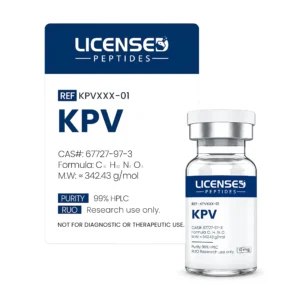
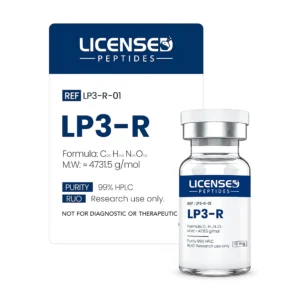
99.4% HPLC Verified · Endotoxin-Screened · GMP-Certified ·
Free FedEx 2-Day on $200+
You cannot copy content of this page
Third-party tested peptides, shipped cold from the U.S. in 1–2 days.
Shop all peptides