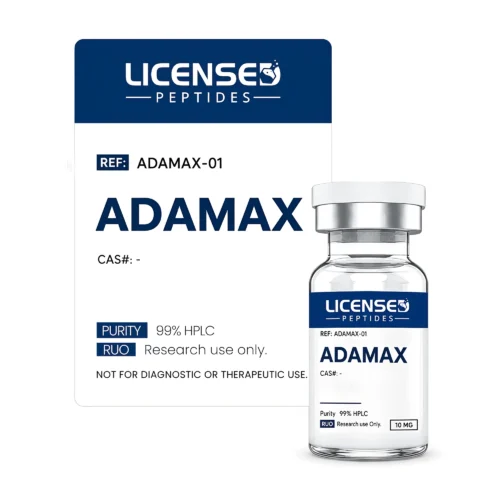
99%+ Purity
Guaranteed per batch

4.9 847 verified reviews

4.9 847 verified reviews
99%+ HPLC Purity —
Independently verified by accredited US laboratory
Endotoxin-Screened —
LAL tested, LPS-free, endotoxin report available
GMP-Certified Manufacturing —
USA facility, ISO 9001:2015
Lyophilized for Stability —
Shipped cold-packed, intact for reconstitution
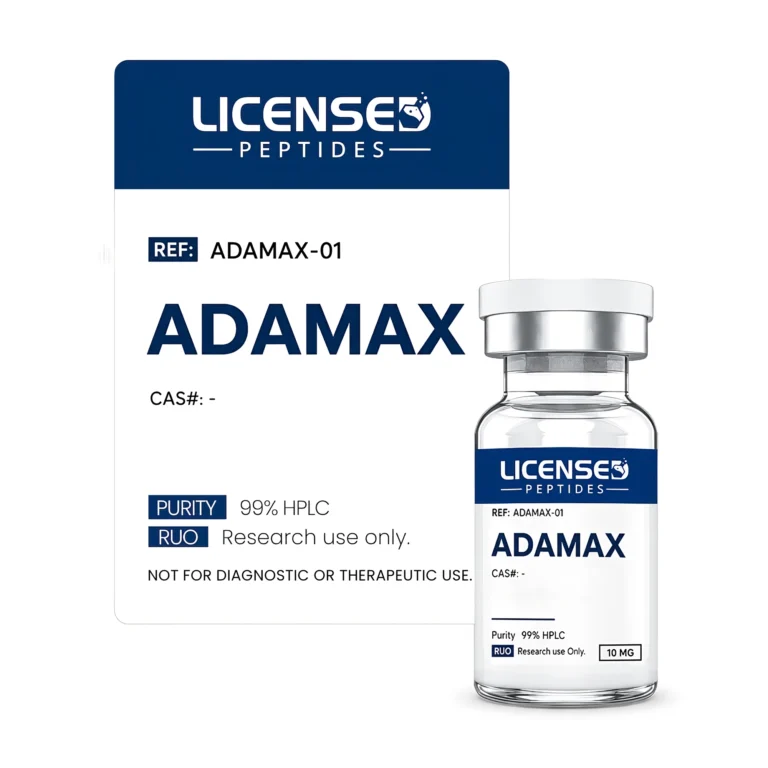
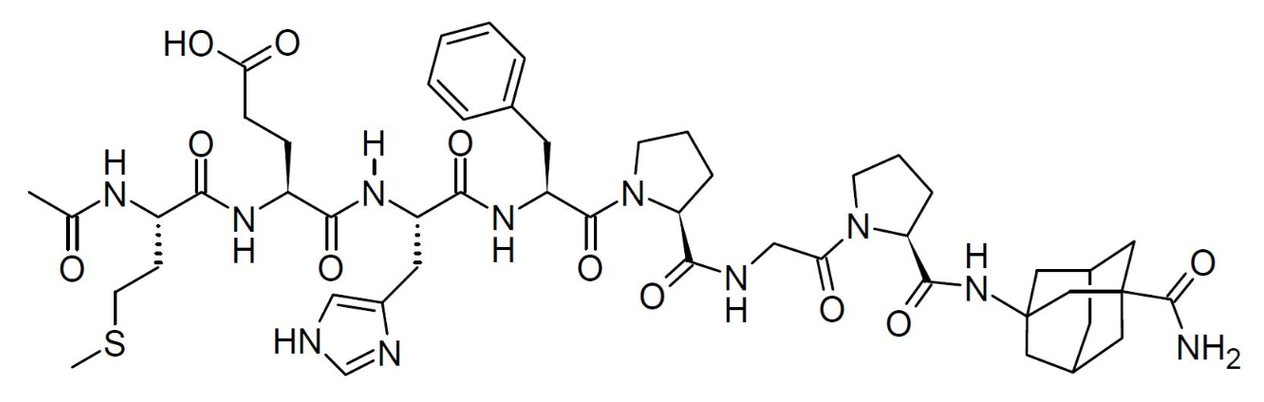
Adamax is a relatively obscure synthetic research peptide generally described as a modified analogue of Semax. It is discussed primarily in the context of experimental neuroscience and nootropic research. However, the scientific literature surrounding Adamax itself is very limited, and several sources use the name inconsistently, so its exact chemical identity should be verified against analytical documentation such as a COA and structural specification.
Adamax is commonly described as incorporating modifications to the Semax peptide backbone, with an adamantane-related structural component intended to alter properties such as molecular stability and lipophilicity. These modifications have led to hypotheses that the compound may behave differently from conventional Semax, particularly with respect to enzymatic degradation and central-nervous-system exposure.
| Molecular formula | C50H69N11O11S |
|---|---|
| Molecular weight | ~1032.23 g/mol |
| CAS number | not established |
| Application | Research use only |
Adamax is an experimental synthetic peptide generally described in secondary research sources as a modified analogue of Semax, a synthetic peptide derived from the ACTH(4–10) sequence. Adamax is reported to incorporate chemical modifications intended to alter the physicochemical and stability characteristics of the parent Semax structure, including an N-terminal acetyl modification and an adamantane-associated structural component.
The scientific interest surrounding Adamax comes largely from its relationship to Semax and from the properties of adamantane, a rigid, lipophilic chemical scaffold that has been investigated in medicinal chemistry for its potential effects on membrane permeability and metabolic stability. These characteristics have led to hypotheses that Adamax could exhibit different stability or biological-distribution properties from unmodified Semax. However, these proposed properties have not been adequately established through published studies on Adamax itself.
For research purposes, Adamax is therefore best described as an experimental Semax-related peptide whose potential biological properties remain under investigation. Claims regarding enhanced cognitive activity, increased brain penetration, longer duration, or improved stability should be presented as proposed or theoretical characteristics rather than established biological effects.
Research in rats has shown that Semax can alter the expression of brain-derived neurotrophic factor (BDNF) and nerve growth factor (NGF). One study found increased BDNF expression in the hippocampus, brainstem, and cerebellum following Semax administration, although effects differed by brain region and gene.
Several animal studies have investigated Semax in experimental cerebral ischemia. For example, RNA-sequencing research in rats found that Semax altered genes associated with inflammatory processes and neurotransmission following ischemia-reperfusion injury.
Experimental research has also investigated Semax in learning and memory models. In one rat study involving prefrontal-cortex ischemia, administration of Semax was associated with recovery of performance in a spatial-learning task. The authors suggested that neuroprotective activity and stimulation of neurotrophic factors could contribute to the observed effects.
The material is supplied as a lyophilized (freeze-dried) powder. Freeze-drying is used for peptides because removing water suppresses the hydrolysis and aggregation routes that dominate degradation in solution, and the resulting amorphous solid is far more stable on storage than the corresponding liquid.4 Reported degradation routes for peptides in the solid state include deamidation of asparagine and glutamine residues, oxidation of methionine and tryptophan, and physical aggregation, all of which are accelerated by residual moisture, elevated temperature and repeated freeze-thaw cycling.5 Sealed vials are therefore held at −20 °C, protected from light, and reconstituted material is kept cold and used within a short working window. For laboratory research use only.
For laboratory research use only. Products on this website are intended solely for in-vitro research. They are not medicines, have not been evaluated by the FDA, and are not intended to diagnose, treat, cure, or prevent any disease. Any administration to humans or animals is strictly prohibited.

Our peptides are produced exclusively for laboratory and scientific research purposes.
Licensed Peptides™ products are developed using industry-standard synthesis and purification protocols, making them suitable for in vitro research, analytical testing, and experimental models.
Strict process controls ensure reproducibility, allowing researchers to work with confidence across experiments.
Our peptides are commonly used in research involving:
All products are intended for research use only and are not for human or animal consumption, therapeutic use, or clinical application.
At Licensed Peptides™, quality isn’t a claim — it’s a controlled, repeatable process.
Every peptide we produce follows a strict, pharma-grade workflow designed to ensure purity, stability, and consistency from synthesis to delivery.
All peptides are synthesized in sterile, controlled environments to eliminate contamination risk and ensure batch consistency.
We use advanced High-Performance Liquid Chromatography (HPLC) to separate and verify peptide purity with precision.
Each batch undergoes heavy metal and endotoxin screening to ensure it is free from hidden contaminants.
We start with rigorously tested amino acids and reagents, ensuring integrity at the molecular level.
Freeze-dried peptides maintain long-term stability, potency, and reliability for research applications.
Every vial is protected from oxygen and moisture, preserving structural integrity during storage and transit.
From synthesis to delivery, every step is engineered to meet the expectations of professionals who require accuracy, consistency, and reliability.
For laboratory research use only. Not for human or veterinary use.
We understand that timing and product integrity are critical for research.
| Ships to | United States (including minor outlying islands) |
|---|---|
| Processing days | Monday to Friday, excluding holidays |
| Daily cut-off | Paid orders placed before 4:00 PM PST are typically shipped the same business day |
| Free shipping | FedEx 2-Day Express on orders over $200 and for VIP members |
| Standard | USPS Ground Advantage, 3–7 business days (not guaranteed) — $8.95 |
| Expedited | FedEx 2-Day $11.95 · UPS 2-Day $19.95 · FedEx Next Day $44.99 |
| Signature | Required on delivery for orders of $1,000 or more |
Products are stored in industrial-grade freezers prior to shipment to maintain stability and purity.
Each order is carefully packed to protect against temperature fluctuations, moisture exposure, and physical damage during transit.
Once your order has shipped you will receive a tracking number by email, so you can monitor delivery progress.
Orders are dispatched domestically from a U.S.-based operation, so there are no international customs steps.
Shipping times are estimates and begin after order processing. Delays may occur due to carrier issues, weather, or other unforeseen factors, and delivery dates are not guaranteed. Full terms are in our Shipping & Delivery Policy.
For laboratory research use only. Not for human or veterinary use.
| Lyophilized, in transit | Stable for shipping for up to 3–4 months |
|---|---|
| Lyophilized, short term | Room temperature is usually adequate for several weeks; refrigeration under 4°C (39°F) is generally acceptable |
| Lyophilized, long term | Freezer at -80°C (-112°F) for several months to years |
| After reconstitution | Refrigerated; stable for up to 30 days |
| Light and moisture | Keep cold and away from light in the original sealed vial |
All of our products are manufactured using the lyophilization (freeze drying) process, which keeps them stable for shipping for up to 3–4 months.
Lyophilization is a unique dehydration process, also known as cryodesiccation, where the peptides are frozen and then subjected to low pressure. This causes the water in the peptide vial to sublimate directly from solid to gas, leaving behind a stable, crystalline white structure known as lyophilized peptide. The puffy white powder can be stored at room temperature until it is reconstituted with bacteriostatic water.
Once peptides have been received, it is imperative that they are kept cold and away from light. If the peptides will be used in the next several days, weeks or months, short-term refrigeration under 4°C (39°F) is generally acceptable. Lyophilized peptides are usually stable at room temperatures for several weeks or more, so if they will be utilized within weeks or months such storage is typically adequate.
For longer term storage (several months to years) it is more preferable to store peptides in a freezer at -80°C (-112°F). When storing peptides for months or even years, freezing is optimal in order to preserve the peptide’s stability.
Once the peptides are reconstituted with bacteriostatic water, they must be stored in the fridge to maintain stability. After reconstitution, the peptides will remain stable for up to 30 days.
For laboratory research use only. Not for human or veterinary use.
Adamax is a relatively obscure synthetic research peptide generally described as a modified analogue of Semax. It is discussed primarily in the context of experimental neuroscience and nootropic research. However, the scientific literature surrounding Adamax itself is very limited, and several sources use the name inconsistently, so its exact chemical identity should be verified against analytical documentation such as a COA and structural specification.
Adamax is commonly described as incorporating modifications to the Semax peptide backbone, with an adamantane-related structural component intended to alter properties such as molecular stability and lipophilicity. These modifications have led to hypotheses that the compound may behave differently from conventional Semax, particularly with respect to enzymatic degradation and central-nervous-system exposure.
| Molecular formula | C50H69N11O11S |
|---|---|
| Molecular weight | ~1032.23 g/mol |
| CAS number | not established |
| Application | Research use only |
Adamax is an experimental synthetic peptide generally described in secondary research sources as a modified analogue of Semax, a synthetic peptide derived from the ACTH(4–10) sequence. Adamax is reported to incorporate chemical modifications intended to alter the physicochemical and stability characteristics of the parent Semax structure, including an N-terminal acetyl modification and an adamantane-associated structural component.
The scientific interest surrounding Adamax comes largely from its relationship to Semax and from the properties of adamantane, a rigid, lipophilic chemical scaffold that has been investigated in medicinal chemistry for its potential effects on membrane permeability and metabolic stability. These characteristics have led to hypotheses that Adamax could exhibit different stability or biological-distribution properties from unmodified Semax. However, these proposed properties have not been adequately established through published studies on Adamax itself.
For research purposes, Adamax is therefore best described as an experimental Semax-related peptide whose potential biological properties remain under investigation. Claims regarding enhanced cognitive activity, increased brain penetration, longer duration, or improved stability should be presented as proposed or theoretical characteristics rather than established biological effects.
Research in rats has shown that Semax can alter the expression of brain-derived neurotrophic factor (BDNF) and nerve growth factor (NGF). One study found increased BDNF expression in the hippocampus, brainstem, and cerebellum following Semax administration, although effects differed by brain region and gene.
Several animal studies have investigated Semax in experimental cerebral ischemia. For example, RNA-sequencing research in rats found that Semax altered genes associated with inflammatory processes and neurotransmission following ischemia-reperfusion injury.
Experimental research has also investigated Semax in learning and memory models. In one rat study involving prefrontal-cortex ischemia, administration of Semax was associated with recovery of performance in a spatial-learning task. The authors suggested that neuroprotective activity and stimulation of neurotrophic factors could contribute to the observed effects.
The material is supplied as a lyophilized (freeze-dried) powder. Freeze-drying is used for peptides because removing water suppresses the hydrolysis and aggregation routes that dominate degradation in solution, and the resulting amorphous solid is far more stable on storage than the corresponding liquid.4 Reported degradation routes for peptides in the solid state include deamidation of asparagine and glutamine residues, oxidation of methionine and tryptophan, and physical aggregation, all of which are accelerated by residual moisture, elevated temperature and repeated freeze-thaw cycling.5 Sealed vials are therefore held at −20 °C, protected from light, and reconstituted material is kept cold and used within a short working window. For laboratory research use only.
For laboratory research use only. Products on this website are intended solely for in-vitro research. They are not medicines, have not been evaluated by the FDA, and are not intended to diagnose, treat, cure, or prevent any disease. Any administration to humans or animals is strictly prohibited.
Our peptides are produced exclusively for laboratory and scientific research purposes.
Licensed Peptides™ products are developed using industry-standard synthesis and purification protocols, making them suitable for in vitro research, analytical testing, and experimental models.
Strict process controls ensure reproducibility, allowing researchers to work with confidence across experiments.
Our peptides are commonly used in research involving:
All products are intended for research use only and are not for human or animal consumption, therapeutic use, or clinical application.
At Licensed Peptides™, quality isn’t a claim — it’s a controlled, repeatable process.
Every peptide we produce follows a strict, pharma-grade workflow designed to ensure purity, stability, and consistency from synthesis to delivery.
All peptides are synthesized in sterile, controlled environments to eliminate contamination risk and ensure batch consistency.
We use advanced High-Performance Liquid Chromatography (HPLC) to separate and verify peptide purity with precision.
Each batch undergoes heavy metal and endotoxin screening to ensure it is free from hidden contaminants.
We start with rigorously tested amino acids and reagents, ensuring integrity at the molecular level.
Freeze-dried peptides maintain long-term stability, potency, and reliability for research applications.
Every vial is protected from oxygen and moisture, preserving structural integrity during storage and transit.
From synthesis to delivery, every step is engineered to meet the expectations of professionals who require accuracy, consistency, and reliability.
For laboratory research use only. Not for human or veterinary use.
We understand that timing and product integrity are critical for research.
| Ships to | United States (including minor outlying islands) |
|---|---|
| Processing days | Monday to Friday, excluding holidays |
| Daily cut-off | Paid orders placed before 4:00 PM PST are typically shipped the same business day |
| Free shipping | FedEx 2-Day Express on orders over $200 and for VIP members |
| Standard | USPS Ground Advantage, 3–7 business days (not guaranteed) — $8.95 |
| Expedited | FedEx 2-Day $11.95 · UPS 2-Day $19.95 · FedEx Next Day $44.99 |
| Signature | Required on delivery for orders of $1,000 or more |
Products are stored in industrial-grade freezers prior to shipment to maintain stability and purity.
Each order is carefully packed to protect against temperature fluctuations, moisture exposure, and physical damage during transit.
Once your order has shipped you will receive a tracking number by email, so you can monitor delivery progress.
Orders are dispatched domestically from a U.S.-based operation, so there are no international customs steps.
Shipping times are estimates and begin after order processing. Delays may occur due to carrier issues, weather, or other unforeseen factors, and delivery dates are not guaranteed. Full terms are in our Shipping & Delivery Policy.
For laboratory research use only. Not for human or veterinary use.
| Lyophilized, in transit | Stable for shipping for up to 3–4 months |
|---|---|
| Lyophilized, short term | Room temperature is usually adequate for several weeks; refrigeration under 4°C (39°F) is generally acceptable |
| Lyophilized, long term | Freezer at -80°C (-112°F) for several months to years |
| After reconstitution | Refrigerated; stable for up to 30 days |
| Light and moisture | Keep cold and away from light in the original sealed vial |
All of our products are manufactured using the lyophilization (freeze drying) process, which keeps them stable for shipping for up to 3–4 months.
Lyophilization is a unique dehydration process, also known as cryodesiccation, where the peptides are frozen and then subjected to low pressure. This causes the water in the peptide vial to sublimate directly from solid to gas, leaving behind a stable, crystalline white structure known as lyophilized peptide. The puffy white powder can be stored at room temperature until it is reconstituted with bacteriostatic water.
Once peptides have been received, it is imperative that they are kept cold and away from light. If the peptides will be used in the next several days, weeks or months, short-term refrigeration under 4°C (39°F) is generally acceptable. Lyophilized peptides are usually stable at room temperatures for several weeks or more, so if they will be utilized within weeks or months such storage is typically adequate.
For longer term storage (several months to years) it is more preferable to store peptides in a freezer at -80°C (-112°F). When storing peptides for months or even years, freezing is optimal in order to preserve the peptide’s stability.
Once the peptides are reconstituted with bacteriostatic water, they must be stored in the fridge to maintain stability. After reconstitution, the peptides will remain stable for up to 30 days.
For laboratory research use only. Not for human or veterinary use.
Guaranteed per batch

Independent lab verified

Vanguard Laboratory · ISO/IEC 17025

USA-manufactured

Free FedEx on $200+
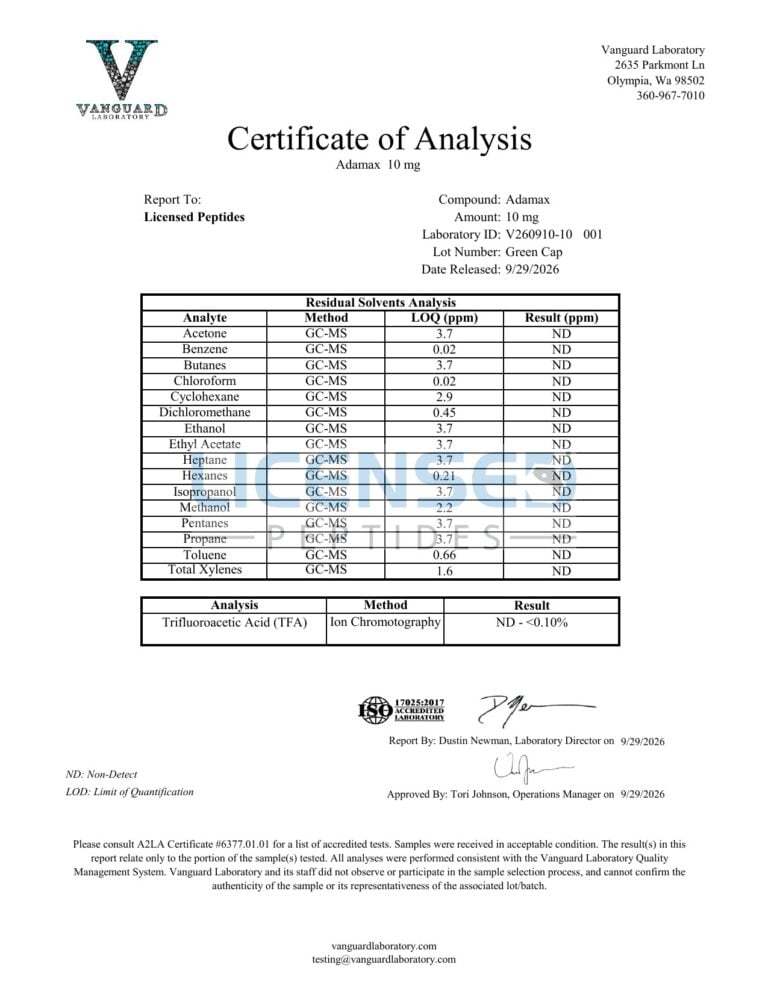
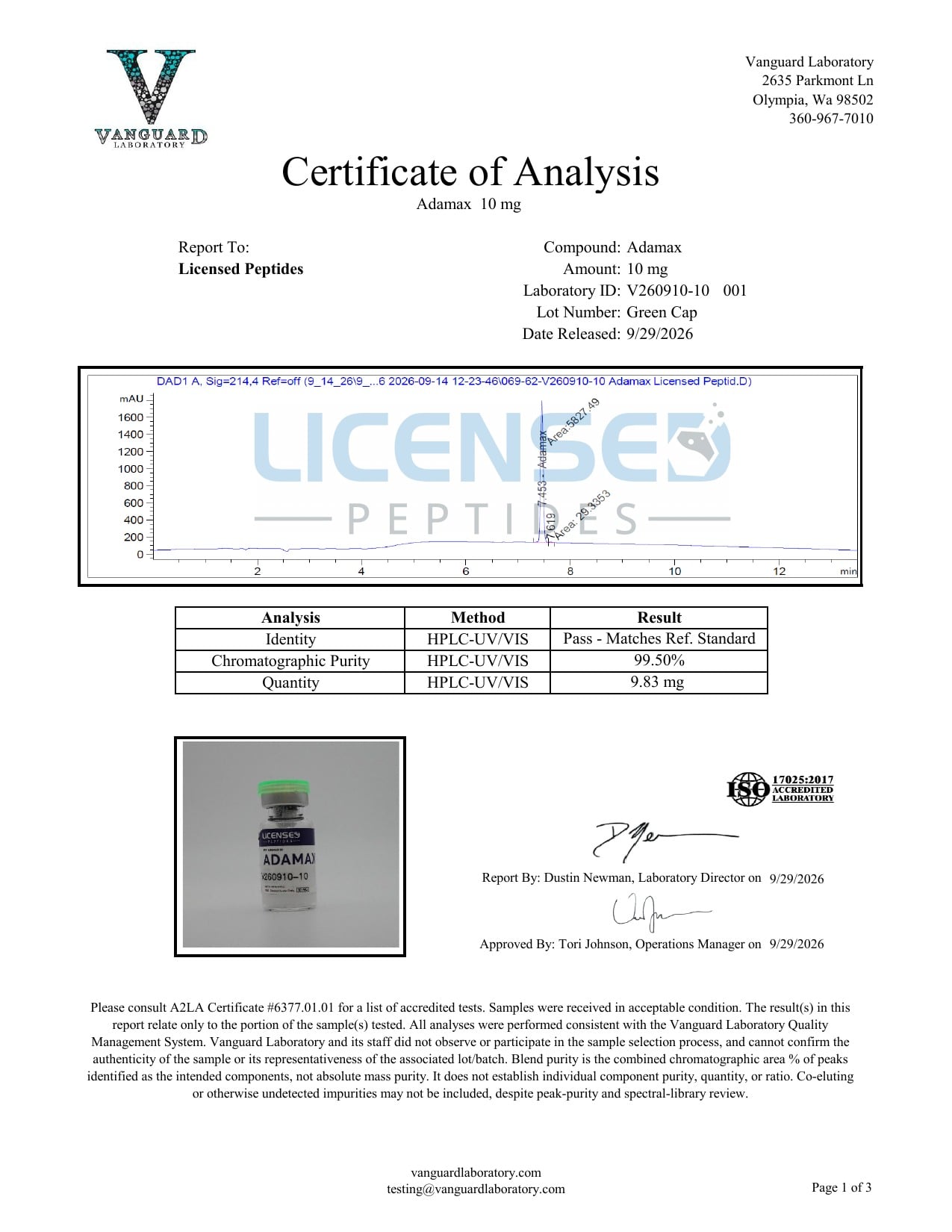
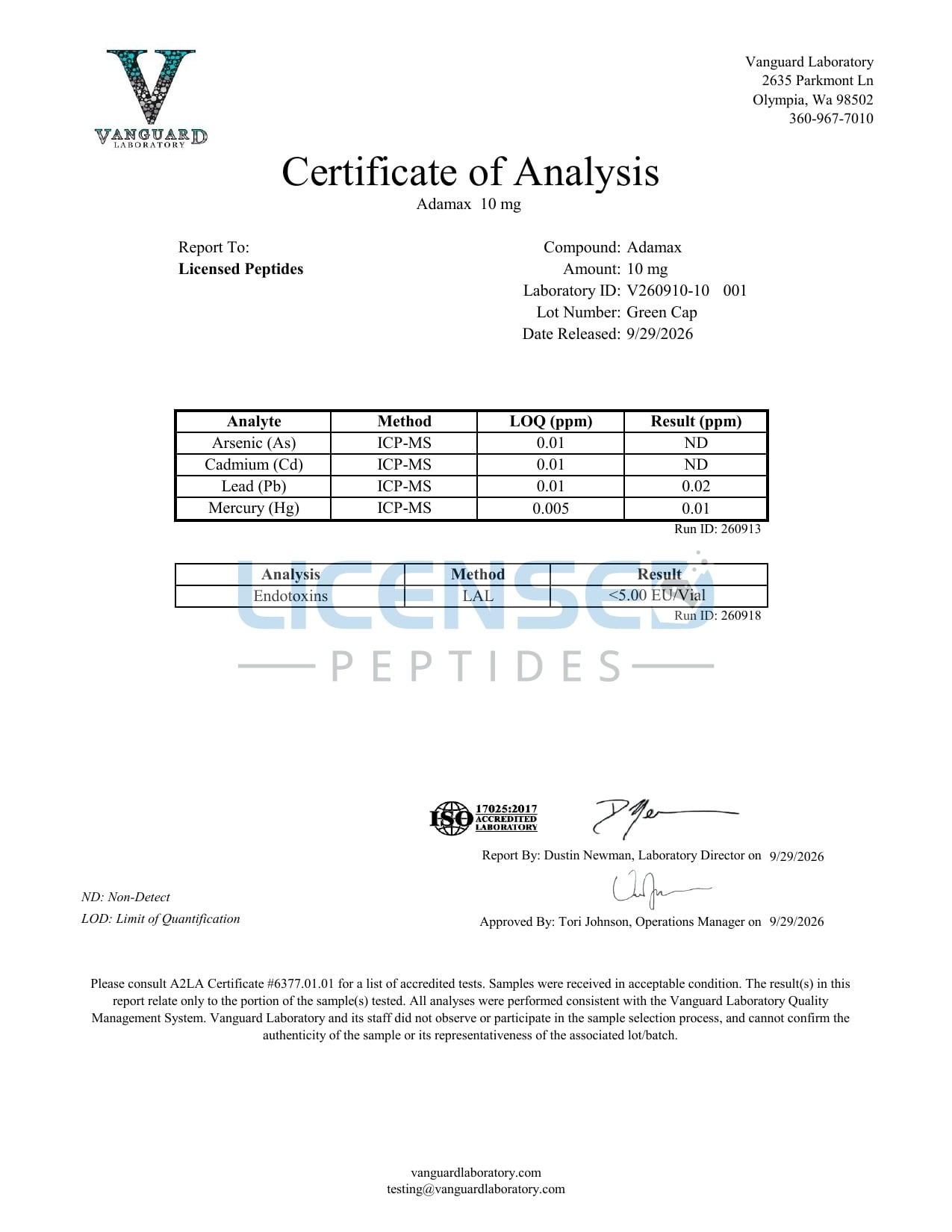
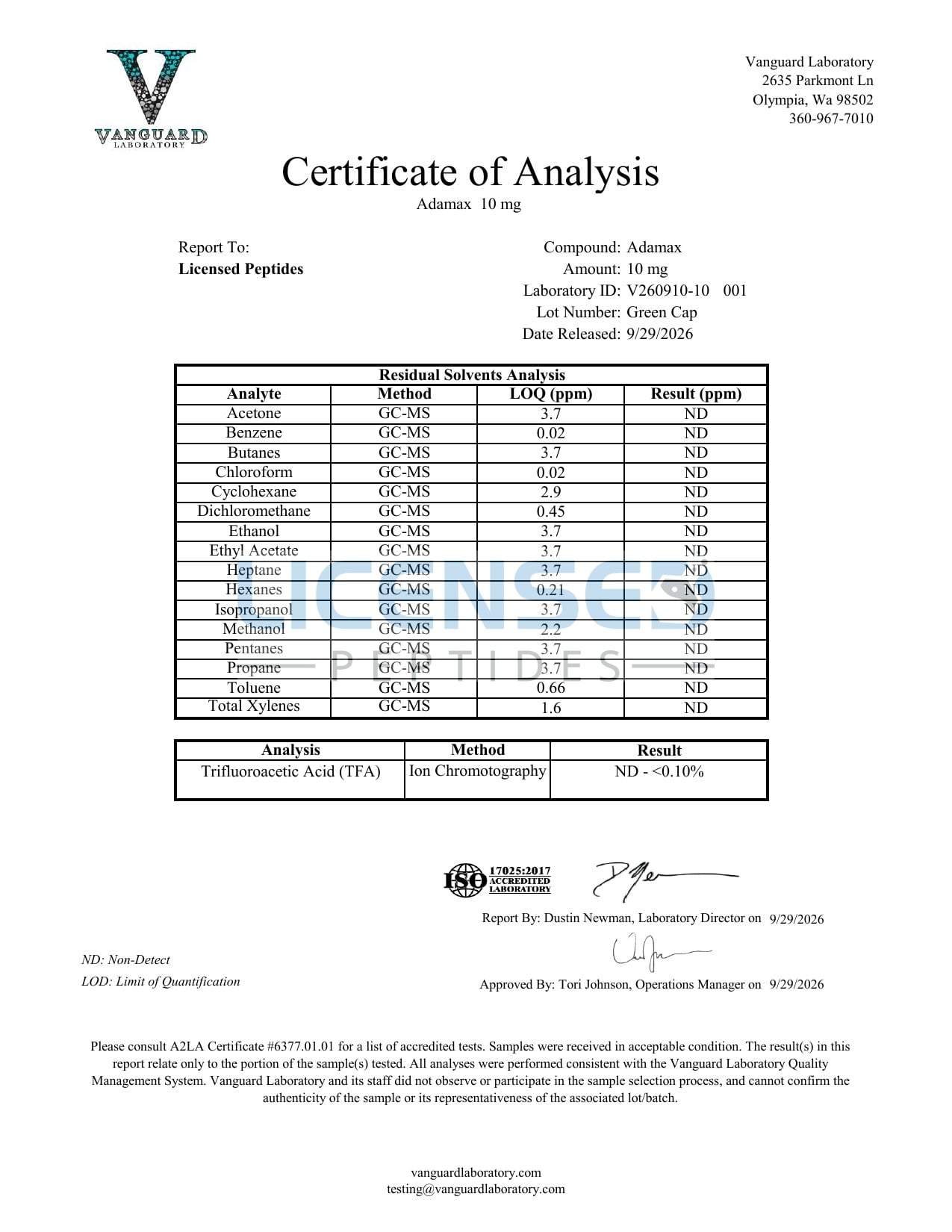
Every batch is independently tested before it ships. Full documentation available for every product.
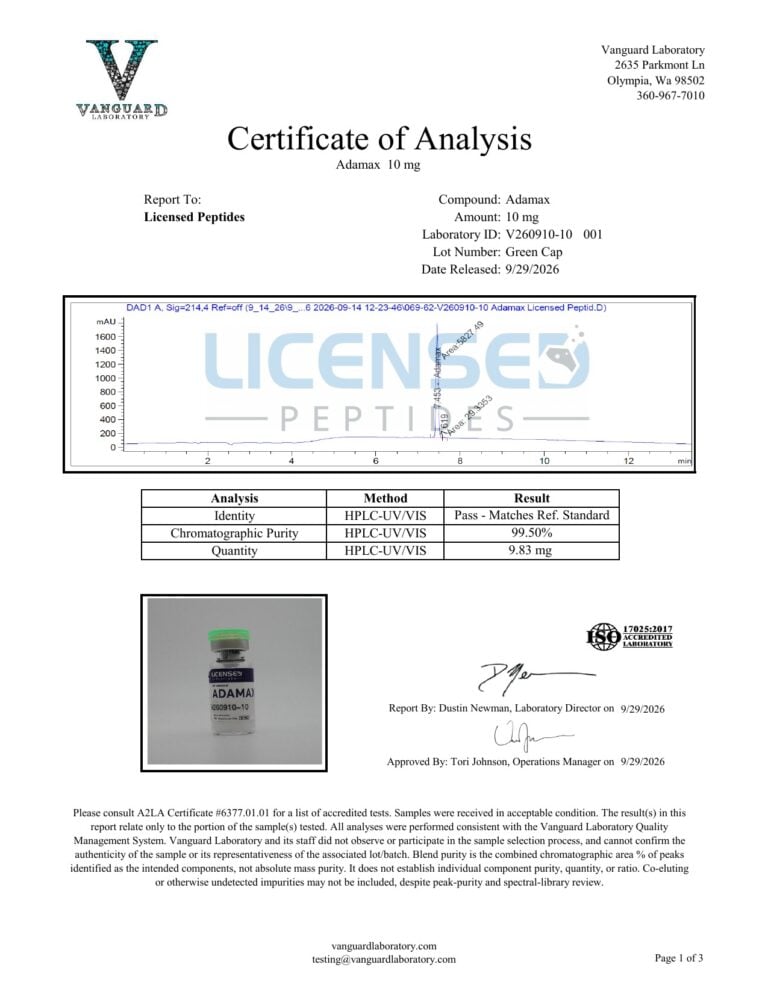
 99.50% — chromatographic purity
Pass — matches reference standard
9.83 mg (label 10 mg)
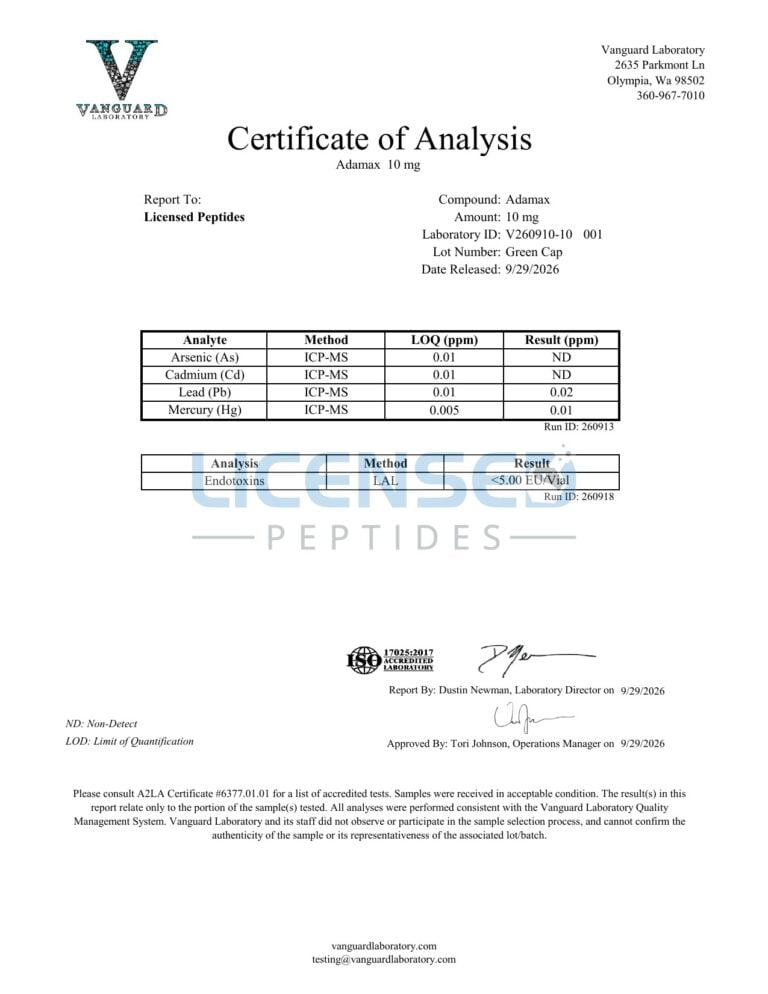
<5.00 EU/Vial
Pb 0.02 ppm · Hg 0.01 ppm · As, Cd not detected
Not detected
Not detected (<0.10%)
Vanguard Laboratory · ISO/IEC 17025 · A2LA #6377.01.01
September 2026
V260910-10 001
V260910-10 · Green Cap
Verified
99.50% — chromatographic purity
Pass — matches reference standard
9.83 mg (label 10 mg)
<5.00 EU/Vial
Pb 0.02 ppm · Hg 0.01 ppm · As, Cd not detected
Not detected
Not detected (<0.10%)
Vanguard Laboratory · ISO/IEC 17025 · A2LA #6377.01.01
September 2026
V260910-10 001
V260910-10 · Green Cap
Verified
 Download Full COA / HPLC Report (PDF)
Verify With Vanguard Laboratory
Download Full COA / HPLC Report (PDF)
Verify With Vanguard Laboratory

Not all peptide vendors hold themselves to the same verification standards.
| Verification Standard | Licensed Peptides | Generic Vendors |
|---|---|---|
| HPLC Purity Analysis |  99%+ Every Batch 99%+ Every Batch |
 Often Not Disclosed Often Not Disclosed |
| Mass Spectrometry Identity | Sequence Confirmed |
Rarely Available |
| Endotoxin Screening (LAL) | Every Product |
Industry Exception |
| GMP-Certified USA Manufacture | ISO 9001:2015 |
Often Overseas |
| COA Published & Downloadable | Every Lot |
Inconsistent |
| Same-Day USA Fulfillment | Before 4PM PST |
3-10 Day Lead Time |
Background articles from the Licensed Peptides research library. All products are supplied for laboratory research use only.
Not all peptide vendors hold themselves to the same verification standards.
99.4% HPLC Verified · Endotoxin-Screened · GMP-Certified ·
Free FedEx 2-Day on $200+
You cannot copy content of this page
Third-party tested peptides, shipped cold from the U.S. in 1–2 days.
Shop all peptides