
99%+ Purity
Guaranteed per batch

4.9 847 verified reviews

4.9 847 verified reviews
99%+ HPLC Purity —
Independently verified by accredited US laboratory
Endotoxin-Screened —
LAL tested, LPS-free, endotoxin report available
GMP-Certified Manufacturing —
USA facility, ISO 9001:2015
Lyophilized for Stability —
Shipped cold-packed, intact for reconstitution
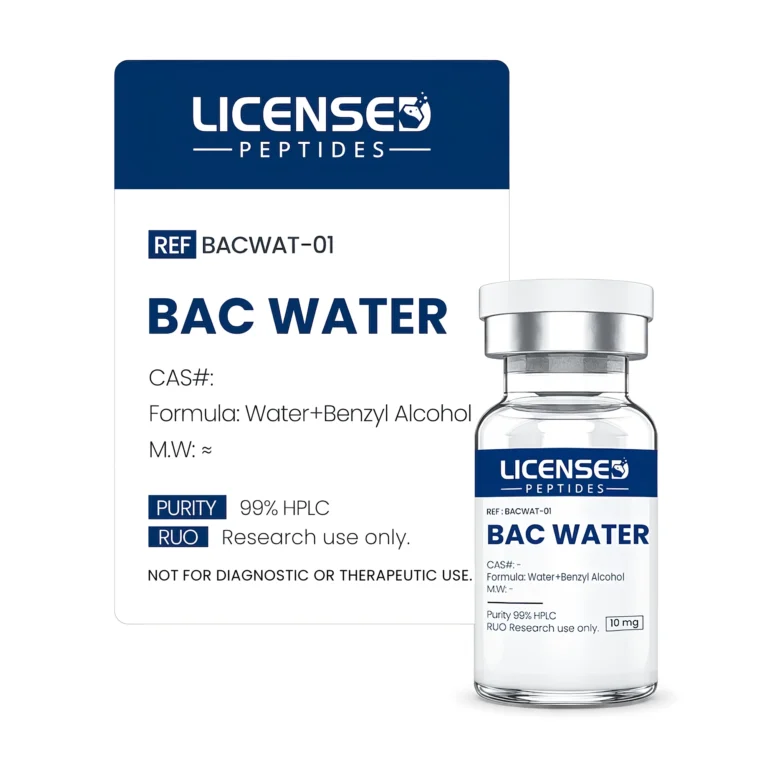
Our bacteriostatic water (or “bac” for short) is a sterile aqueous solution that you can use with research peptides. This reagent will keep your solutions free of contaminants and also inhibit the growth of germs, ensuring you can safely dissolve or store samples of peptides for long-term testing.
With Licensed Peptides, you get:
When used in conjunction with high-purity research materials, including LPS-free and endotoxin-free research peptides and peptide blends, bac water helps maintain experimental consistency and reproducibility. Its formulation supports predictable dilution behavior and helps preserve the chemical stability and structural integrity of sensitive research compounds over extended study timelines.
| Product Name | Bacteriostatic Water |
| Application | Research Use Only |
| Sterility | Sterile |
| Benzyl Alcohol | 0.9% |
| Quality Control | Batch Verified |
| Manufacturing | Quality-Controlled Production |
| Storage | Follow Product Label Instructions |
We supply bac water for peptides strictly for research purposes. It’s not approved for human or veterinary use. Any discussion of biological activity in relation to bacteriostatic water refers solely to analytical study, whether regarding preclinical or in vitro research.
| Form supplied | Lyophilized powder |
|---|---|
| Application | Research use only |
In studies involving delicate cellular systems or tissue samples, this solution is particularly valuable for ensuring the accuracy of dilution processes and maintaining consistency across experimental replicates. Its bacteriostatic properties help mitigate microbial interference that could otherwise affect the validity and reproducibility of research outcomes.
For storage, bacteriostatic water should be maintained at ambient temperature and protected from light, heat, and moisture. Unopened vials generally retain stability for up to two years; however, once opened, the contents should be discarded within 28 days to preserve sterility and effectiveness.
The preservative system is what distinguishes bacteriostatic water from plain sterile water. Benzyl alcohol at 0.9% w/v inhibits microbial growth, which is why a multi-dose vial can be entered more than once without the whole contents being discarded. The USP monograph for Bacteriostatic Water for Injection sets the composition and the sterility requirements; the benzyl alcohol content is the reason the reagent carries handling restrictions.
Benzyl alcohol acts as a bacteriostatic rather than a bactericidal agent: it suppresses replication rather than sterilising the contents. Reconstitution volume, concentration and the number of vial entries are all documented in laboratory protocols because preservative capacity is finite. Peptide chemists also note that benzyl alcohol is not inert for every sequence, so solvent choice is itself a variable recorded in method sections.
Peptides, which are short amino acid chains, demand careful handling and controlled storage conditions. In most research laboratories, peptides are distributed in a lyophilized (freeze-dried) form that must be dissolved before use. Bacteriostatic water is commonly chosen for this reconstitution due to its sterility and antimicrobial properties.
Preservation of Sample Integrity: Because it is sterile and contains a bacteriostatic agent, this water protects delicate peptide samples from microbial contamination, maintaining their purity throughout experimental use.
Ease of Use: Since bacteriostatic water can be safely used multiple times, it enables researchers to draw several aliquots from one vial — ideal for working with expensive or limited peptide samples.
Short-Term Stability: The inclusion of benzyl alcohol inhibits bacterial growth, extending the usable life of peptide solutions for short-term storage.
Protein studies also require stringent contamination control to ensure experimental reliability. Like peptides, many proteins arrive as powders that must be reconstituted. Bacteriostatic water provides a sterile and stable solvent environment for this purpose.
Maintaining Purity: The bacteriostatic effect of benzyl alcohol helps preserve the cleanliness and integrity of protein samples, even after multiple withdrawals from the same vial.
Experimental Consistency: Using the same sterile solvent across multiple protein preparations improves reproducibility and reduces unwanted microbial variables.
Wide Compatibility: Bacteriostatic water is suitable for use with many proteins. However, researchers should always verify that their specific protein is not sensitive to benzyl alcohol, as it may interfere with certain enzymes or delicate protein structures.
Note: Always assess solvent compatibility during method validation to prevent adverse interactions with sensitive proteins.
Beyond reconstituting peptides and proteins, bacteriostatic water serves several additional laboratory roles:
Sample Dilution: Used for creating precise concentrations in analytical and biological assays.
Buffer and Reagent Preparation: Acts as a clean base for preparing solutions and buffers.
Instrument Maintenance: Provides a sterile rinse for laboratory tools, including pipettes and automated liquid-handling systems.
In automated research environments, bacteriostatic water ensures that reagents remain sterile and uncontaminated over multiple handling cycles, supporting reliable and reproducible experimental outcomes.
Many research compounds require precise dilution ratios and controlled reconstitution conditions. Bacteriostatic water provides a stable environment that supports gradual, uniform mixing without introducing unwanted contaminants. Its production under USP-grade manufacturing standards helps ensure consistency from batch to batch.
The benzyl alcohol content does not merely serve as a labeling feature; it actively inhibits microbial growth within the vial following access. In laboratories where materials may be accessed multiple times over ongoing experiments, this antimicrobial property helps reduce variables related to contamination risk, supporting data reliability and experimental accuracy.
Certain compounds are highly sensitive to environmental changes, including pH fluctuations and microbial exposure. Bacteriostatic water offers a gentler and more stable solution environment, making it a preferred choice for preparing delicate research materials that require careful handling.
Because bacteriostatic water supports multiple withdrawals, it significantly reduces the need for frequent replacement. This efficiency is especially valuable in laboratories managing high research volumes or long-term studies, where budget allocation and material conservation are ongoing considerations.
The clinical literature on benzyl alcohol is dominated by the 1982 New England Journal of Medicine report of gasping syndrome in neonates exposed to benzyl-alcohol-preserved flush solutions. That paper is the reason benzyl alcohol carries the handling restrictions it does. It is cited here because any honest page about this reagent should carry it, not as a claim about any use of this product, which is supplied for laboratory research only.
Research Focus: Preservative Safety Literature
Title: The Gasping Syndrome and Benzyl Alcohol Poisoning (New England Journal of Medicine, 1982)
Authors: Juan Gershanik, Bruce Boecler, Henry Ensley, Sue McCloskey, William George
Research Focus: Compendial Standard
Title: Bacteriostatic Water for Injection, USP monograph – composition, sterility and preservative content
Authors: United States Pharmacopeia
For laboratory research use only. Products on this website are intended solely for in-vitro research. They are not medicines, have not been evaluated by the FDA, and are not intended to diagnose, treat, cure, or prevent any disease. Any administration to humans or animals is strictly prohibited.
Test
Proper storage of bacteriostatic water is important for maintaining product integrity, sterility, and overall quality throughout its intended shelf life.
Bacteriostatic water is supplied as a sterile solution and should be stored in accordance with the product label and applicable laboratory procedures. Preserving product integrity requires attention to storage conditions, handling practices, and contamination-control measures.
Regulatory guidance for sterile products consistently emphasizes the importance of maintaining container integrity and minimizing unnecessary exposure to environmental contaminants during storage and use.
Important: Researchers should inspect product packaging upon receipt and document lot information as part of standard laboratory recordkeeping practices.
General considerations include:
The FDA notes that sterile products should be handled using appropriate aseptic procedures and stored according to manufacturer guidance throughout their period of use.
Once a sterile container has been accessed, laboratories typically implement additional handling and documentation procedures. These procedures may include recording access dates, maintaining inventory logs, and monitoring storage conditions in accordance with internal quality standards.
Important: Researchers should consult product labeling and facility-specific protocols when establishing storage timelines and handling procedures.
For laboratory research use only. Not for human or veterinary use.

Bacteriostatic water is a sterile, non-pyrogenic water preparation containing 0.9% benzyl alcohol as a preservative. In laboratory environments, it is commonly used as a sterile aqueous vehicle in workflows involving lyophilized compounds, analytical testing, and controlled preparation procedures.
Researchers commonly select bac water for peptides because it offers:
Scientific organizations and regulatory bodies consistently emphasize the importance of documentation, contamination control, and standardized handling practices when preparing sterile materials. According to the World Health Organization (WHO), validated procedures and controlled laboratory environments are important components of reproducible research workflows.
Unlike preservative-free sterile water, which is intended for single-use laboratory applications, bacteriostatic water is designed to support multi-dose access in controlled research settings. This reduces material waste, supports procedural efficiency, and lowers the risk of accidental microbial introduction during repeated laboratory manipulation.
| Bacteriostatic Water | Sterile Water |
| Contains 0.9% benzyl alcohol | No preservative |
| Designed for multidose applications | Preservative-free formulation |
| Antimicrobial preservative system | No antimicrobial preservative |
According to pharmaceutical compounding standards from The American Pharmacists Association, the inclusion of an antimicrobial preservative is the fundamental differentiating feature between bacteriostatic water and preservative-free sterile water variants (Allen, 2020).
Benzyl alcohol has been utilized in pharmaceutical and laboratory preparations for decades because of its antimicrobial properties. Research literature describes benzyl alcohol as an effective preservative used in appropriately formulated multidose products (Johnson et al., 2017).
However, preservative systems are only one component of contamination control. Regulatory guidance from the Food & Drug Administration (FDA) and WHO emphasizes that proper aseptic technique, storage procedures, environmental controls, and documentation practices remain essential regardless of the presence of preservatives.
At Licensed Peptides, we prioritize documentation, transparency, and quality oversight to support researchers seeking dependable bac water for laboratory and analytical applications.
Allen, L. V., Jr. (2020). The Art, Science, and Technology of Pharmaceutical Compounding (6th ed.). American Pharmacists Association.
Johnson, W., Bergfeld, W. F., Belsito, D. V., Hill, R. A., Klaassen, C. D., Liebler, D. C., … & Andersen, F. A. (2017). Safety assessment of benzyl alcohol, benzoic acid and its salts, and benzyl benzoate. International Journal of Toxicology, 36(3_suppl), 5S-30S.
World Health Organization. (2011). Laboratory quality management system: Handbook. World Health Organization (WHO).
For laboratory research use only. Not for human or veterinary use.
At Licensed Peptides™, quality isn’t a claim; it’s a controlled, repeatable process.
Our bacteriostatic water is sourced in accordance with strict quality-control requirements to support laboratory, analytical, and research applications. From manufacturing oversight to batch accountability, every step is intended to reduce uncertainty and provide researchers with the information they need to make informed purchasing decisions.
Bac water for peptides is only as reliable as the standards behind its production. Licensed Peptides prioritizes quality-controlled sourcing to help support product integrity and consistency across laboratory workflows.
Researchers working with lyophilized peptides often require dependable materials that fit within established laboratory procedures. Our bacteriostatic water is supplied for research applications where consistency, documentation, and standardized preparation practices are important considerations.
We believe transparency matters. Licensed Peptides emphasizes documentation, traceability, and supplier accountability to help researchers make informed sourcing decisions and maintain consistent procurement records across projects.
Our U.S.-based team is available to assist with product information, documentation requests, and order-related questions.
For laboratory research use only. Not for human or veterinary use.
We understand that timing and product integrity are critical for research.
Paid, in-stock orders placed before our 4:00 PM PST cut-off are typically shipped the same business day from within the United States.
We use expedited domestic carriers for delivery within the United States. Shipping times are estimates and delivery dates are not guaranteed.
Each order is carefully packed to protect against temperature fluctuations, moisture exposure, and physical damage during transit.
You’ll receive tracking information immediately upon shipment so you can monitor delivery progress.
No long international delays, no customs issues. Just fast, dependable delivery from a U.S.-based operation.
For laboratory research use only. Not for human or veterinary use.
Our bacteriostatic water (or “bac” for short) is a sterile aqueous solution that you can use with research peptides. This reagent will keep your solutions free of contaminants and also inhibit the growth of germs, ensuring you can safely dissolve or store samples of peptides for long-term testing.
With Licensed Peptides, you get:
When used in conjunction with high-purity research materials, including LPS-free and endotoxin-free research peptides and peptide blends, bac water helps maintain experimental consistency and reproducibility. Its formulation supports predictable dilution behavior and helps preserve the chemical stability and structural integrity of sensitive research compounds over extended study timelines.
| Product Name | Bacteriostatic Water |
| Application | Research Use Only |
| Sterility | Sterile |
| Benzyl Alcohol | 0.9% |
| Quality Control | Batch Verified |
| Manufacturing | Quality-Controlled Production |
| Storage | Follow Product Label Instructions |
We supply bac water for peptides strictly for research purposes. It’s not approved for human or veterinary use. Any discussion of biological activity in relation to bacteriostatic water refers solely to analytical study, whether regarding preclinical or in vitro research.
| Form supplied | Lyophilized powder |
|---|---|
| Application | Research use only |
In studies involving delicate cellular systems or tissue samples, this solution is particularly valuable for ensuring the accuracy of dilution processes and maintaining consistency across experimental replicates. Its bacteriostatic properties help mitigate microbial interference that could otherwise affect the validity and reproducibility of research outcomes.
For storage, bacteriostatic water should be maintained at ambient temperature and protected from light, heat, and moisture. Unopened vials generally retain stability for up to two years; however, once opened, the contents should be discarded within 28 days to preserve sterility and effectiveness.
The preservative system is what distinguishes bacteriostatic water from plain sterile water. Benzyl alcohol at 0.9% w/v inhibits microbial growth, which is why a multi-dose vial can be entered more than once without the whole contents being discarded. The USP monograph for Bacteriostatic Water for Injection sets the composition and the sterility requirements; the benzyl alcohol content is the reason the reagent carries handling restrictions.
Benzyl alcohol acts as a bacteriostatic rather than a bactericidal agent: it suppresses replication rather than sterilising the contents. Reconstitution volume, concentration and the number of vial entries are all documented in laboratory protocols because preservative capacity is finite. Peptide chemists also note that benzyl alcohol is not inert for every sequence, so solvent choice is itself a variable recorded in method sections.
Peptides, which are short amino acid chains, demand careful handling and controlled storage conditions. In most research laboratories, peptides are distributed in a lyophilized (freeze-dried) form that must be dissolved before use. Bacteriostatic water is commonly chosen for this reconstitution due to its sterility and antimicrobial properties.
Preservation of Sample Integrity: Because it is sterile and contains a bacteriostatic agent, this water protects delicate peptide samples from microbial contamination, maintaining their purity throughout experimental use.
Ease of Use: Since bacteriostatic water can be safely used multiple times, it enables researchers to draw several aliquots from one vial — ideal for working with expensive or limited peptide samples.
Short-Term Stability: The inclusion of benzyl alcohol inhibits bacterial growth, extending the usable life of peptide solutions for short-term storage.
Protein studies also require stringent contamination control to ensure experimental reliability. Like peptides, many proteins arrive as powders that must be reconstituted. Bacteriostatic water provides a sterile and stable solvent environment for this purpose.
Maintaining Purity: The bacteriostatic effect of benzyl alcohol helps preserve the cleanliness and integrity of protein samples, even after multiple withdrawals from the same vial.
Experimental Consistency: Using the same sterile solvent across multiple protein preparations improves reproducibility and reduces unwanted microbial variables.
Wide Compatibility: Bacteriostatic water is suitable for use with many proteins. However, researchers should always verify that their specific protein is not sensitive to benzyl alcohol, as it may interfere with certain enzymes or delicate protein structures.
Note: Always assess solvent compatibility during method validation to prevent adverse interactions with sensitive proteins.
Beyond reconstituting peptides and proteins, bacteriostatic water serves several additional laboratory roles:
Sample Dilution: Used for creating precise concentrations in analytical and biological assays.
Buffer and Reagent Preparation: Acts as a clean base for preparing solutions and buffers.
Instrument Maintenance: Provides a sterile rinse for laboratory tools, including pipettes and automated liquid-handling systems.
In automated research environments, bacteriostatic water ensures that reagents remain sterile and uncontaminated over multiple handling cycles, supporting reliable and reproducible experimental outcomes.
Many research compounds require precise dilution ratios and controlled reconstitution conditions. Bacteriostatic water provides a stable environment that supports gradual, uniform mixing without introducing unwanted contaminants. Its production under USP-grade manufacturing standards helps ensure consistency from batch to batch.
The benzyl alcohol content does not merely serve as a labeling feature; it actively inhibits microbial growth within the vial following access. In laboratories where materials may be accessed multiple times over ongoing experiments, this antimicrobial property helps reduce variables related to contamination risk, supporting data reliability and experimental accuracy.
Certain compounds are highly sensitive to environmental changes, including pH fluctuations and microbial exposure. Bacteriostatic water offers a gentler and more stable solution environment, making it a preferred choice for preparing delicate research materials that require careful handling.
Because bacteriostatic water supports multiple withdrawals, it significantly reduces the need for frequent replacement. This efficiency is especially valuable in laboratories managing high research volumes or long-term studies, where budget allocation and material conservation are ongoing considerations.
The clinical literature on benzyl alcohol is dominated by the 1982 New England Journal of Medicine report of gasping syndrome in neonates exposed to benzyl-alcohol-preserved flush solutions. That paper is the reason benzyl alcohol carries the handling restrictions it does. It is cited here because any honest page about this reagent should carry it, not as a claim about any use of this product, which is supplied for laboratory research only.
Research Focus: Preservative Safety Literature
Title: The Gasping Syndrome and Benzyl Alcohol Poisoning (New England Journal of Medicine, 1982)
Authors: Juan Gershanik, Bruce Boecler, Henry Ensley, Sue McCloskey, William George
Research Focus: Compendial Standard
Title: Bacteriostatic Water for Injection, USP monograph – composition, sterility and preservative content
Authors: United States Pharmacopeia
For laboratory research use only. Products on this website are intended solely for in-vitro research. They are not medicines, have not been evaluated by the FDA, and are not intended to diagnose, treat, cure, or prevent any disease. Any administration to humans or animals is strictly prohibited.
Proper storage of bacteriostatic water is important for maintaining product integrity, sterility, and overall quality throughout its intended shelf life.
Bacteriostatic water is supplied as a sterile solution and should be stored in accordance with the product label and applicable laboratory procedures. Preserving product integrity requires attention to storage conditions, handling practices, and contamination-control measures.
Regulatory guidance for sterile products consistently emphasizes the importance of maintaining container integrity and minimizing unnecessary exposure to environmental contaminants during storage and use.
Important: Researchers should inspect product packaging upon receipt and document lot information as part of standard laboratory recordkeeping practices.
General considerations include:
The FDA notes that sterile products should be handled using appropriate aseptic procedures and stored according to manufacturer guidance throughout their period of use.
Once a sterile container has been accessed, laboratories typically implement additional handling and documentation procedures. These procedures may include recording access dates, maintaining inventory logs, and monitoring storage conditions in accordance with internal quality standards.
Important: Researchers should consult product labeling and facility-specific protocols when establishing storage timelines and handling procedures.
For laboratory research use only. Not for human or veterinary use.
Bacteriostatic water is a sterile, non-pyrogenic water preparation containing 0.9% benzyl alcohol as a preservative. In laboratory environments, it is commonly used as a sterile aqueous vehicle in workflows involving lyophilized compounds, analytical testing, and controlled preparation procedures.
Researchers commonly select bac water for peptides because it offers:
Scientific organizations and regulatory bodies consistently emphasize the importance of documentation, contamination control, and standardized handling practices when preparing sterile materials. According to the World Health Organization (WHO), validated procedures and controlled laboratory environments are important components of reproducible research workflows.
Unlike preservative-free sterile water, which is intended for single-use laboratory applications, bacteriostatic water is designed to support multi-dose access in controlled research settings. This reduces material waste, supports procedural efficiency, and lowers the risk of accidental microbial introduction during repeated laboratory manipulation.
| Bacteriostatic Water | Sterile Water |
| Contains 0.9% benzyl alcohol | No preservative |
| Designed for multidose applications | Preservative-free formulation |
| Antimicrobial preservative system | No antimicrobial preservative |
According to pharmaceutical compounding standards from The American Pharmacists Association, the inclusion of an antimicrobial preservative is the fundamental differentiating feature between bacteriostatic water and preservative-free sterile water variants (Allen, 2020).
Benzyl alcohol has been utilized in pharmaceutical and laboratory preparations for decades because of its antimicrobial properties. Research literature describes benzyl alcohol as an effective preservative used in appropriately formulated multidose products (Johnson et al., 2017).
However, preservative systems are only one component of contamination control. Regulatory guidance from the Food & Drug Administration (FDA) and WHO emphasizes that proper aseptic technique, storage procedures, environmental controls, and documentation practices remain essential regardless of the presence of preservatives.
At Licensed Peptides, we prioritize documentation, transparency, and quality oversight to support researchers seeking dependable bac water for laboratory and analytical applications.
Allen, L. V., Jr. (2020). The Art, Science, and Technology of Pharmaceutical Compounding (6th ed.). American Pharmacists Association.
Johnson, W., Bergfeld, W. F., Belsito, D. V., Hill, R. A., Klaassen, C. D., Liebler, D. C., … & Andersen, F. A. (2017). Safety assessment of benzyl alcohol, benzoic acid and its salts, and benzyl benzoate. International Journal of Toxicology, 36(3_suppl), 5S-30S.
World Health Organization. (2011). Laboratory quality management system: Handbook. World Health Organization (WHO).
For laboratory research use only. Not for human or veterinary use.
At Licensed Peptides™, quality isn’t a claim; it’s a controlled, repeatable process.
Our bacteriostatic water is sourced in accordance with strict quality-control requirements to support laboratory, analytical, and research applications. From manufacturing oversight to batch accountability, every step is intended to reduce uncertainty and provide researchers with the information they need to make informed purchasing decisions.
Bac water for peptides is only as reliable as the standards behind its production. Licensed Peptides prioritizes quality-controlled sourcing to help support product integrity and consistency across laboratory workflows.
Researchers working with lyophilized peptides often require dependable materials that fit within established laboratory procedures. Our bacteriostatic water is supplied for research applications where consistency, documentation, and standardized preparation practices are important considerations.
We believe transparency matters. Licensed Peptides emphasizes documentation, traceability, and supplier accountability to help researchers make informed sourcing decisions and maintain consistent procurement records across projects.
Our U.S.-based team is available to assist with product information, documentation requests, and order-related questions.
For laboratory research use only. Not for human or veterinary use.
We understand that timing and product integrity are critical for research.
Paid, in-stock orders placed before our 4:00 PM PST cut-off are typically shipped the same business day from within the United States.
We use expedited domestic carriers for delivery within the United States. Shipping times are estimates and delivery dates are not guaranteed.
Each order is carefully packed to protect against temperature fluctuations, moisture exposure, and physical damage during transit.
You’ll receive tracking information immediately upon shipment so you can monitor delivery progress.
No long international delays, no customs issues. Just fast, dependable delivery from a U.S.-based operation.
For laboratory research use only. Not for human or veterinary use.
Guaranteed per batch

Independent lab verified

Vanguard Laboratory · ISO/IEC 17025

USA-manufactured

Free FedEx on $200+

Not all peptide vendors hold themselves to the same verification standards.
| Verification Standard | Licensed Peptides | Generic Vendors |
|---|---|---|
| HPLC Purity Analysis |  99%+ Every Batch 99%+ Every Batch |
 Often Not Disclosed Often Not Disclosed |
| Mass Spectrometry Identity | Sequence Confirmed |
Rarely Available |
| Endotoxin Screening (LAL) | Every Product |
Industry Exception |
| GMP-Certified USA Manufacture | ISO 9001:2015 |
Often Overseas |
| COA Published & Downloadable | Every Lot |
Inconsistent |
| Same-Day USA Fulfillment | Before 4PM PST |
3-10 Day Lead Time |
Bac water for peptides is a sterile aqueous solution that contains 0.9% benzyl alcohol as a preservative. Researchers often use bac water in lab environments when working with lyophilized peptides.
No, bac water and sterile water are not the same. However, they’re both sterile water-based solutions. The main difference is that bacteriostatic water contains 0.9% benzyl alcohol, while sterile water does not.
Benzyl alcohol is an antimicrobial preservative that researchers use to sterilize different preparations.
Many research peptides are supplied in a lyophilized or freeze-dried format to support stability during storage and transportation. Researchers may incorporate bacteriostatic water into laboratory preparation workflows involving these compounds. The specific requirements for any research protocol depend on the compound being evaluated and established laboratory procedures.
Researchers working with compounds such as BPC-157 10mg, TB-500, MOTS-c, and other lyophilized research peptides often prioritize consistency, documentation, and standardized preparation practices across experiments.
Bacteriostatic water should be stored according to the manufacturer’s instructions and applicable laboratory protocols. Researchers commonly maintain storage records, monitor environmental conditions, and follow established contamination-control procedures to help preserve product integrity. Always review product labeling and documentation before storage or use.
Researchers frequently evaluate suppliers based on documentation availability, batch traceability, manufacturing transparency, and quality-control standards. Common considerations include product specifications, supplier verification practices, and traceability records. Documentation can play an important role in supporting reproducibility and maintaining procurement consistency across long-term research projects.
Bacteriostatic water is primarily supplied as a sterile aqueous vehicle for laboratory and analytical applications. Researchers commonly utilize it in workflows involving lyophilized compounds, peptides, proteins, and other materials requiring controlled preparation procedures. Its intended role within a research environment depends on the specific protocol being performed.
Researchers should inspect bacteriostatic water before use. If cloudiness, discoloration, particulate matter, or other signs of contamination are observed, the product should not be used. Product integrity, storage conditions, and handling procedures should be reviewed in accordance with applicable laboratory protocols and manufacturer guidance.
No. Bacteriostatic water is not designed to remove endotoxins, contaminants, or impurities from research compounds. Endotoxin testing and contamination control are separate processes that occur through analytical testing, quality-control procedures, and validated laboratory practices.
Like other laboratory materials, bacteriostatic water is supplied with manufacturer-provided dating and storage recommendations. Researchers should always review product labeling and follow applicable storage guidelines to help maintain product quality and integrity throughout its intended shelf life.
Bacteriostatic water contains 0.9% benzyl alcohol, which distinguishes it from preservative-free sterile water. Because of this preservative system, bacteriostatic water is frequently selected for laboratory environments where repeated vial access may be required as part of established research procedures.
Yes. Licensed Peptides bacteriostatic water is supplied exclusively for laboratory, research, and analytical applications. It is not intended for human consumption, clinical use, therapeutic applications, veterinary use, or diagnostic procedures. Any discussion of laboratory applications refers solely to research environments and scientific workflows.
99.4% HPLC Verified · Endotoxin-Screened · GMP-Certified ·
Free FedEx 2-Day on $200+
You cannot copy content of this page
Third-party tested peptides, shipped cold from the U.S. in 1–2 days.
Shop all peptides