
99%+ Purity
Guaranteed per batch

4.9 847 verified reviews




4.9 847 verified reviews
99%+ HPLC Purity —
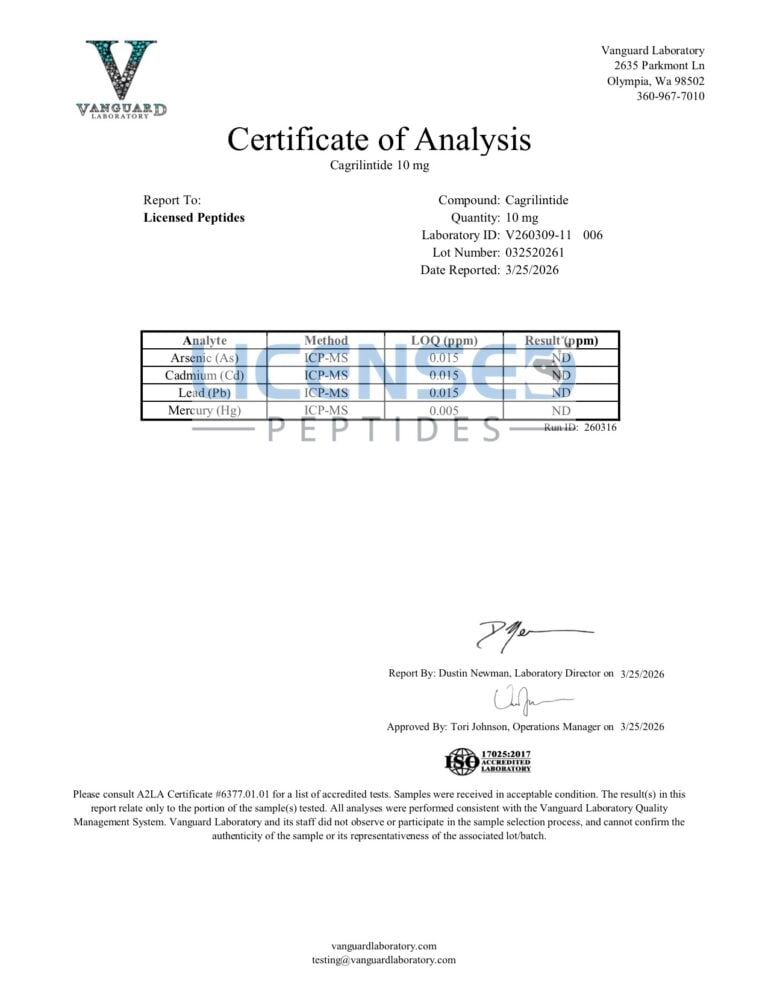
Independently verified by accredited US laboratory
Endotoxin-Screened —
LAL tested, LPS-free, endotoxin report available
GMP-Certified Manufacturing —
USA facility, ISO 9001:2015
Lyophilized for Stability —
Shipped cold-packed, intact for reconstitution
Cagrilintide is a long-acting amylin analogue currently under investigation for its potential roles in metabolic research. As a synthetic peptide modeled after the naturally occurring hormone amylin, co-secreted with insulin, Cagrilintide has demonstrated noteworthy effects in animal studies and controlled research environments. These findings have prompted increasing scientific interest in its interaction with appetite regulation pathways, metabolic signaling, and energy expenditure. While the molecule remains investigational, early data indicate that its mechanistic profile may offer multiple avenues for future study.
Within experimental environments, Cagrilintide has been explored for its receptor activity, downstream signaling effects, and stability profile relative to native amylin. Research observations suggest that its extended duration of action and receptor engagement characteristics may offer multiple avenues for further mechanistic investigation. Ongoing studies continue to evaluate its role in metabolic signaling networks, peptide-receptor dynamics, and neuroendocrine communication pathways under controlled conditions.
Cagrilintide supplied for research purposes is manufactured as a high-purity, LPS-free peptide and is endotoxin-free, ensuring suitability for sensitive laboratory applications. Each batch is produced under stringent quality controls and is research peptide endotoxin tested, supporting reproducibility and reliability in experimental settings where contaminant interference must be minimized.
All information provided herein relates exclusively to laboratory, preclinical, or controlled research settings. Cagrilintide is not for human or animal consumption, not for therapeutic use, and is not intended to diagnose, treat, cure, or prevent any disease or condition. Its availability is strictly limited to qualified research use.
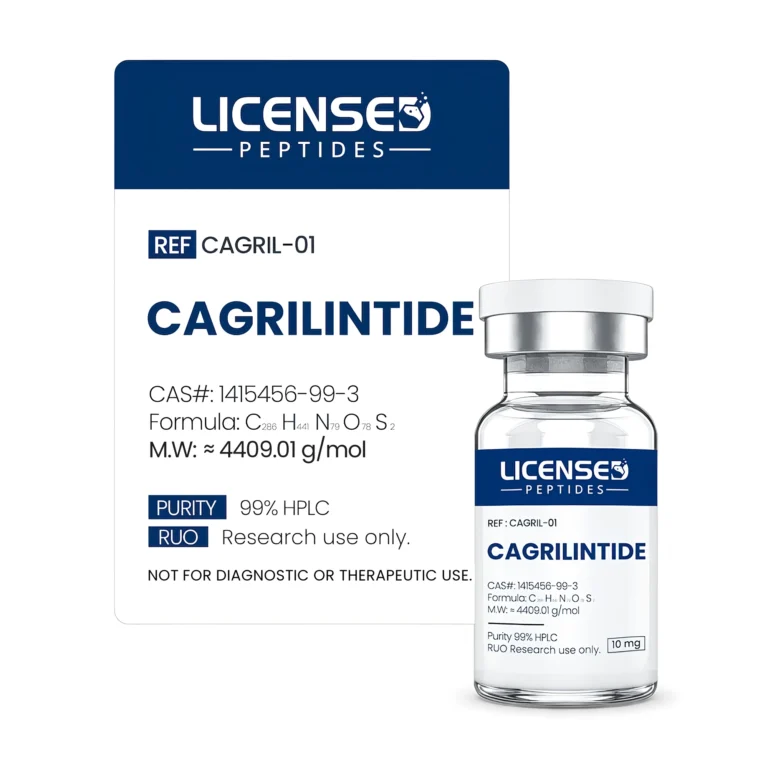
| Molecular formula | C₁₉₁H₂₉₄N₅₂O₅₈S₂ |
|---|---|
| Molecular weight | ~ 4226.8 g/mol |
| Length | 37 amino acids |
| Application | Research use only |
Cagrilintide is a long-acting amylin analogue used in laboratory research to study receptor signaling, peptide stability, and related experimental models of metabolic biology. References to biological activity on this page are provided for research context only and must not be interpreted as claims of therapeutic, diagnostic, or clinical benefit. This product is supplied strictly for research use only and is not intended for human or animal use.
Amylin is a peptide hormone co-secreted with insulin and is studied for its role in satiety signalling, gastric emptying and postprandial glucagon secretion. The native hormone is unstable and prone to aggregation, which limits its use as a laboratory reference compound.
Cagrilintide (NNC0174-0833) is a long-acting, acylated amylin analogue first described by Novo Nordisk. It combines the amylin sequence with structural modifications that increase stability and extend half-life.
Studies to date have explored its potential applications in the following areas:
This material is provided for laboratory research only and is not intended for diagnosis, treatment, prevention, or consumption.
Amylin analogues are studied because amylin signals through receptor complexes formed when the calcitonin receptor associates with receptor-activity-modifying proteins. Analogues that are stable in solution make it possible to probe those complexes without the aggregation that limits work with the native peptide.2
At the molecular level, cagrilintide binds amylin receptors, which are calcitonin-receptor complexes expressed in appetite-regulating brain regions. In published rodent studies, these interactions have been examined against readouts such as:
These are preclinical measurements only and are not outcomes for any person.
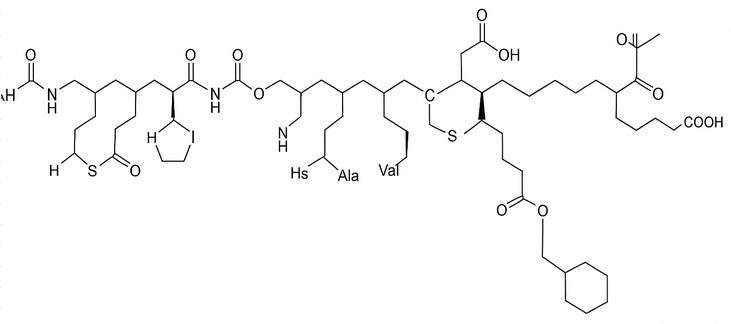
Cagrilintide is a 37–amino acid peptide structurally related to human amylin, modified with a C16 fatty diacid side chain linked via a γ-glutamic acid spacer at Lys²⁸. This lipidation promotes albumin binding, extending its plasma half-life to approximately one week, as characterised in published pharmacokinetic studies.
At the receptor level, cagrilintide activates amylin receptors, which are heterodimers consisting of the calcitonin receptor (CTR) combined with receptor activity-modifying proteins (RAMPs). Preclinical work indicates that the body-weight endpoints measured in those animal studies are mediated primarily via AMY1 and AMY3 receptor subtypes, which are highly expressed in appetite-regulating regions of the brain. Reported readouts in those models include food intake, gastric emptying and satiety signalling. The receptor mechanism is distinct from that of GLP-1 receptor agonists, which is why the two are examined together in combination models.
Published literature on cagrilintide is included here for educational and research-context purposes only. References to clinical trials, body-weight outcomes, glucose-related measures, or other human endpoints are not claims about this product and do not indicate that it is intended for human or animal use.
Cagrilintide is a research-grade amylin analogue used to support laboratory investigation of receptor biology and metabolic signaling pathways. Any discussion of experimental outcomes is limited to research context only. This product is not offered as a therapeutic, weight-management, or clinical product.
Scientific authors and literature references are provided solely to identify published research sources. They do not constitute endorsement, promotion, or any suggestion that this product is approved, safe, or intended for human or animal use.
In controlled laboratory settings, cagrilintide may be used to investigate amylin-receptor activity, peptide-receptor interactions, and downstream signaling pathways. Any references to appetite signaling, energy expenditure, satiety, or food intake are limited to experimental research context only and do not imply approved human or veterinary use.
Cagrilintide may be relevant for laboratories or investigators who study:
These uses apply strictly to research environments and do not constitute guidance for human or veterinary use.
Amylin receptors are described as complexes of the calcitonin receptor with receptor-activity-modifying proteins, and analogue potency is established in cell lines expressing each defined combination.2
The native human sequence aggregates readily; residue substitutions that break the amyloidogenic core are the standard chemical route to analogues that remain soluble in aqueous buffer.2
Supplied as a lyophilised powder in a sealed vial. Published handling practice for research peptides of this class is cold, dry, light-protected storage of the lyophilised solid, with reconstituted material kept refrigerated and used within the stability window established by the laboratory. For laboratory research use only.
For laboratory research use only. Products on this website are intended solely for in-vitro research. They are not medicines, have not been evaluated by the FDA, and are not intended to diagnose, treat, cure, or prevent any disease. Any administration to humans or animals is strictly prohibited.


Our peptides are produced exclusively for laboratory and scientific research purposes.
Licensed Peptides™ products are developed using industry-standard synthesis and purification protocols, making them suitable for in vitro research, analytical testing, and experimental models.
Strict process controls ensure reproducibility, allowing researchers to work with confidence across experiments.
Our peptides are commonly used in research involving:
All products are intended for research use only and are not for human or animal consumption, therapeutic use, or clinical application.
At Licensed Peptides™, quality isn’t a claim — it’s a controlled, repeatable process.
Every peptide we produce follows a strict, pharma-grade workflow designed to ensure purity, stability, and consistency from synthesis to delivery.
All peptides are synthesized in sterile, controlled environments to eliminate contamination risk and ensure batch consistency.
We use advanced High-Performance Liquid Chromatography (HPLC) to separate and verify peptide purity with precision.
Each batch undergoes heavy metal and endotoxin screening to ensure it is free from hidden contaminants.
We start with rigorously tested amino acids and reagents, ensuring integrity at the molecular level.
Freeze-dried peptides maintain long-term stability, potency, and reliability for research applications.
Every vial is protected from oxygen and moisture, preserving structural integrity during storage and transit.
From synthesis to delivery, every step is engineered to meet the expectations of professionals who require accuracy, consistency, and reliability.
For laboratory research use only. Not for human or veterinary use.
We understand that timing and product integrity are critical for research.
| Ships to | United States (including minor outlying islands) |
|---|---|
| Processing days | Monday to Friday, excluding holidays |
| Daily cut-off | Paid orders placed before 4:00 PM PST are typically shipped the same business day |
| Free shipping | FedEx 2-Day Express on orders over $200 and for VIP members |
| Standard | USPS Ground Advantage, 3–7 business days (not guaranteed) — $8.95 |
| Expedited | FedEx 2-Day $11.95 · UPS 2-Day $19.95 · FedEx Next Day $44.99 |
| Signature | Required on delivery for orders of $1,000 or more |
Products are stored in industrial-grade freezers prior to shipment to maintain stability and purity.
Each order is carefully packed to protect against temperature fluctuations, moisture exposure, and physical damage during transit.
Once your order has shipped you will receive a tracking number by email, so you can monitor delivery progress.
Orders are dispatched domestically from a U.S.-based operation, so there are no international customs steps.
Shipping times are estimates and begin after order processing. Delays may occur due to carrier issues, weather, or other unforeseen factors, and delivery dates are not guaranteed. Full terms are in our Shipping & Delivery Policy.
For laboratory research use only. Not for human or veterinary use.
| pack | 1 pack, 3 pack, 5 pack, 10 pack |
|---|
| Lyophilized, in transit | Stable for shipping for up to 3–4 months |
|---|---|
| Lyophilized, short term | Room temperature is usually adequate for several weeks; refrigeration under 4°C (39°F) is generally acceptable |
| Lyophilized, long term | Freezer at -80°C (-112°F) for several months to years |
| After reconstitution | Refrigerated; stable for up to 30 days |
| Light and moisture | Keep cold and away from light in the original sealed vial |
All of our products are manufactured using the lyophilization (freeze drying) process, which keeps them stable for shipping for up to 3–4 months.
Lyophilization is a unique dehydration process, also known as cryodesiccation, where the peptides are frozen and then subjected to low pressure. This causes the water in the peptide vial to sublimate directly from solid to gas, leaving behind a stable, crystalline white structure known as lyophilized peptide. The puffy white powder can be stored at room temperature until it is reconstituted with bacteriostatic water.
Once peptides have been received, it is imperative that they are kept cold and away from light. If the peptides will be used in the next several days, weeks or months, short-term refrigeration under 4°C (39°F) is generally acceptable. Lyophilized peptides are usually stable at room temperatures for several weeks or more, so if they will be utilized within weeks or months such storage is typically adequate.
For longer term storage (several months to years) it is more preferable to store peptides in a freezer at -80°C (-112°F). When storing peptides for months or even years, freezing is optimal in order to preserve the peptide’s stability.
Once the peptides are reconstituted with bacteriostatic water, they must be stored in the fridge to maintain stability. After reconstitution, the peptides will remain stable for up to 30 days.
For laboratory research use only. Not for human or veterinary use.
Cagrilintide is a long-acting amylin analogue currently under investigation for its potential roles in metabolic research. As a synthetic peptide modeled after the naturally occurring hormone amylin, co-secreted with insulin, Cagrilintide has demonstrated noteworthy effects in animal studies and controlled research environments. These findings have prompted increasing scientific interest in its interaction with appetite regulation pathways, metabolic signaling, and energy expenditure. While the molecule remains investigational, early data indicate that its mechanistic profile may offer multiple avenues for future study.
Within experimental environments, Cagrilintide has been explored for its receptor activity, downstream signaling effects, and stability profile relative to native amylin. Research observations suggest that its extended duration of action and receptor engagement characteristics may offer multiple avenues for further mechanistic investigation. Ongoing studies continue to evaluate its role in metabolic signaling networks, peptide-receptor dynamics, and neuroendocrine communication pathways under controlled conditions.
Cagrilintide supplied for research purposes is manufactured as a high-purity, LPS-free peptide and is endotoxin-free, ensuring suitability for sensitive laboratory applications. Each batch is produced under stringent quality controls and is research peptide endotoxin tested, supporting reproducibility and reliability in experimental settings where contaminant interference must be minimized.
All information provided herein relates exclusively to laboratory, preclinical, or controlled research settings. Cagrilintide is not for human or animal consumption, not for therapeutic use, and is not intended to diagnose, treat, cure, or prevent any disease or condition. Its availability is strictly limited to qualified research use.
| Molecular formula | C₁₉₁H₂₉₄N₅₂O₅₈S₂ |
|---|---|
| Molecular weight | ~ 4226.8 g/mol |
| Length | 37 amino acids |
| Application | Research use only |
Cagrilintide is a long-acting amylin analogue used in laboratory research to study receptor signaling, peptide stability, and related experimental models of metabolic biology. References to biological activity on this page are provided for research context only and must not be interpreted as claims of therapeutic, diagnostic, or clinical benefit. This product is supplied strictly for research use only and is not intended for human or animal use.
Amylin is a peptide hormone co-secreted with insulin and is studied for its role in satiety signalling, gastric emptying and postprandial glucagon secretion. The native hormone is unstable and prone to aggregation, which limits its use as a laboratory reference compound.
Cagrilintide (NNC0174-0833) is a long-acting, acylated amylin analogue first described by Novo Nordisk. It combines the amylin sequence with structural modifications that increase stability and extend half-life.
Studies to date have explored its potential applications in the following areas:
This material is provided for laboratory research only and is not intended for diagnosis, treatment, prevention, or consumption.
Amylin analogues are studied because amylin signals through receptor complexes formed when the calcitonin receptor associates with receptor-activity-modifying proteins. Analogues that are stable in solution make it possible to probe those complexes without the aggregation that limits work with the native peptide.2
At the molecular level, cagrilintide binds amylin receptors, which are calcitonin-receptor complexes expressed in appetite-regulating brain regions. In published rodent studies, these interactions have been examined against readouts such as:
These are preclinical measurements only and are not outcomes for any person.
Cagrilintide is a 37–amino acid peptide structurally related to human amylin, modified with a C16 fatty diacid side chain linked via a γ-glutamic acid spacer at Lys²⁸. This lipidation promotes albumin binding, extending its plasma half-life to approximately one week, as characterised in published pharmacokinetic studies.
At the receptor level, cagrilintide activates amylin receptors, which are heterodimers consisting of the calcitonin receptor (CTR) combined with receptor activity-modifying proteins (RAMPs). Preclinical work indicates that the body-weight endpoints measured in those animal studies are mediated primarily via AMY1 and AMY3 receptor subtypes, which are highly expressed in appetite-regulating regions of the brain. Reported readouts in those models include food intake, gastric emptying and satiety signalling. The receptor mechanism is distinct from that of GLP-1 receptor agonists, which is why the two are examined together in combination models.
Published literature on cagrilintide is included here for educational and research-context purposes only. References to clinical trials, body-weight outcomes, glucose-related measures, or other human endpoints are not claims about this product and do not indicate that it is intended for human or animal use.
Cagrilintide is a research-grade amylin analogue used to support laboratory investigation of receptor biology and metabolic signaling pathways. Any discussion of experimental outcomes is limited to research context only. This product is not offered as a therapeutic, weight-management, or clinical product.
Scientific authors and literature references are provided solely to identify published research sources. They do not constitute endorsement, promotion, or any suggestion that this product is approved, safe, or intended for human or animal use.
In controlled laboratory settings, cagrilintide may be used to investigate amylin-receptor activity, peptide-receptor interactions, and downstream signaling pathways. Any references to appetite signaling, energy expenditure, satiety, or food intake are limited to experimental research context only and do not imply approved human or veterinary use.
Cagrilintide may be relevant for laboratories or investigators who study:
These uses apply strictly to research environments and do not constitute guidance for human or veterinary use.
Amylin receptors are described as complexes of the calcitonin receptor with receptor-activity-modifying proteins, and analogue potency is established in cell lines expressing each defined combination.2
The native human sequence aggregates readily; residue substitutions that break the amyloidogenic core are the standard chemical route to analogues that remain soluble in aqueous buffer.2
Supplied as a lyophilised powder in a sealed vial. Published handling practice for research peptides of this class is cold, dry, light-protected storage of the lyophilised solid, with reconstituted material kept refrigerated and used within the stability window established by the laboratory. For laboratory research use only.
For laboratory research use only. Products on this website are intended solely for in-vitro research. They are not medicines, have not been evaluated by the FDA, and are not intended to diagnose, treat, cure, or prevent any disease. Any administration to humans or animals is strictly prohibited.
Our peptides are produced exclusively for laboratory and scientific research purposes.
Licensed Peptides™ products are developed using industry-standard synthesis and purification protocols, making them suitable for in vitro research, analytical testing, and experimental models.
Strict process controls ensure reproducibility, allowing researchers to work with confidence across experiments.
Our peptides are commonly used in research involving:
All products are intended for research use only and are not for human or animal consumption, therapeutic use, or clinical application.
At Licensed Peptides™, quality isn’t a claim — it’s a controlled, repeatable process.
Every peptide we produce follows a strict, pharma-grade workflow designed to ensure purity, stability, and consistency from synthesis to delivery.
All peptides are synthesized in sterile, controlled environments to eliminate contamination risk and ensure batch consistency.
We use advanced High-Performance Liquid Chromatography (HPLC) to separate and verify peptide purity with precision.
Each batch undergoes heavy metal and endotoxin screening to ensure it is free from hidden contaminants.
We start with rigorously tested amino acids and reagents, ensuring integrity at the molecular level.
Freeze-dried peptides maintain long-term stability, potency, and reliability for research applications.
Every vial is protected from oxygen and moisture, preserving structural integrity during storage and transit.
From synthesis to delivery, every step is engineered to meet the expectations of professionals who require accuracy, consistency, and reliability.
For laboratory research use only. Not for human or veterinary use.
We understand that timing and product integrity are critical for research.
| Ships to | United States (including minor outlying islands) |
|---|---|
| Processing days | Monday to Friday, excluding holidays |
| Daily cut-off | Paid orders placed before 4:00 PM PST are typically shipped the same business day |
| Free shipping | FedEx 2-Day Express on orders over $200 and for VIP members |
| Standard | USPS Ground Advantage, 3–7 business days (not guaranteed) — $8.95 |
| Expedited | FedEx 2-Day $11.95 · UPS 2-Day $19.95 · FedEx Next Day $44.99 |
| Signature | Required on delivery for orders of $1,000 or more |
Products are stored in industrial-grade freezers prior to shipment to maintain stability and purity.
Each order is carefully packed to protect against temperature fluctuations, moisture exposure, and physical damage during transit.
Once your order has shipped you will receive a tracking number by email, so you can monitor delivery progress.
Orders are dispatched domestically from a U.S.-based operation, so there are no international customs steps.
Shipping times are estimates and begin after order processing. Delays may occur due to carrier issues, weather, or other unforeseen factors, and delivery dates are not guaranteed. Full terms are in our Shipping & Delivery Policy.
For laboratory research use only. Not for human or veterinary use.
| pack | 1 pack, 3 pack, 5 pack, 10 pack |
|---|
| Lyophilized, in transit | Stable for shipping for up to 3–4 months |
|---|---|
| Lyophilized, short term | Room temperature is usually adequate for several weeks; refrigeration under 4°C (39°F) is generally acceptable |
| Lyophilized, long term | Freezer at -80°C (-112°F) for several months to years |
| After reconstitution | Refrigerated; stable for up to 30 days |
| Light and moisture | Keep cold and away from light in the original sealed vial |
All of our products are manufactured using the lyophilization (freeze drying) process, which keeps them stable for shipping for up to 3–4 months.
Lyophilization is a unique dehydration process, also known as cryodesiccation, where the peptides are frozen and then subjected to low pressure. This causes the water in the peptide vial to sublimate directly from solid to gas, leaving behind a stable, crystalline white structure known as lyophilized peptide. The puffy white powder can be stored at room temperature until it is reconstituted with bacteriostatic water.
Once peptides have been received, it is imperative that they are kept cold and away from light. If the peptides will be used in the next several days, weeks or months, short-term refrigeration under 4°C (39°F) is generally acceptable. Lyophilized peptides are usually stable at room temperatures for several weeks or more, so if they will be utilized within weeks or months such storage is typically adequate.
For longer term storage (several months to years) it is more preferable to store peptides in a freezer at -80°C (-112°F). When storing peptides for months or even years, freezing is optimal in order to preserve the peptide’s stability.
Once the peptides are reconstituted with bacteriostatic water, they must be stored in the fridge to maintain stability. After reconstitution, the peptides will remain stable for up to 30 days.
For laboratory research use only. Not for human or veterinary use.
Guaranteed per batch

Independent lab verified

Vanguard Laboratory · ISO/IEC 17025

USA-manufactured

Free FedEx on $200+
Every batch is independently tested before it ships. Full documentation available for every product.
 99%+ — Passes ≥99%
Confirmed — 1419.6 m/z
<1.0 EU/mg — LPS-Free
No growth detected
White lyophilized powder
All 15 residues confirmed
±0.2% — Within spec
Vanguard Laboratory · ISO/IEC 17025 · A2LA #6377.01.01
GMP / ISO 9001:2015
2026
Verified
99%+ — Passes ≥99%
Confirmed — 1419.6 m/z
<1.0 EU/mg — LPS-Free
No growth detected
White lyophilized powder
All 15 residues confirmed
±0.2% — Within spec
Vanguard Laboratory · ISO/IEC 17025 · A2LA #6377.01.01
GMP / ISO 9001:2015
2026
Verified
 Download Full COA / HPLC Report (PDF)
Verify With Vanguard Laboratory
Download Full COA / HPLC Report (PDF)
Verify With Vanguard Laboratory

Not all peptide vendors hold themselves to the same verification standards.
| Verification Standard | Licensed Peptides | Generic Vendors |
|---|---|---|
| HPLC Purity Analysis |  99%+ Every Batch 99%+ Every Batch |
 Often Not Disclosed Often Not Disclosed |
| Mass Spectrometry Identity | Sequence Confirmed |
Rarely Available |
| Endotoxin Screening (LAL) | Every Product |
Industry Exception |
| GMP-Certified USA Manufacture | ISO 9001:2015 |
Often Overseas |
| COA Published & Downloadable | Every Lot |
Inconsistent |
| Same-Day USA Fulfillment | Before 4PM PST |
3-10 Day Lead Time |
Cagrilintide is an investigational amylin-receptor agonist studied for its potential roles in satiety signaling, metabolic regulation, and feeding-behavior research. It is used exclusively for laboratory research and is not approved for human or animal use.
Cagrilintide is an amylin-receptor agonist. Published preclinical work has examined amylin and calcitonin receptor signalling in satiety-related pathways in animal models. These are published research observations only and do not describe an effect in people.
Findings include changes in satiety signaling, alterations in feeding rhythms, reduced food-seeking behavior, and modulated glucose-response patterns in research subjects.
Yes. Research has demonstrated significant interest in combining Cagrilintide with GLP-1 agents to explore synergistic effects on metabolic and satiety pathways.
Some studies indicate that Cagrilintide can influence post-meal glycemic markers and stabilize feeding-driven glucose oscillations in research models.
Published preclinical studies have used amylin-receptor agonists when examining feeding-related reward circuitry in animal models. This is research context only.
Its extended-duration design makes it suitable for exploring long-term metabolic pathways, appetite regulation, and energy-balance studies in research subjects.
An LPS-free peptide indicates that Cagrilintide has been tested to confirm the absence of lipopolysaccharides, which are bacterial endotoxins that can interfere with experimental outcomes. This is especially important for cellular, receptor, and signaling pathway research.
Endotoxin contamination can activate unintended immune or stress responses in experimental systems. An endotoxin-free peptide helps ensure that observed effects are attributable to Cagrilintide itself rather than external contaminants.
Yes. Cagrilintide provided for research purposes is endotoxin tested, supporting consistency and reliability in sensitive laboratory applications, including in vitro and biochemical studies.
Background articles from the Licensed Peptides research library. All products are supplied for laboratory research use only.
Not all peptide vendors hold themselves to the same verification standards.
99.4% HPLC Verified · Endotoxin-Screened · GMP-Certified ·
Free FedEx 2-Day on $200+
You cannot copy content of this page
Third-party tested peptides, shipped cold from the U.S. in 1–2 days.
Shop all peptides