What Is Cagrilintide? A Scientific Overview of This Investigational Amylin Analog

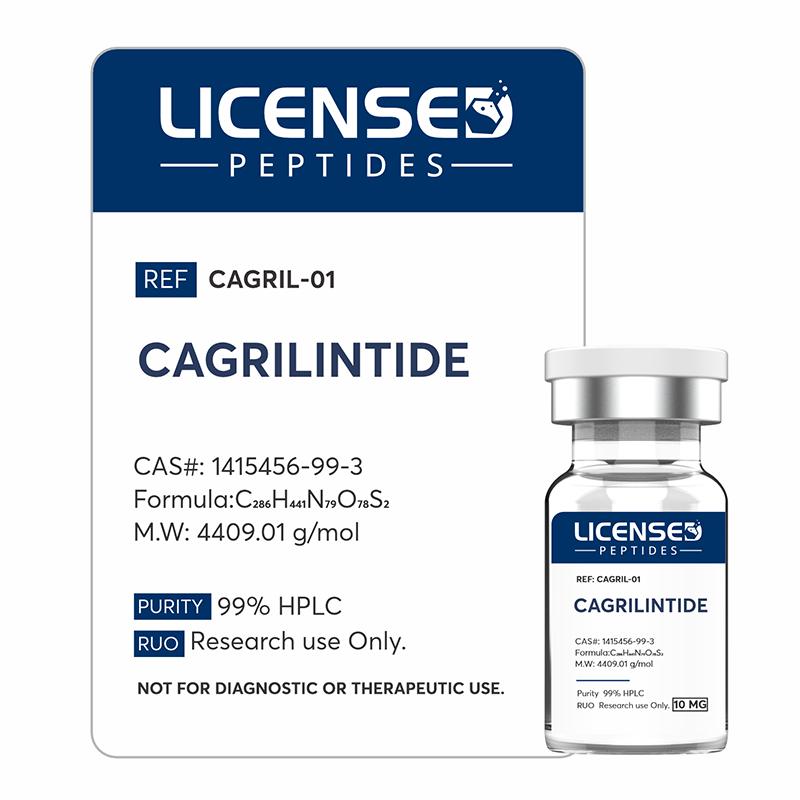
Metabolic research has gone through significant expansion over the past decade. Scientists have investigated peptide-based compounds that influence energy regulation and nutrient signaling. Endocrine pathways have also received a great deal of research attention. While glucagon-like peptide-1 (GLP-1) receptor research has been topical, analysts have examined other biological systems that contribute to appetite regulation, food intake signaling, and glucose homeostasis.
One area of scientific interest is the amylin pathway.¹ Amylin is a naturally occurring peptide hormone. Pancreatic beta cells produce it, and it’s involved in multiple physiological signaling processes. Researchers have spent years studying how changes to amylin may influence biological activity, receptor interactions, and pharmacokinetic characteristics.
Among the compounds emerging from this research is cagrilintide, an investigational long-acting amylin analog. Scientists have explored cagrilintide because of its ability to interact with amylin receptors and related signaling pathways, while exhibiting a substantially longer duration of activity than endogenous amylin.
This article examines what cagrilintide is, how it was developed, its mechanism of action, the biological pathways it targets, and what current clinical research suggests about its role within ongoing metabolic investigations.
Key Takeaways
- Cagrilintide is an investigational long-acting amylin analog developed to mimic selected biological activities of the naturally occurring hormone amylin.
- Amylin is a hormone co-secreted with insulin by pancreatic beta cells, where it contributes to physiological processes associated with food intake, gastric emptying, and glucagon signaling.
- Unlike endogenous amylin, cagrilintide was engineered for prolonged biological activity, allowing researchers to investigate sustained activation of amylin-related pathways.
- Cagrilintide has progressed through multiple phases of clinical research, with ongoing studies continuing to evaluate its biological activity, pharmacokinetics, and long-term effects.
- Researchers are also investigating cagrilintide in combination with GLP-1-based compounds, as these pathways operate through distinct but potentially complementary biological mechanisms.
- Important scientific questions remain unanswered, including aspects of long-term safety, receptor-level pharmacology, and the full scope of amylin pathway biology.
- Cagrilintide is an investigational compound, and current knowledge continues to evolve as additional clinical trial data becomes available.
What Is Cagrilintide?
Cagrilintide is a research peptide that acts like amylin. It was created to copy specific biological functions of amylin. Scientists made structural changes so it lasts longer.
Amylin is a naturally occurring peptide hormone that pancreatic beta cells secrete with insulin when people eat.¹ According to researchers, amylin is involved in several physiological processes related to nutrient signaling, gastric function, and appetite modulation.
Because endogenous amylin has a relatively short half-life, scientists have explored ways to create modified analogs capable of maintaining biological activity for longer periods. Cagrilintide represents one outcome of these efforts.
Cagrilintide at a Glance
| Compound Name | Cagrilintide |
| Classification | Long-acting amylin analog |
| Developer | Novo Nordisk |
| Peptide Type | Synthetic peptide |
| Primary Target | Amylin receptor complexes formed by calcitonin receptors (CTR) and receptor activity-modifying proteins (RAMP1, RAMP2, or RAMP3) |
| Research Area | Metabolic and endocrine research |
| Clinical Development | Investigational |
| FDA Status (June 2026) | Investigational compound; not FDA-approved |
| Combination Program | CagriSema (cagrilintide + semaglutide) |
Definition and Classification
From a pharmacological perspective, cagrilintide is classified as
-
-
- A synthetic peptide analog
- A long-acting amylin analog
- An investigational drug currently being evaluated in Phase 3 clinical development (see the ClinicalTrials.gov study record: NCT04982575).
- A peptide designed to interact with amylin receptor systems
-
Unlike naturally occurring amylin, cagrilintide contains specific molecular modifications intended to improve stability and prolong systemic exposure. These structural changes allow researchers to investigate sustained activation of amylin-related signaling pathways.
Development Background
Cagrilintide was developed by Novo Nordisk as part of its efforts to explore novel peptide-based approaches for metabolic studies. Novo Nordisk investigated cagrilintide in monotherapy and combination trials, notably the CagriSema program.
Interest in amylin analogs predates cagrilintide by several decades. Researchers initially focused on understanding the biological role of endogenous amylin and how it contributes to nutrient sensing and postprandial signaling.
As scientists learned more about amylin biology, they began testing modified analogs. They wanted these analogs to engage receptors longer than natural amylin. This ultimately contributed to the development of cagrilintide, which was specifically developed to function as a long-acting amylin receptor agonist.
Molecular Design
One of the defining characteristics of cagrilintide is its structural similarity to human amylin.
The molecule was designed to retain the ability to interact with biological targets associated with the amylin pathway while incorporating modifications intended to improve pharmacokinetic performance.
These modifications increase molecular stability and contribute to prolonged biological activity compared with native amylin. ¹
As a result, cagrilintide is a long‑acting, engineered amylin analog developed to prolong receptor engagement compared with native amylin. It allows the investigation of sustained amylin receptor activation over longer periods.
Understanding the Amylin Pathway
To understand why cagrilintide is studied, it’s important to first understand the biological role of amylin.
What Is Amylin?
Amylin, also known as islet amyloid polypeptide (IAPP), is a peptide hormone produced and released by pancreatic beta cells. ¹ It’s co-secreted with insulin in response to nutrient intake and forms part of a broader network of hormones involved in metabolic signaling.
Amylin is composed of 37 amino acids and is produced within the pancreas. After nutrient consumption, pancreatic beta cells release insulin and amylin into circulation. Although insulin and amylin are secreted together, they perform distinct biological functions and act through different receptor systems.
Scientists generally describe amylin as a signaling peptide involved in communication between the gastrointestinal tract, pancreas, and central nervous system.
Biological Functions of Amylin
Scientific literature suggests that amylin participates in several physiological processes¹², including
-
-
- Appetite-related signaling
- Regulation of food intake
- Gastric emptying processes
- Glucagon secretion signaling
- Postprandial metabolic responses
-
Importantly, these biological activities occur through complex interactions involving multiple tissues and signaling networks.
Rather than acting through a single pathway, amylin appears to function as part of an integrated physiological system that contributes to nutrient sensing and energy regulation.
The Amylin System
Researchers often refer to the “amylin system” when discussing the broader network of receptors and signaling mechanisms associated with amylin biology.
The amylin system includes:
-
-
- Amylin receptors
- Calcitonin receptor complexes
- Central nervous system signaling pathways
- Peripheral signaling mechanisms
-
These interconnected pathways provide opportunities for academics to examine how amylin-related compounds influence biological processes. Ongoing research into the amylin system extends beyond metabolic physiology and includes investigations into neurological and age-related disorders. For additional background on these emerging areas of study, see our discussion of amylin protein as a therapeutic target in Alzheimer’s disease.
Why Researchers Study the Amylin Pathway
Interest in the amylin pathway has increased because it represents a biological system distinct from several other metabolic signaling pathways currently under investigation.
Investigations continue to examine how amylin signaling contributes to¹²:
-
-
- Energy balance
- Nutrient sensing
- Gastrointestinal signaling
- Hormonal communication networks
- Metabolic regulation
-
Studies continue to explore how amylin receptor activation influences physiological responses across multiple organ systems.
How Does Cagrilintide Work?
Cagrilintide was developed to interact with biological pathways associated with amylin signaling. The current evidence suggests that the peptide exerts its activity through interactions with amylin receptors and related receptor complexes.
Unlike some signaling molecules that act through a single receptor target, amylin biology involves a more complex receptor network.
Amylin Receptors
Amylin receptors are receptor complexes formed when the calcitonin receptor (CTR) associates with one of three receptor activity-modifying proteins (RAMP1, RAMP2, or RAMP3). These receptor configurations are commonly referred to as AMY1, AMY2, and AMY3 receptors and are distributed throughout tissues involved in nutrient sensing, gastrointestinal physiology, and central nervous system signalling. ¹,²
The current literature suggests that activation of these receptor complexes influences pathways involved in food intake regulation, gastric physiology, and energy balance. Scientists continue to investigate how different receptor configurations contribute to distinct biological responses. ¹
Amylin and Calcitonin Receptors
Cagrilintide functions primarily as an amylin receptor agonist. Because amylin receptors are formed from calcitonin receptors and receptor activity-modifying proteins, researchers often discuss amylin receptor pharmacology within the broader calcitonin receptor family.
This relationship helps explain why investigations of amylin signaling frequently examine receptor subtype activity, downstream signaling pathways, and receptor-specific biological responses. Ongoing research continues to explore how activation of different amylin receptor configurations influences physiological outcomes.
Appetite Regulation and Central Signaling
Research suggests that amylin-related signaling involves several brain regions associated with appetite regulation and nutrient sensing.
Studies examining endogenous amylin indicate that signaling occurs through neural pathways that communicate information regarding nutrient intake and gastrointestinal activity. ¹,²
Investigators continue to explore how cagrilintide influences these pathways and whether sustained receptor activation produces distinct signaling effects compared with naturally occurring amylin.
Gastric Emptying and Gastrointestinal Signaling
Amylin signaling has been studied for its key role in regulating gastric motility and gastric emptying, which are important components of postprandial physiology. ¹,²
Gastric emptying refers to the process by which contents move from the stomach into the small intestine. Data suggest that amylin signaling contributes to the regulation of this process. ¹
Scientists have investigated whether amylin agonists can slow gastric emptying; studies assess whether cagrilintide contributes to this effect and how it interacts with GLP‑1 agonists.
Glucagon Secretion and Glucose Regulation
Researchers have also examined the relationship between amylin signaling and glucagon secretion.
Glucagon is a hormone involved in glucose control. Experimental studies suggest that amylin participates in signaling pathways that influence postprandial glucose dynamics and nutrient metabolism. ¹,²
The interactions between amylin signaling, glucagon secretion, and blood glucose regulation (blood sugar control) continue to be investigated in both laboratory and clinical settings.
Why Is Cagrilintide Considered A Long-Acting Amylin Analog?
A defining characteristic of cagrilintide is its prolonged duration of activity compared with endogenous amylin.
Limitations of Native Amylin
Naturally occurring amylin is rapidly cleared from circulation. This relatively short biological lifespan presents challenges for researchers seeking to investigate sustained amylin receptor activation.
Because of this limitation, scientists have explored methods for extending peptide stability and duration.
Structural Modifications
Cagrilintide incorporates specific molecular modifications that distinguish it from endogenous amylin.
These modifications were designed to:
-
-
- Increase molecular stability
- Reduce rapid degradation
- Extend systemic exposure
- Support prolonged receptor engagement
-
These approaches are commonly used throughout peptide research when investigators seek to improve pharmacokinetic characteristics.
Extended Biological Activity
The resulting molecule exhibits prolonged systemic exposure compared with endogenous amylin, which is rapidly cleared from circulation. This extended pharmacokinetic profile allows the investigation of sustained amylin receptor engagement over longer periods than would be possible with native amylin.
The development of long-acting peptide analogs reflects a broader trend within peptide science, where structural engineering is used to optimize biological and pharmacokinetic properties.
Clinical Trials and Human Research
Cagrilintide has progressed through multiple stages of clinical development and is one of the most extensively studied amylin analogs currently under investigation. ⁴,⁶
-
-
- Phase 1 studies evaluated safety, tolerability, and pharmacokinetic characteristics
- Early data from Phase 2 investigations provided insights into biological activity and physiological responses. ⁴
- Phase 3 programs continue to evaluate cagrilintide in larger participant populations, including combination research programs involving semaglutide.
-
Early Clinical Development
Initial clinical studies focused on evaluating safety, tolerability, pharmacokinetics, and biological activity.
Early data from Phase 1 and initial Phase 2 investigations helped researchers evaluate the safety profile, pharmacokinetic characteristics, and biological activity of cagrilintide, supporting progression into larger clinical development programs.
Phase 2 Research
Phase 2 trials explored the biological effects of cagrilintide across larger participant populations.
Researchers evaluated multiple endpoints related to metabolic signaling, body weight regulation, and overall physiological response. ⁴
These studies generated significant scientific interest because they suggested that amylin-based approaches may represent a distinct area of metabolic research beyond existing peptide pathways.
Phase 3 Development Programs
More recently, cagrilintide has advanced into Phase 3 clinical development programs. These trials involve substantially larger participant populations and are designed to evaluate outcomes over extended periods.
Several studies have also examined cagrilintide in combination with other investigational metabolic therapies, reflecting growing scientific interest in multi-pathway approaches.
Ongoing Clinical Trials
Numerous questions remain under investigation, including:
-
-
- Long-term biological effects
- Extended safety profiles
- Pharmacodynamic characteristics
- Receptor-level adaptations
- Combination therapy applications
-
As a result, ongoing clinical trials continue to generate new information regarding the compound’s biological activity and potential future applications.
Has Cagrilintide Received FDA Approval?
Regulatory status is an important consideration when evaluating any investigational peptide undergoing clinical research and development.
As of the time of writing, cagrilintide has been the subject of multiple clinical research programs and has progressed through advanced stages of clinical development. ⁶,⁷,⁸
The U.S. Food and Drug Administration (FDA) evaluates investigational compounds through a structured review process that typically includes preclinical research, Phase 1, Phase 2, and Phase 3 clinical trials. Data generated during these stages are used to determine whether a compound meets regulatory standards for approval.
Cagrilintide has attracted significant scientific interest because of its role as a long-acting amylin analog and its investigation both as a standalone compound and in combination research programs. However, regulatory decisions are based on comprehensive reviews of clinical data, manufacturing information, and safety assessments.
Because regulatory status can change as new information becomes available, researchers should consult official FDA announcements and sponsor communications for the most current information regarding cagrilintide’s approval status.
Why FDA Approval Matters in Scientific Research
FDA approval is viewed as a significant milestone in drug development because it reflects the completion of extensive regulatory review. Before approval, compounds are investigational and continue to be studied through controlled research programs.
For scientists and industry observers, the clinical development of cagrilintide provides valuable insights into amylin biology, receptor pharmacology, and the broader field of peptide-based metabolic research, regardless of the outcome of ongoing regulatory evaluations.
Cagrilintide and GLP-1 Research
Although cagrilintide is an amylin analog, it is frequently discussed alongside GLP-1 receptor research because both pathways are involved in nutrient-related signaling.
What Is GLP-1?
Glucagon-like peptide-1 (GLP-1) is a naturally occurring hormone involved in glucose-dependent signaling and gastrointestinal physiology. GLP-1 receptor agonists have become a major area of peptide research and pharmaceutical development.
Different Biological Pathways
Despite being discussed together, GLP-1 and amylin operate through distinct biological mechanisms.
GLP-1 signaling primarily occurs through GLP-1 receptors, whereas cagrilintide acts through amylin and calcitonin receptor-related pathways.
Because these systems are biologically distinct, analysts have explored whether they may provide complementary signaling effects.
Combination Therapy Research
The possibility of combining different metabolic signaling pathways has become an important area of scientific investigation.
Researchers have proposed that activating multiple pathways simultaneously may provide opportunities to study more comprehensive metabolic signaling responses.
This concept has contributed to interest in combination therapy research involving cagrilintide.
CagriSema Development
One of the most widely discussed areas of cagrilintide research involves its investigation alongside semaglutide in a combination known as CagriSema’. ⁷,⁸,⁹
This combination is still under investigation in clinical development programs to better understand how simultaneous activation of amylin-related and GLP-1-related pathways influences biological outcomes.
Current Limitations of the Evidence
Cagrilintide is an investigational compound. Although several clinical trials have been completed or are ongoing, scientific understanding continues to evolve.
Several unanswered questions remain regarding:
-
-
- Long-term receptor adaptation
- Extended safety observations
- Pharmacokinetic variability
- Biological mechanisms
- Combination pathway interactions
-
These questions are common during the development of novel peptide-based compounds. Clinical development is designed to address these knowledge gaps. As additional trial results become available, researchers will gain a clearer understanding of the peptide’s biological profile and long-term research significance.
FAQs
What Is Cagrilintide?
Cagrilintide is an investigational long-acting amylin analog designed to interact with amylin receptor systems and related biological pathways.
Is Cagrilintide FDA-Approved?
Regulatory status can change over time. Researchers should consult the most current regulatory information from relevant authorities for the latest updates. As of the time of writing, cagrilintide has not yet been approved by the FDA.
How Does Cagrilintide Work?
Research suggests that cagrilintide acts through amylin receptors and calcitonin receptor-related signaling pathways.
What is CagriSema?
CagriSema is an investigational combination involving cagrilintide with semaglutide that is currently being evaluated in clinical development programs.
Are Clinical Trials Still Ongoing?
Yes. Multiple ongoing clinical trials continue to investigate various aspects of cagrilintide biology and clinical development.
Conclusion
Cagrilintide is an investigational long-acting amylin analog developed to explore the biological potential of sustained amylin receptor activation. By interacting with amylin and calcitonin receptor-related pathways, the peptide has become an important focus of metabolic research and clinical development.
Despite encouraging progress, important questions remain regarding long-term effects, receptor pharmacology, and future applications. Ongoing clinical trials will continue to shape scientific understanding of this compound and its role within metabolic research.
As interest in peptide science continues to expand, cagrilintide represents an important example of how advances in peptide engineering are enabling researchers to investigate increasingly sophisticated biological pathways.
Disclaimer: All products referenced by Licensed Peptides are intended exclusively for laboratory research purposes. They are not intended for human consumption, medical use, diagnosis, treatment, cure, or prevention of any disease. This article is provided solely for scientific and educational purposes. Licensed Peptides products are supplied for research use only.
References
-
- Hay DL, Chen S, Lutz TA, Parkes DG, Roth JD. Amylin: Pharmacology, Physiology, and Clinical Potential. Pharmacological Reviews. 2015;67(3):564-600.
- Lutz TA. Control of food intake and energy expenditure by amylin—therapeutic implications. International Journal of Obesity. 2009;33(Suppl 1):S24-S27.
- Lutz TA. The role of amylin in the control of energy homeostasis. American Journal of Physiology-Regulatory, Integrative and Comparative Physiology. 2010;298(6):R1475-R1484.
- Lau DCW, Erichsen L, Francisco AM, et al. Once-weekly cagrilintide for weight management in adults with overweight and obesity: a multicentre, randomised, double-blind, placebo-controlled and active-controlled phase 2 trial. The Lancet. 2021;398(10317):2160-2172.
- Knop FK, Aroda VR, Astrup A, et al. The Rise of Amycretin and Other Amylin-Based Therapies in Metabolic Research. Nature Reviews Endocrinology. 2024;20:1-17.
- Frias JP, Deenadayalan S, Erichsen L, Knop FK, Lingvay I, Macura S, et al. Efficacy and safety of co-administered once-weekly cagrilintide 2.4 mg with once-weekly semaglutide 2.4 mg in type 2 diabetes: a multicentre, randomised, double-blind, active-controlled, phase 2 trial. The Lancet. 2023;402(10403):720-730. doi:10.1016/S0140-6736(23)01163-7.
- Novo Nordisk. Cagrilintide Clinical Development Program. ClinicalTrials.gov and sponsor communications. Accessed June 2026.
- Novo Nordisk. CagriSema Clinical Development Program. ClinicalTrials.gov and sponsor communications. Accessed June 2026.
- ClinicalTrials.gov. Studies Investigating Cagrilintide and CagriSema. U.S. National Library of Medicine. Accessed June 2026.

