
99%+ Purity
Guaranteed per batch

4.9 847 verified reviews

4.9 847 verified reviews
99%+ HPLC Purity —
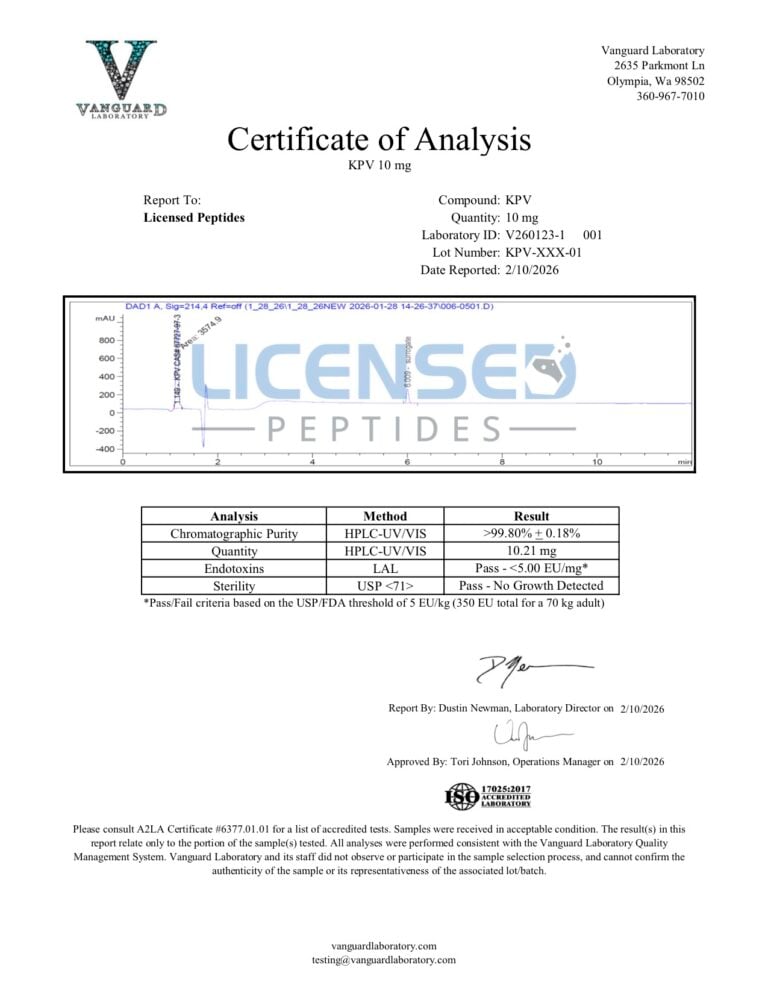
Independently verified by accredited US laboratory
Endotoxin-Screened —
LAL tested, LPS-free, endotoxin report available
GMP-Certified Manufacturing —
USA facility, ISO 9001:2015
Lyophilized for Stability —
Shipped cold-packed, intact for reconstitution
Buy KPV peptide for research use only. Every batch we supply undergoes independent HPLC purity analysis, mass spectrometry identity verification, and screening for endotoxins and heavy metals before release. Certificates of Analysis for every batch are available.
At Licensed Peptides™, we supply research-grade KPV made in GMP-certified facilities within the U.S. Our manufacturing team understands the requirements of laboratory and scientific research, and as such, produces each batch under strict quality control. Additionally, we independently verify each batch through accredited laboratories to confirm purity, identity, sterility, and reliability through a 6-point quality verification process.
When you buy KPV peptide from Licensed Peptides, you’ll receive a compound that upholds our research-grade standards:
• SPPS-Synthesized Peptides: Our KPV peptide is synthesized via solid-phase peptide synthesis (SPPS) to ensure accuracy in its sequence and maximum purity.
• Lyophilized KPV Peptide for Stability: Freeze-drying helps preserve its integrity while shipping, storing, and handling in the lab.
• 99%+ HPLC-Verified Purity: Third-party labs test every batch of KPV to confirm purity levels of 99%+.
• Identity Confirmation Through Mass Spectrometry: We confirm the peptide’s molecular identity and composition.
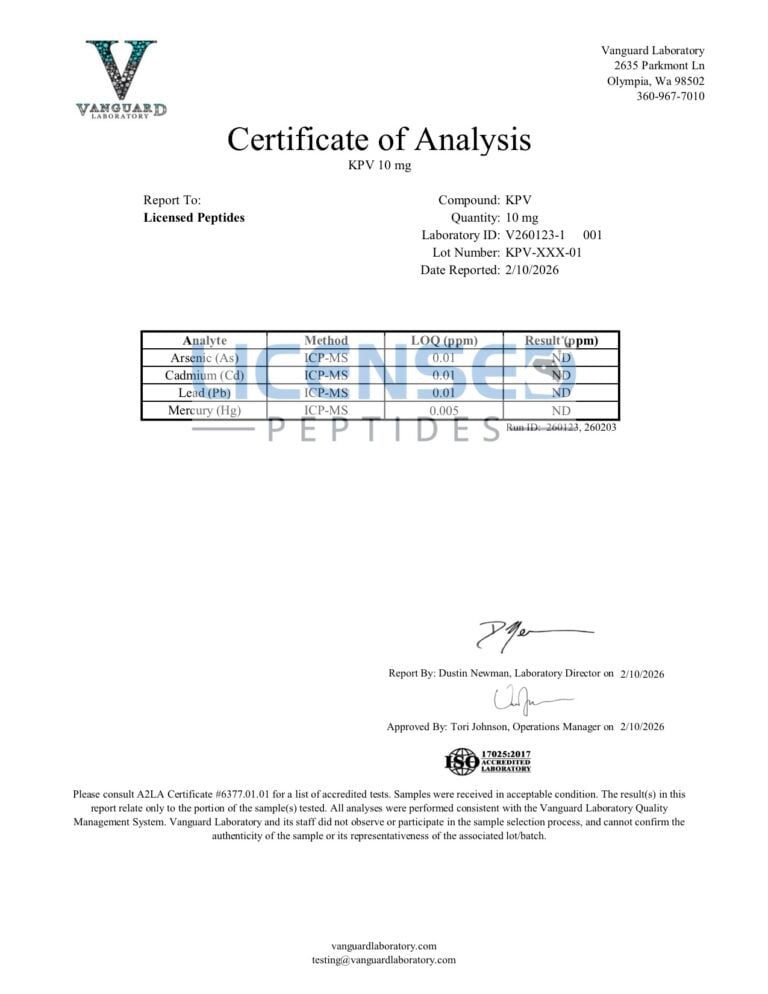
• Heavy-Metal & Endotoxin Screening: We test each batch for bacterial endotoxins, lipopolysaccharides (LPS), and heavy metals. Our KPV is endotoxin-free and LPS-free.
• Certificates of Analysis: Every batch of KPV comes with transparent documentation that provides detailed analytical results.
• USA GMP Manufacturing: Our peptides are manufactured in GMP-certified facilities in the U.S., upholding the highest standards of quality.
• Same-Day Shipping: We ship any order in stock (placed before our daily cutoff) on the same day within the US.
• U.S.-Based Expert Support for Researchers: We have a responsive team that understands the needs of researchers. Contact us anytime by phone at +1 (855) 322-2214 or email [email protected] with any questions.
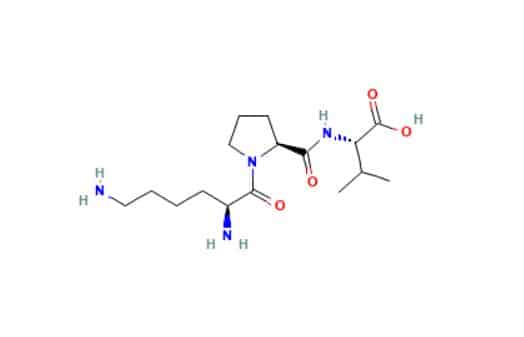
KPV is a synthetic peptide that’s made up of three amino acids: Lys-Pro-Val. These three amino acids are the C-terminal fragment (position 11-13) of the alpha-melanocyte-stimulating hormone (α-MSH), which is a naturally occurring melanocortin peptide that’s involved in the regulation of inflammation and immune responses.
Researchers use the KPV peptide to study inflammatory signaling, epithelial biology, and communication pathways within the immune system.
| Peptide Class | Synthetic Tripeptide |
| Sequence | Lys-Pro-Val (KPV) |
| Quantity | Choose from 1, 3, 5 & 10 Vial Options |
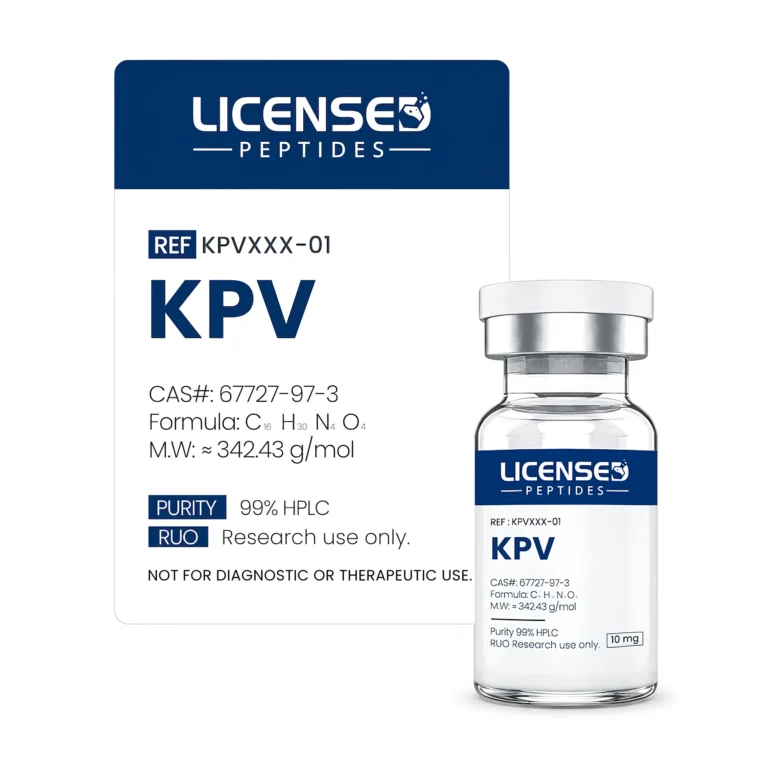
| Strength | 10mg Per Vial |
| Purity | 99%+ HPLC Verified |
| Form | Lyophilized Powder |
| Manufacturing | USA GMP Facility |
| Testing | Third-Party Verified |
| Documentation | Certificate of Analysis Available |
| Storage | -20°C Long-Term |
| Application | Research Use Only |
Licensed Peptides supplies KPV Peptide exclusively for research. It’s not approved for human or veterinary use. Any discussion concerning the biological activity of KPV refers to preclinical and in vitro studies only.
| Molecular formula | C₁₆H₃₀N₄O₄ |
|---|---|
| Molecular weight | 342.43 g/mol |
| CAS number | 67727-97-3 |
| PubChem CID | 125672 |
| Form supplied | Lyophilized powder |
| Storage | -20°C |
| Application | Research use only |
KPV is a laboratory research material used to examine peptide behavior, receptormediated signaling, and inflammatory pathway responses in controlled experimental models. References to biological effects are provided for scientific context only and must not be interpreted as claims of therapeutic, diagnostic, or clinical benefit. This product is not offered for human or veterinary use.
KPV stands out among research peptides because it is:
Investigators appreciate that KPV frequently demonstrates biological relevance in model systems.
In laboratory models, KPV may be used to investigate epithelial integrity, mucosal signaling, and pathway-response behavior. Any mention of intestinal, colitis-related, or barrier-related systems is provided only for research context and must not be interpreted as a human-use claim.
KPV may be used in laboratory studies involving epithelial signaling and dermal model systems. References to skin or wound-related research are limited to experimental context only and do not imply therapeutic, cosmetic, or clinical benefit.
Research-grade KPV 10mg is typically produced under strict conditions to ensure:
These manufacturing priorities help ensure the peptide behaves predictably in scientific studies.
For laboratory research use only. Products on this website are intended solely for in-vitro research. They are not medicines, have not been evaluated by the FDA, and are not intended to diagnose, treat, cure, or prevent any disease. Any administration to humans or animals is strictly prohibited.


It’s important to store peptides correctly in order to preserve their structure and stability. Here at Licensed Peptides, we supply KPV in a lyophilized (freeze-dried) form to keep it stable during shipping and while storing.
Lyophilization, sometimes called freeze-drying, is a process that removes moisture from peptides by freezing them and exposing them to low pressure. During this process, water sublimates directly from solid to vapor, resulting in a stable, crystalline white powder.
Note that lyophilized KPV will tolerate storage conditions well, and it can stay stable for longer.
Store unopened lyophilized KPV at room temperature for short periods without compromising peptide quality. Ensure you store the KPV vials in a cool, dry environment and keep them away from excessive heat, humidity, and direct light.
Refrigerate KPV vials below 4°C (39°F) for near-term experimental use. At this temperature, lyophilized KPV may retain its integrity for several weeks.
Place unopened vials in a freezer. Researchers commonly use temperatures of -20°C (-4°F), while -80°C (-112°F) provides an additional margin of protection for long-term preservation and archival storage.
Once you reconstitute your KPV peptide with bacteriostatic water, refrigeration becomes essential.
Important: In the right conditions, reconstituted KPV peptide solutions may remain suitable for use for up to 30 days.
For laboratory research use only. Not for human or veterinary use.

We supply KPV exclusively for research. Our 6-point verification process is designed to confirm the material supplied is a certified peptide for use in analytical testing, in vitro research, and experimental models.
We understand the importance of purity and sterility in research compounds; that’s why we manufacture our peptides under strict quality standards in GMP-certified facilities. We also work with independent accredited laboratories who verify each batch, using our 6-point verification process:
Because KPV is the active C-terminal fragment of α-MSH,3 it’s now the subject of many studies. Researchers are studying its involvement in different signaling pathways in immune communication and epithelial biology. Studies reveal that KPV interacts with different cellular processes,1 which is why it’s an interesting compound for mechanistic research.
Currently, researchers are investigating KPV in:
Researchers examine how KPV interacts with inflammatory responses mediated by cytokines. This is because KPV may influence signaling pathways that are linked to pro-inflammatory mediators.3 They continue evaluating these interactions across different tissue models to determine whether KPV exhibits consistent activity under varying experimental conditions.
One of the most extensively studied mechanisms of KPV involves the nuclear factor kappa-light-chain-enhancer of activated B cells (NF-κB) signaling pathway. Preclinical research indicates that KPV may influence NF-κB activation and the downstream expression of inflammatory signaling molecules.2 Because NF-κB regulates numerous genes involved in immune communication, this pathway remains an active area of peptide research.
Researchers have also explored the interaction of KPV with mitogen-activated protein kinase (MAPK) pathways. These pathways regulate cellular responses to external stimuli. Scientists continue to study these mechanisms to better understand the regulation of cellular communication networks by peptides.
Unlike many larger peptides that exhibit limited oral stability in experimental settings, researchers continue to study the transport of KPV through the Peptide Transporter 1 (PepT1) system expressed within intestinal epithelial cells.1 Scientists are interested in this transport mechanism because it may help explain how small tripeptides behave differently from larger peptide molecules during laboratory investigations.
| Characteristic | KPV | α-MSH | Modified KPV Analogs (e.g., KdPT) |
| Peptide Length | 3 Amino Acids | 13 Amino Acids | Modified Tripeptides |
| Parent Molecule | C-terminal Fragment of α-MSH (amino acids 11-13)3 | Full Melanocortin Peptide | Synthetic Derivatives |
| Primary Research Focus | Cellular signaling, epithelial biology, inflammatory pathwayspeptide | Melanocortin receptor biology | Structure-activity relationship studies |
| Molecular Complexity | Low | Moderate | Moderate |
| Current Research | Preclinical and laboratory studies | Extensive laboratory investigation | Experimental analog research |
Licensed Peptides supplies KPV Peptide exclusively for research. It’s not approved for human or veterinary use. Any discussion concerning the biological activity of KPV refers to preclinical and in vitro studies only.
1. Dalmasso G, Charrier-Hisamuddin L, Nguyen HT, Yan Y, Sitaraman SV, Merlin D. PepT1-mediated tripeptide KPV uptake reduces intestinal inflammation. Gastroenterology. 2008;134(1):166-178. doi:10.1053/j.gastro.2007.10.026
2. Land SC. Inhibition of cellular and systemic inflammation cues in human bronchial epithelial cells by melanocortin-related peptides: mechanism of KPV action and a role for MC3R agonists. Int J Physiol Pathophysiol Pharmacol. 2012;4(2):59-73.
3. Luger TA, Brzoska T. Alpha-MSH related peptides: a new class of anti-inflammatory and immunomodulating drugs. Ann Rheum Dis. 2007;66(suppl 3):iii52-iii55. doi:10.1136/ard.2007.079780
For laboratory research use only. Not for human or veterinary use.
At Licensed Peptides™, quality is a controlled, repeatable process. Every batch of KPV follows a strict, pharma-grade workflow, ensuring the peptides you purchase are stable and pure, from synthesis to delivery.
We synthesize all our KPV peptides in sterile, controlled environments to reduce the risk of contamination. This ensures consistency across every single batch.
In order to verify purity with precision, we use advanced High-Performance Liquid Chromatography (HPLC) analysis. This means your peptides are free from unwanted chemicals and impurities.
We use mass spectrometry to confirm molecular identity and test each batch of KPV for endotoxins and lipopolysaccharides (LPS) using Limulus Amebocyte Lysate (LAL). Each batch also undergoes HPLC purity analysis.
We supply KPV peptides with verified endotoxin reports. Low endotoxin levels are important in sensitive receptor-signaling studies where inflammatory contaminants may influence the outcome of the experiment.
Our manufacturing process begins with rigorously tested amino acids and validated reagents. This procedure protects the molecular integrity of KPV throughout peptide synthesis.
Freeze-dried KPV peptide is more stable, which means it’s less likely to degrade during experimentation, and it keeps its structural integrity intact. This ensures it’s reliable for lab work.
We seal each KPV peptide vial in nitrogen to minimize exposure to oxygen and moisture. This preserves integrity while you’re transporting and storing the peptide.
From peptide synthesis to final fulfillment, we meet the expectations of researchers who need dependable sourcing to ensure they create reproducible studies.
For laboratory research use only. Not for human or veterinary use.
We understand that timing and product integrity are critical for research.
Paid, in-stock orders placed before our 4:00 PM PST cut-off are typically shipped the same business day from within the United States.
We use expedited domestic carriers for delivery within the United States. Shipping times are estimates and delivery dates are not guaranteed.
We store our KPV peptides in industrial-grade freezers prior to shipment to support stability and purity.
We carefully pack each order to reduce exposure to temperature fluctuations, moisture, and physical damage during transit.
We provide tracking information immediately after shipment so researchers can monitor delivery progress.
No international delays. No customs uncertainty. Just dependable fulfillment from a U.S.-based operation.
For laboratory research use only. Not for human or veterinary use.
| pack | 1 pack, 3 pack, 5 pack, 10 pack |
|---|
Buy KPV peptide for research use only. Every batch we supply undergoes independent HPLC purity analysis, mass spectrometry identity verification, and screening for endotoxins and heavy metals before release. Certificates of Analysis for every batch are available.
At Licensed Peptides™, we supply research-grade KPV made in GMP-certified facilities within the U.S. Our manufacturing team understands the requirements of laboratory and scientific research, and as such, produces each batch under strict quality control. Additionally, we independently verify each batch through accredited laboratories to confirm purity, identity, sterility, and reliability through a 6-point quality verification process.
When you buy KPV peptide from Licensed Peptides, you’ll receive a compound that upholds our research-grade standards:
• SPPS-Synthesized Peptides: Our KPV peptide is synthesized via solid-phase peptide synthesis (SPPS) to ensure accuracy in its sequence and maximum purity.
• Lyophilized KPV Peptide for Stability: Freeze-drying helps preserve its integrity while shipping, storing, and handling in the lab.
• 99%+ HPLC-Verified Purity: Third-party labs test every batch of KPV to confirm purity levels of 99%+.
• Identity Confirmation Through Mass Spectrometry: We confirm the peptide’s molecular identity and composition.
• Heavy-Metal & Endotoxin Screening: We test each batch for bacterial endotoxins, lipopolysaccharides (LPS), and heavy metals. Our KPV is endotoxin-free and LPS-free.
• Certificates of Analysis: Every batch of KPV comes with transparent documentation that provides detailed analytical results.
• USA GMP Manufacturing: Our peptides are manufactured in GMP-certified facilities in the U.S., upholding the highest standards of quality.
• Same-Day Shipping: We ship any order in stock (placed before our daily cutoff) on the same day within the US.
• U.S.-Based Expert Support for Researchers: We have a responsive team that understands the needs of researchers. Contact us anytime by phone at +1 (855) 322-2214 or email [email protected] with any questions.
KPV is a synthetic peptide that’s made up of three amino acids: Lys-Pro-Val. These three amino acids are the C-terminal fragment (position 11-13) of the alpha-melanocyte-stimulating hormone (α-MSH), which is a naturally occurring melanocortin peptide that’s involved in the regulation of inflammation and immune responses.
Researchers use the KPV peptide to study inflammatory signaling, epithelial biology, and communication pathways within the immune system.
| Peptide Class | Synthetic Tripeptide |
| Sequence | Lys-Pro-Val (KPV) |
| Quantity | Choose from 1, 3, 5 & 10 Vial Options |
| Strength | 10mg Per Vial |
| Purity | 99%+ HPLC Verified |
| Form | Lyophilized Powder |
| Manufacturing | USA GMP Facility |
| Testing | Third-Party Verified |
| Documentation | Certificate of Analysis Available |
| Storage | -20°C Long-Term |
| Application | Research Use Only |
Licensed Peptides supplies KPV Peptide exclusively for research. It’s not approved for human or veterinary use. Any discussion concerning the biological activity of KPV refers to preclinical and in vitro studies only.
| Molecular formula | C₁₆H₃₀N₄O₄ |
|---|---|
| Molecular weight | 342.43 g/mol |
| CAS number | 67727-97-3 |
| PubChem CID | 125672 |
| Form supplied | Lyophilized powder |
| Storage | -20°C |
| Application | Research use only |
KPV is a laboratory research material used to examine peptide behavior, receptormediated signaling, and inflammatory pathway responses in controlled experimental models. References to biological effects are provided for scientific context only and must not be interpreted as claims of therapeutic, diagnostic, or clinical benefit. This product is not offered for human or veterinary use.
KPV stands out among research peptides because it is:
Investigators appreciate that KPV frequently demonstrates biological relevance in model systems.
In laboratory models, KPV may be used to investigate epithelial integrity, mucosal signaling, and pathway-response behavior. Any mention of intestinal, colitis-related, or barrier-related systems is provided only for research context and must not be interpreted as a human-use claim.
KPV may be used in laboratory studies involving epithelial signaling and dermal model systems. References to skin or wound-related research are limited to experimental context only and do not imply therapeutic, cosmetic, or clinical benefit.
Research-grade KPV 10mg is typically produced under strict conditions to ensure:
These manufacturing priorities help ensure the peptide behaves predictably in scientific studies.
For laboratory research use only. Products on this website are intended solely for in-vitro research. They are not medicines, have not been evaluated by the FDA, and are not intended to diagnose, treat, cure, or prevent any disease. Any administration to humans or animals is strictly prohibited.
It’s important to store peptides correctly in order to preserve their structure and stability. Here at Licensed Peptides, we supply KPV in a lyophilized (freeze-dried) form to keep it stable during shipping and while storing.
Lyophilization, sometimes called freeze-drying, is a process that removes moisture from peptides by freezing them and exposing them to low pressure. During this process, water sublimates directly from solid to vapor, resulting in a stable, crystalline white powder.
Note that lyophilized KPV will tolerate storage conditions well, and it can stay stable for longer.
Store unopened lyophilized KPV at room temperature for short periods without compromising peptide quality. Ensure you store the KPV vials in a cool, dry environment and keep them away from excessive heat, humidity, and direct light.
Refrigerate KPV vials below 4°C (39°F) for near-term experimental use. At this temperature, lyophilized KPV may retain its integrity for several weeks.
Place unopened vials in a freezer. Researchers commonly use temperatures of -20°C (-4°F), while -80°C (-112°F) provides an additional margin of protection for long-term preservation and archival storage.
Once you reconstitute your KPV peptide with bacteriostatic water, refrigeration becomes essential.
Important: In the right conditions, reconstituted KPV peptide solutions may remain suitable for use for up to 30 days.
For laboratory research use only. Not for human or veterinary use.
We supply KPV exclusively for research. Our 6-point verification process is designed to confirm the material supplied is a certified peptide for use in analytical testing, in vitro research, and experimental models.
We understand the importance of purity and sterility in research compounds; that’s why we manufacture our peptides under strict quality standards in GMP-certified facilities. We also work with independent accredited laboratories who verify each batch, using our 6-point verification process:
Because KPV is the active C-terminal fragment of α-MSH,3 it’s now the subject of many studies. Researchers are studying its involvement in different signaling pathways in immune communication and epithelial biology. Studies reveal that KPV interacts with different cellular processes,1 which is why it’s an interesting compound for mechanistic research.
Currently, researchers are investigating KPV in:
Researchers examine how KPV interacts with inflammatory responses mediated by cytokines. This is because KPV may influence signaling pathways that are linked to pro-inflammatory mediators.3 They continue evaluating these interactions across different tissue models to determine whether KPV exhibits consistent activity under varying experimental conditions.
One of the most extensively studied mechanisms of KPV involves the nuclear factor kappa-light-chain-enhancer of activated B cells (NF-κB) signaling pathway. Preclinical research indicates that KPV may influence NF-κB activation and the downstream expression of inflammatory signaling molecules.2 Because NF-κB regulates numerous genes involved in immune communication, this pathway remains an active area of peptide research.
Researchers have also explored the interaction of KPV with mitogen-activated protein kinase (MAPK) pathways. These pathways regulate cellular responses to external stimuli. Scientists continue to study these mechanisms to better understand the regulation of cellular communication networks by peptides.
Unlike many larger peptides that exhibit limited oral stability in experimental settings, researchers continue to study the transport of KPV through the Peptide Transporter 1 (PepT1) system expressed within intestinal epithelial cells.1 Scientists are interested in this transport mechanism because it may help explain how small tripeptides behave differently from larger peptide molecules during laboratory investigations.
| Characteristic | KPV | α-MSH | Modified KPV Analogs (e.g., KdPT) |
| Peptide Length | 3 Amino Acids | 13 Amino Acids | Modified Tripeptides |
| Parent Molecule | C-terminal Fragment of α-MSH (amino acids 11-13)3 | Full Melanocortin Peptide | Synthetic Derivatives |
| Primary Research Focus | Cellular signaling, epithelial biology, inflammatory pathwayspeptide | Melanocortin receptor biology | Structure-activity relationship studies |
| Molecular Complexity | Low | Moderate | Moderate |
| Current Research | Preclinical and laboratory studies | Extensive laboratory investigation | Experimental analog research |
Licensed Peptides supplies KPV Peptide exclusively for research. It’s not approved for human or veterinary use. Any discussion concerning the biological activity of KPV refers to preclinical and in vitro studies only.
1. Dalmasso G, Charrier-Hisamuddin L, Nguyen HT, Yan Y, Sitaraman SV, Merlin D. PepT1-mediated tripeptide KPV uptake reduces intestinal inflammation. Gastroenterology. 2008;134(1):166-178. doi:10.1053/j.gastro.2007.10.026
2. Land SC. Inhibition of cellular and systemic inflammation cues in human bronchial epithelial cells by melanocortin-related peptides: mechanism of KPV action and a role for MC3R agonists. Int J Physiol Pathophysiol Pharmacol. 2012;4(2):59-73.
3. Luger TA, Brzoska T. Alpha-MSH related peptides: a new class of anti-inflammatory and immunomodulating drugs. Ann Rheum Dis. 2007;66(suppl 3):iii52-iii55. doi:10.1136/ard.2007.079780
For laboratory research use only. Not for human or veterinary use.
At Licensed Peptides™, quality is a controlled, repeatable process. Every batch of KPV follows a strict, pharma-grade workflow, ensuring the peptides you purchase are stable and pure, from synthesis to delivery.
We synthesize all our KPV peptides in sterile, controlled environments to reduce the risk of contamination. This ensures consistency across every single batch.
In order to verify purity with precision, we use advanced High-Performance Liquid Chromatography (HPLC) analysis. This means your peptides are free from unwanted chemicals and impurities.
We use mass spectrometry to confirm molecular identity and test each batch of KPV for endotoxins and lipopolysaccharides (LPS) using Limulus Amebocyte Lysate (LAL). Each batch also undergoes HPLC purity analysis.
We supply KPV peptides with verified endotoxin reports. Low endotoxin levels are important in sensitive receptor-signaling studies where inflammatory contaminants may influence the outcome of the experiment.
Our manufacturing process begins with rigorously tested amino acids and validated reagents. This procedure protects the molecular integrity of KPV throughout peptide synthesis.
Freeze-dried KPV peptide is more stable, which means it’s less likely to degrade during experimentation, and it keeps its structural integrity intact. This ensures it’s reliable for lab work.
We seal each KPV peptide vial in nitrogen to minimize exposure to oxygen and moisture. This preserves integrity while you’re transporting and storing the peptide.
From peptide synthesis to final fulfillment, we meet the expectations of researchers who need dependable sourcing to ensure they create reproducible studies.
For laboratory research use only. Not for human or veterinary use.
We understand that timing and product integrity are critical for research.
Paid, in-stock orders placed before our 4:00 PM PST cut-off are typically shipped the same business day from within the United States.
We use expedited domestic carriers for delivery within the United States. Shipping times are estimates and delivery dates are not guaranteed.
We store our KPV peptides in industrial-grade freezers prior to shipment to support stability and purity.
We carefully pack each order to reduce exposure to temperature fluctuations, moisture, and physical damage during transit.
We provide tracking information immediately after shipment so researchers can monitor delivery progress.
No international delays. No customs uncertainty. Just dependable fulfillment from a U.S.-based operation.
For laboratory research use only. Not for human or veterinary use.
| pack | 1 pack, 3 pack, 5 pack, 10 pack |
|---|
Guaranteed per batch

Independent lab verified

Vanguard Laboratory · ISO/IEC 17025

USA-manufactured

Free FedEx on $200+
Every batch is independently tested before it ships. Full documentation available for every product.
 99%+ — Passes ≥99%
Confirmed — 1419.6 m/z
<1.0 EU/mg — LPS-Free
No growth detected
White lyophilized powder
All 15 residues confirmed
±0.2% — Within spec
Vanguard Laboratory · ISO/IEC 17025 · A2LA #6377.01.01
GMP / ISO 9001:2015
2026
Verified
99%+ — Passes ≥99%
Confirmed — 1419.6 m/z
<1.0 EU/mg — LPS-Free
No growth detected
White lyophilized powder
All 15 residues confirmed
±0.2% — Within spec
Vanguard Laboratory · ISO/IEC 17025 · A2LA #6377.01.01
GMP / ISO 9001:2015
2026
Verified
 Download Full COA / HPLC Report (PDF)
Verify With Vanguard Laboratory
Download Full COA / HPLC Report (PDF)
Verify With Vanguard Laboratory

Not all peptide vendors hold themselves to the same verification standards.
| Verification Standard | Licensed Peptides | Generic Vendors |
|---|---|---|
| HPLC Purity Analysis |  99%+ Every Batch 99%+ Every Batch |
 Often Not Disclosed Often Not Disclosed |
| Mass Spectrometry Identity | Sequence Confirmed |
Rarely Available |
| Endotoxin Screening (LAL) | Every Product |
Industry Exception |
| GMP-Certified USA Manufacture | ISO 9001:2015 |
Often Overseas |
| COA Published & Downloadable | Every Lot |
Inconsistent |
| Same-Day USA Fulfillment | Before 4PM PST |
3-10 Day Lead Time |
KPV is a synthetic tripeptide composed of the amino acid sequence Lys-Pro-Val. It represents the C-terminal fragment of alpha-melanocyte-stimulating hormone (α-MSH) and continues to be investigated in laboratory research involving cellular signaling, epithelial biology, and inflammatory pathways.
Researchers study KPV in different areas, such as:
• Cytokine signalling
• NF-κB pathway regulation
• Epithelial biology
• Mucosal barrier models
• Cellular communication
• Structure-activity relationship studies
Here at Licensed Peptides, we verify the quality of our KPV through the following independent checks:
• HPLC purity analysis
• Mass spectrometry identity verification
• Endotoxin and LPS screening
• Screening for heavy metals
• Visual inspection of quality
Researchers investigate KPV using several laboratory delivery methods, including exposure to cell culture, oral transport models, topical research applications, and KPV peptide preparation within controlled preclinical animal studies.
We do not provide dosing recommendations or administration guidance for human use.
HPLC is High-Performance Liquid Chromatography, which separates peptide material from potential impurities. A value of 99%+ means that the KPV peptide represents at least 99% of the analyzed sample.
Store unopened lyophilized vials at -20°C or below for long-term preservation. Once reconstituted, refrigerate the solution below 4°C and protect it from repeated freeze-thaw cycles.
Researchers choose Licensed Peptides because every batch includes:
• 99%+ HPLC-verified purity
• Third-party analytical testing
• Mass spectrometry identity confirmation
• Endotoxin screening
• Batch-specific Certificates of Analysis
• USA GMP manufacturing
• Reliable domestic fulfillment
Background articles from the Licensed Peptides research library. All products are supplied for laboratory research use only.
Not all peptide vendors hold themselves to the same verification standards.
99.4% HPLC Verified · Endotoxin-Screened · GMP-Certified ·
Free FedEx 2-Day on $200+
You cannot copy content of this page
Third-party tested peptides, shipped cold from the U.S. in 1–2 days.
Shop all peptides