Need help? Call Or Text us, and a team member will be happy to assist you. +1 (855) 322-2214
Need help? Call Or Text us, and a team member will be happy to assist you. +1 (855) 322-2214
Synergistic Regeneration: Integrating BPC-157, Thymosin Beta-4, and GHK-Cu for Healing
Disclaimer: All articles and product details provided on this website are intended for educational and informational purposes only. The products listed here are for in-vitro research only. In-vitro studies are conducted outside of living organisms. These products are not intended as medicines or drugs and have not been approved by the FDA to prevent, treat, or cure any medical condition, ailment, or disease. The direct or indirect administration of these substances to humans or animals is unequivocally prohibited under applicable law.
Overview
BPC-157, Thymosin Beta-4 (TB-500), and GHK-Cu have each been widely investigated for their roles in tissue repair, modulation of inflammation, and cellular regeneration. Individually, they have shown potential to accelerate wound closure, support angiogenesis, limit fibrosis, and fine-tune immune activity across multiple organ systems. Although their mechanisms differ, they converge on a common aim: restoring homeostasis and optimizing tissue function after injury or physiological stress.
This article examines the emerging rationale for combining these peptides. By aligning complementary mechanisms—vascular support, matrix remodeling, inflammation control, and cytoprotection—co-administration may yield synergistic benefits that exceed the effects of any single agent. We summarize key biology and preclinical findings to clarify how BPC-157, TB-500, and GHK-Cu might be layered to enhance tissue repair, performance recovery, and long-term resilience.
BPC-157: Body Protection Compound at a Glance
BPC-157 is a 15–amino acid peptide identified in gastric juice and noted for broad regenerative actions across gut, tendon, muscle, bone, and nerve models. It exhibits stability in harsh environments (including gastric acid) and has shown activity when evaluated orally, topically, or via subcutaneous routes in research settings.
Core Mechanisms
- Angiogenesis & endothelial protection. BPC-157 promotes endothelial migration and enhances VEGF signaling, fostering capillary growth and perfusion in injured tissues.
- Matrix support with tempered scarring. It increases fibroblast activity and early, collagen-rich granulation tissue while limiting excessive scar formation.
- Inflammation control & cytoprotection. BPC-157 reduces inflammatory cell influx and pro-inflammatory cytokines, stabilizes cell membranes, and scavenges reactive species.
- Pro-healing signaling. It activates pathways such as FAK–paxillin that support cell migration and survival and may upregulate growth hormone receptors in injured tissue, increasing responsiveness to endogenous growth cues.
Collectively, these multimodal effects—vascular, matrix, immunomodulatory, and signaling—underpin consistent benefits in preclinical models (e.g., tendon injury, ulcer disease), with human data still evolving.
Thymosin Beta-4 (TB-500): Coordinating Early Repair
Thymosin Beta-4 (Tβ4; TB-500) is a 43–amino acid peptide found throughout the body and concentrated at wound sites. Released by platelets and macrophages after injury, it protects cells, tempers inflammation, and orchestrates early repair. A defining feature is its actin-binding capacity, which frees cells to migrate and re-epithelialize wound surfaces.
Key Actions
- Angiogenesis & progenitor recruitment. Tβ4 elevates VEGF, increases capillary density in injured tissue, and mobilizes bone-marrow–derived progenitors.
- Anti-inflammatory & anti-fibrotic effects. It reduces inflammatory cytokines, limits myofibroblast activity, and modulates MMPs to prevent disorganized scar.
- Quality of healing. Across skin, cornea, heart, and tendon models, Tβ4 accelerates closure while improving tissue architecture (thinner, more flexible scars; better collagen organization).
GHK-Cu: Copper-Mediated Remodeling
GHK-Cu is a naturally occurring tripeptide–copper complex present in plasma, saliva, and urine, with levels highest in youth. It has been linked to robust tissue remodeling and is broadly used in dermatologic formulations.
Principal Effects
- Matrix synthesis & vessel growth. GHK-Cu upregulates collagen, elastin, and glycosaminoglycans; promotes angiogenesis; and supports nerve repair.
- Inflammation and oxidative stress control. It lowers TNF-α and MMP activity, elevates endogenous antioxidants (e.g., glutathione), and shifts gene expression toward pro-repair programs.
- Copper supply to healing enzymes. By delivering bioavailable copper, GHK-Cu supports copper-dependent processes (e.g., lysyl oxidase–mediated cross-linking of collagen/elastin), stabilizing and strengthening new tissue.
Where Mechanisms Converge: Rationale for Synergy
1) Angiogenesis
- BPC-157 enhances VEGF signaling and endothelial migration.
- Tβ4 boosts VEGF and recruits progenitors for neovascularization.
- GHK-Cu directly stimulates endothelial sprouting and supplies copper needed for endothelial function.
Synergy: Initiation (BPC-157, Tβ4) plus maturation/stabilization (GHK-Cu) may yield faster, higher-quality vascular networks.
2) Collagen & Matrix Remodeling
- GHK-Cu powerfully induces matrix synthesis.
- BPC-157 accelerates collagen deposition in tendon/muscle repair.
- Tβ4 optimizes collagen architecture and curbs fibrotic remodeling via MMP/myofibroblast modulation.
Synergy: BPC-157 + GHK-Cu drive matrix formation; Tβ4 aligns fibers and limits scarring—potentially stronger, more elastic repair.
3) Copper-Dependent Repair
- Copper is essential for angiogenic signaling and enzymatic cross-linking of new matrix.
Synergy: GHK-Cu supplies copper to reinforce vascular integrity and matrix strength initiated by BPC-157 and Tβ4.
Net effect: Concurrent activation of vascularization, matrix construction, inflammation control, and cytoprotection may translate into faster healing with better functional outcomes than monotherapy—pending direct, controlled combination studies.
Research Applications and Representative Outcomes
Musculoskeletal & Connective Tissue
- BPC-157 enhances tendon/ligament repair with dense collagen and robust neovascularization while limiting inflammation.
- Tβ4 accelerates muscle and tendon healing with less fibrosis and improved functional recovery.
- GHK-Cu (early data) supports ligament graft healing and fracture repair with increased collagen and vascularization.
Potential combination benefit: faster recovery timelines and superior tissue quality (e.g., stronger tendons with organized fibers; better-perfused muscle).
Skin Healing & Aesthetics
- BPC-157 speeds closure in complex wounds (burns, diabetic ulcers) and promotes collagen-rich granulation.
- Tβ4 reduces scarring and improves flexibility and cosmesis.
- GHK-Cu improves dermal thickness, elasticity, and clarity via matrix synthesis and vascular support.
In practice: Some practitioners pair the trio (“GLOW” blend) for rejuvenation and scar refinement; formal combination trials are still needed.
Gastrointestinal Repair
- BPC-157 is notable for GI cytoprotection and mucosal healing in ulcer, IBD, and fistula models.
- GHK-Cu may support epithelial barrier integrity and reduce inflammation/oxidative injury.
- Tβ4 could help limit fibrosis and support mucosal repair.
Stacked approach: BPC-157 as the anchor for GI healing, with Tβ4 and GHK-Cu complementing scar control, matrix support, and microvascular growth.
Longevity & Systemic Resilience
- GHK-Cu shifts gene programs toward youthful repair/antioxidant profiles and shows organ-level benefits in aged models.
- BPC-157 supports neuro- and organ protection under stress and may help normalize brain-gut signaling.
- Tβ4 aids vascularization and repair in older tissues.
Hypothesis: Periodic, protocolized use could enhance recovery after surgery/injury and support healthy aging—requiring rigorous clinical validation.
What’s Next
Clinical Trials & Human Evidence
Most data remain preclinical. Early human investigations (e.g., BPC-157 in IBD; Tβ4 in corneal injury and chronic wounds) are encouraging but limited. Robust randomized trials are needed to define efficacy, safety, dose, and duration—especially for combination use.
Designing Synergistic Protocols
Future studies should directly compare mono- vs multi-peptide regimens and test timing strategies (e.g., BPC-157 early for protection/angiogenesis, Tβ4 mid-phase for scar control, GHK-Cu later for remodeling/strength).
New Indications
Neuroregeneration and cardiovascular repair are promising frontiers—pairing cytoprotection/angiogenesis (BPC-157, Tβ4) with matrix strengthening and anti-inflammatory effects (GHK-Cu).
Proving Additive Value
Head-to-head in challenging settings (burns, large surgical wounds, chronic ulcers) should assess time to closure, tensile strength, scar metrics, vessel density, and functional recovery to confirm true synergy.
Conclusion
From 2015–2025, evidence has accumulated that BPC-157, Thymosin Beta-4, and GHK-Cu each support regeneration across multiple tissues. The mechanistic overlap—vascular support, matrix building, inflammation control, and copper-dependent stabilization—creates a strong rationale for combined use. Well-designed human studies are the critical next step to determine whether a coordinated, multi-peptide strategy can reliably accelerate healing, improve tissue quality, and enhance recovery in real-world clinical scenarios.
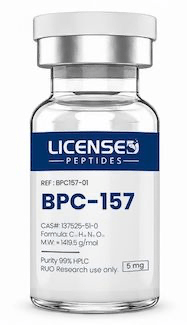
Product available for research use only:
Sources:
Huang T. et al. (2015). BPC-157 enhances wound healing in vivo and promotes angiogenesis in vitro. Drug Des Devel Ther., 9, 2485-2499 (pmc.ncbi.nlm.nih.gov).
Vaickus M.H. et al. (2023). Local and Systemic Peptide Therapies for Soft Tissue Regeneration: A Narrative Review. Int J Sports Phys Ther., 18(3), 543-559 (pmc.ncbi.nlm.nih.gov).
Vukusić D. et al. (2020). Stable Gastric Pentadecapeptide BPC 157 and Wound Healing. Front Pharmacol., 12, 627533 (frontiersin.org).
Greenfield J. et al. (2018). Regenerative and Protective Actions of the GHK-Cu Peptide in Light of New Gene Data. Int J Mol Sci., 19(7), 1987 (pmc.ncbi.nlm.nih.gov).
Goldstein A.L. et al. (2012). Thymosin β4: A multi-functional regenerative peptide – basic properties and clinical applications. Expert Opin Biol Ther., 12(1), 37-51 (pubmed.ncbi.nlm.nih.gov).
Chandrasekaran V.N. et al. (2025). Combined impact of Thymosin β4 and selenium on diabetic ulcers: a comprehensive review. Discover Biotechnol., 2, 11 (link.springer.com).
Pickart L., Margolina A. (2018). GHK peptide as a natural modulator of multiple cellular pathways in skin regeneration. Biomed Rep., 8(1), 24-34 (pmc.ncbi.nlm.nih.gov).
Sosne G. et al. (2016). Thymosin β4 promotes dermal healing. Vitam Horm., 102, 251-275 (pmc.ncbi.nlm.nih.gov).

