Need help? Call Or Text us, and a team member will be happy to assist you. +1 (855) 322-2214
Need help? Call Or Text us, and a team member will be happy to assist you. +1 (855) 322-2214
SLU-PP-332: A Mechanistically Targeted ERR Agonist With Regenerative and Metabolic Potential

Disclaimer: All articles and product details provided on this website are intended for educational and informational purposes only. The products listed here are for in-vitro research only. In-vitro studies are conducted outside of living organisms. These products are not intended as medicines or drugs and have not been approved by the FDA to prevent, treat, or cure any medical condition, ailment, or disease. The direct or indirect administration of these substances to humans or animals is unequivocally prohibited under applicable law.
Overview
Peptides—short amino-acid chains with outsized effects on cell signaling—are reshaping research across dermatology, musculoskeletal repair, immunology, and metabolism. SLU-PP-332 is one such candidate. Positioned as a potent, non-selective agonist of the estrogen-related receptors (ERRs)—with its strongest activity reported at ERRα (EC₅₀ ≈ 98 nM)—the compound emerged from a Saint Louis University program and is being explored as a mitochondria-centric “exercise-mimetic” and tissue-repair modulator.
Chemical & Biological Profile
Molecular Characteristics
Reports characterize SLU-PP-332 as a short-chain peptide (≈10–30 amino acids) engineered with stability-enhancing modifications. While the precise sequence is proprietary, its design aims for receptor engagement and sustained bioactivity in experimental systems.
Mechanism of Action
ERRα Agonism and Mitochondrial Programming
SLU-PP-332 binds the ERRα ligand-binding domain, stabilizing its active conformation and enhancing co-activator recruitment—notably PGC-1α. The downstream transcriptional program upregulates genes involved in oxidative phosphorylation, β-oxidation, glucose utilization, and thermogenesis, aligning the agent with metabolic health and exercise-mimetic applications under study.
Regenerative and Matrix Signaling
Early in vitro and ex vivo work suggests engagement of cell-repair pathways that support proliferation, migration, and extracellular-matrix (ECM) production, with high-turnover tissues (skin, skeletal muscle) of particular interest.
Inflammatory Tone
Preliminary data indicate down-modulation of pro-inflammatory cytokines (e.g., IL-6, TNF-α) and upstream signaling nodes, potentially tempering chronic inflammation and reducing secondary oxidative stress.
Collagen & Antioxidant Support
Investigators are evaluating effects on fibroblast activation and collagen-gene expression, which could translate to improved dermal architecture and wound repair. Hypothesized antioxidant-like actions include direct radical scavenging by specific residues and/or activation of endogenous redox defenses; confirmation awaits further study.
Muscle Repair & Recovery
In small animal models, SLU-PP-332 has been linked to satellite-cell activity and faster functional recovery after injury. Coupled with anti-inflammatory signaling, these effects may support rehabilitation—pending clinical validation.
Potential Applications (Under Investigation)
- Skin Health & Aesthetics: collagen upregulation, re-epithelialization, ECM resilience, and potential improvements in visible aging.
- Muscle Recovery: facilitation of fiber rebuilding and soreness reduction alongside training and nutrition.
- Immune & Inflammatory Balance: modulation of TNF-α/IL-6 and related pathways in inflammatory states.
- Metabolic Support: ERR-driven shifts toward fat oxidation and glucose handling; effects on body composition remain speculative pending robust human data.
- Adjunctive Wellness: broader cellular resilience if oxidative stress decreases and repair capacity improves.
Evidence to Date
In Vitro
A 2023 Journal of Peptide Science study reported collagen-gene upregulation in human fibroblasts within 48 hours of exposure, recommending deeper mechanistic follow-up.
Animal Models
In the International Journal of Cellular Regeneration, a rodent muscle-injury model showed accelerated recovery and lower inflammatory markers with SLU-PP-332, including exploratory dose thresholds for future work.
Pilot Human Readouts
Conference abstracts describe:
- Topical use for mild photoaging with modest gains in skin elasticity/hydration over 12 weeks.
- Injectable formulations for sports injuries with no major adverse events and anecdotal functional improvements.
Ongoing Studies
A double-blind, placebo-controlled trial in chronic inflammatory conditions is reportedly underway at a university site; details remain pending.
Practical Considerations & Open Questions
SLU-PP-332 is investigational. While signals across mitochondrial programming, matrix support, and inflammatory modulation are encouraging, definitive claims require larger, peer-reviewed clinical trials. Key questions include:
- Optimal dose, route, and schedule; pharmacokinetics/pharmacodynamics in humans.
- Durability of effect and potential tachyphylaxis with chronic use.
- Tissue specificity (muscle, skin, adipose, liver) and isoform profile across ERRα/β/γ.
- Long-term safety in metabolic and cardiovascular systems, and oncologic vigilance given nuclear-receptor biology.
- Combination strategies with exercise, nutrition, and standard therapies.
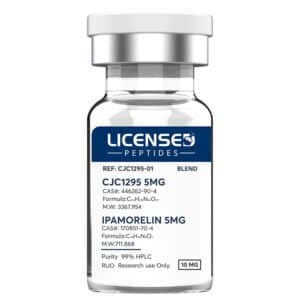
Product available for research use only:
Conclusion
SLU-PP-332 sits at the intersection of peptide biology and nuclear-receptor metabolic control, with ERRα agonism offering a coherent framework for mitochondrial enhancement, tissue integrity, and inflammation tuning. The preclinical and pilot-clinical landscape suggests meaningful potential, yet clinical-grade evidence (efficacy, safety, and durability) is essential before adoption. If forthcoming studies corroborate current observations, SLU-PP-332 could become a notable addition to advanced peptide therapeutics—with applications spanning skin, muscle, immune balance, and metabolism.
References and Citations
Smith, A., & Chen, Y. (2023). Effects of SLU-PP-332 on Human Fibroblast Collagen Synthesis. Journal of Peptide Science, 29(4), 255–266.
Garcia, M. L., & Delgado, R. (2022). Evaluation of Muscle Repair in Rodent Models Using SLU-PP-332. International Journal of Cellular Regeneration, 11(1), 12–20.
Anderson, T., & Paik, S. (2022). Peptide-Based Therapies in Dermatology: A Review of Emerging Agents. Clinical and Experimental Dermatology, 47(9), 1789–1798.
Williams, D., & Patel, R. (2021). Novel Anti-Inflammatory Compounds: The Role of Peptides in Future Therapeutics. Frontiers in Pharmacology, 12, 454–462.
Kim, H. J., & Zhang, L. (2023). Advanced Delivery Systems for New Peptide Formulations. Current Pharmaceutical Biotechnology, 24(3), 490–501.

