Glutathione (GSH and GSSG) quantification by the DTNB enzymatic recycling assay: an analytical methods summary
Summary
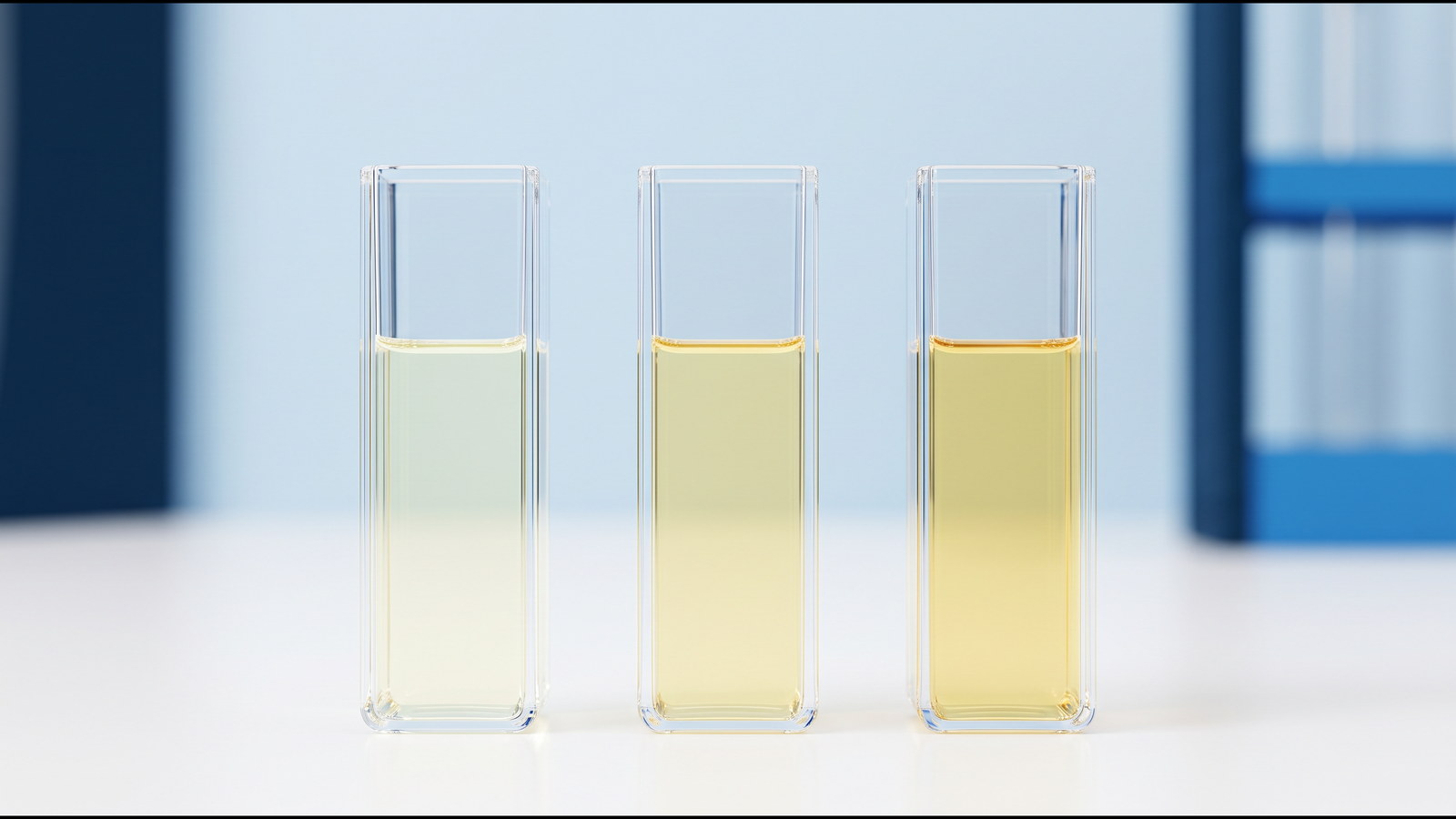
This summary describes the enzymatic recycling assay for total and oxidised glutathione, first described by Tietze (Analytical Biochemistry, 1969) and set out as a step-by-step procedure by Rahman, Kode and Biswas (Nature Protocols, 2006), together with an overview by Monostori and colleagues (Journal of Chromatography B, 2009) of separation-based methods for the same analytes. The assay measures the reaction of glutathione with 5,5′-dithio-bis(2-nitrobenzoic acid) (DTNB) to give a yellow chromophore read at 412 nm, with glutathione reductase and NADPH recycling the oxidised form so that the signal accumulates.
Peptide
- Name
- Glutathione (reduced form, GSH); glutathione disulfide (oxidised form, GSSG)
- Sequence
- gamma-L-Glu-L-Cys-Gly (the glutamate is linked through its side-chain carboxyl, a gamma-glutamyl bond)
- CAS
- 70-18-8 (GSH); 27025-41-8 (GSSG)
- Formula
- C10H17N3O6S, approximately 307.3 g/mol (GSH); C20H32N6O12S2, approximately 612.6 g/mol (GSSG)
- Class
- Tripeptide thiol.
Study design
Tietze 1969: an enzymatic method for the quantitative determination of nanogram amounts of total and oxidised glutathione, with applications to mammalian blood and other tissues. The method couples the DTNB reaction with glutathione reductase so that each glutathione molecule is recycled repeatedly, amplifying the colour yield.
Rahman 2006: a spectrophotometric and microplate-reader procedure in two parts, preparation of cytosolic or tissue extracts and detection of total glutathione (GSH plus GSSG). GSSG is measured separately after the reduced form is masked, and GSH is obtained by difference. The authors list whole blood, plasma, serum, lung lavage fluid, cerebrospinal fluid, urine, tissues and cell extracts as sample types.
Monostori 2009: an overview of sample pretreatment and of separation and detection choices for GSH and GSSG, covering high-performance liquid chromatography, capillary electrophoresis and gas chromatography with photometric, fluorimetric, electrochemical and mass spectrometric detection.
Endpoints: detection limit, assay time, linearity and the GSH to GSSG ratio as reported by each method. In the recycling assay the rate of colour development, rather than the end-point absorbance, is proportional to the amount of glutathione present, which is what gives the method its sensitivity.
Reported findings
Rahman and colleagues reported that oxidation of GSH by DTNB forms 5′-thio-2-nitrobenzoic acid (TNB), measurable at 412 nm, and that the GSSG formed is recycled to GSH by glutathione reductase in the presence of NADPH. The lowest detection reported for GSH and GSSG was 0.103 nM in a 96-well plate. The whole procedure, including reagent preparation, was reported to require no more than 15 minutes. The authors described the method as simple, convenient, sensitive and accurate.
Tietze reported that the recycling method allowed quantification of nanogram amounts of total and oxidised glutathione in blood and tissue samples; the reaction conditions, rate measurements and sample preparation are detailed in the original paper.
Monostori and colleagues reported that the concentrations of GSH and GSSG and their molar ratio are used as indicators of cell redox status, and that sample pretreatment (in particular prevention of thiol oxidation during handling) is a central issue for every separation-based method. Their comparison of detection modes is tabulated in the full paper.
Limitations
The recycling assay reports total glutathione and requires a separate masking step for GSSG, so the GSH value is calculated by difference and carries the combined error of both measurements. Thiol oxidation during sample handling can inflate GSSG. Detection limits quoted are instrument- and plate-dependent. These are method descriptions and contain no biological outcome data.
References
- Rahman I, Kode A, Biswas SK. Nature Protocols. 2006;1(6):3159-3165. PMID 17406579. DOI 10.1038/nprot.2006.378.
- Tietze F. Analytical Biochemistry. 1969;27(3):502-522. PMID 4388022. DOI 10.1016/0003-2697(69)90064-5.
- Monostori P, Wittmann G, Karg E, Turi S. Journal of Chromatography B. 2009;877(28):3331-3346. PMID 19560987. DOI 10.1016/j.jchromb.2009.06.016.
This summary describes published research for the information of qualified researchers. It is not a description of any product sold on this site, which are supplied for in-vitro laboratory research only and are not for human or veterinary use.