Kisspeptin-10 and GPR54 in CHO-K1 cells: receptor binding and second-messenger assays, a published study summary
Summary
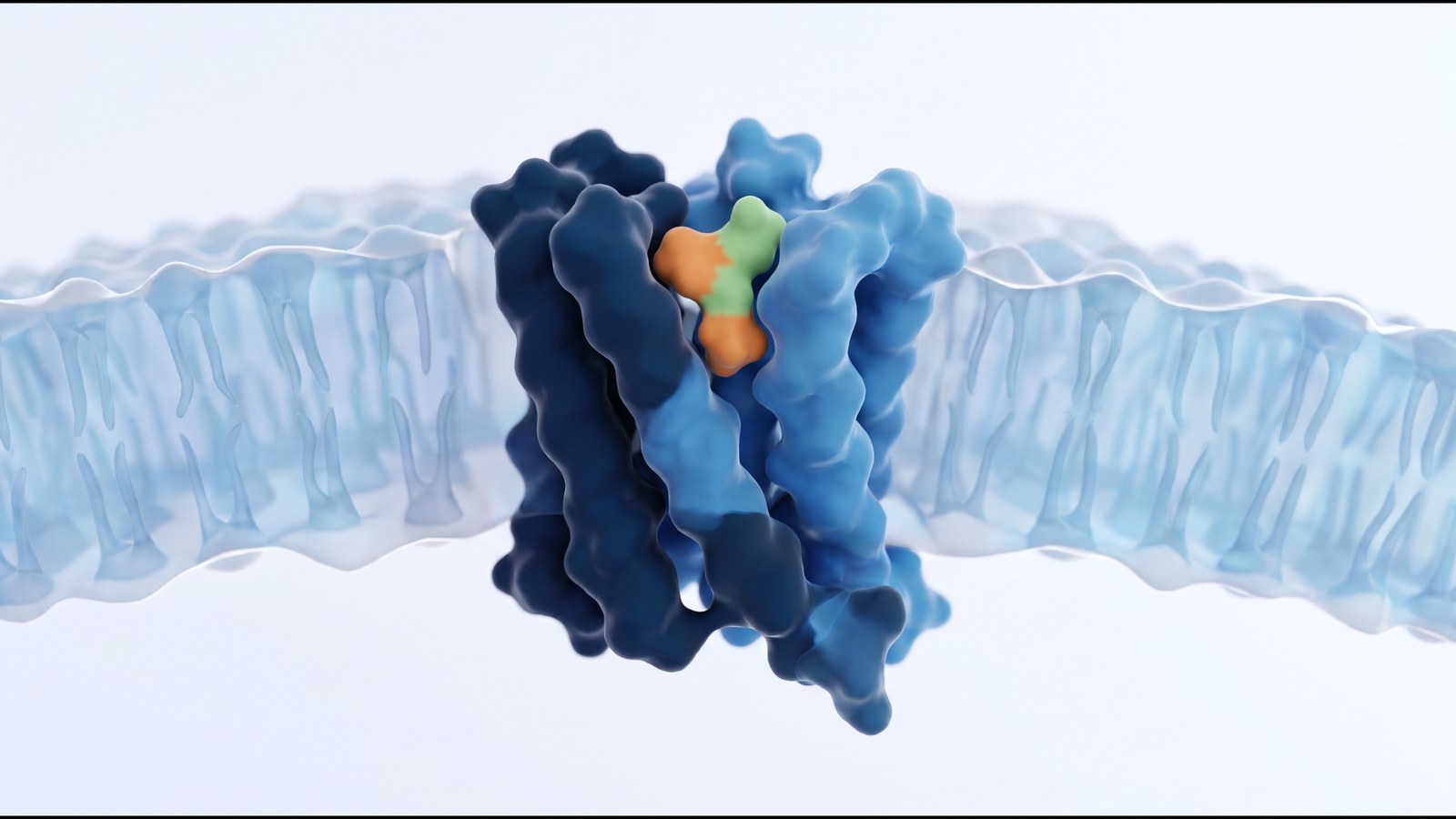
This summary covers three papers published in 2001 that identified the peptides derived from the KiSS-1 precursor protein as ligands of the orphan G protein-coupled receptor GPR54 (also called AXOR12 and hOT7T175). Kotani and colleagues (Journal of Biological Chemistry) isolated the peptides from human placenta and characterised binding and signalling in Chinese hamster ovary K1 cells expressing the receptor. Muir and colleagues (Journal of Biological Chemistry) cloned the human receptor and identified agonist peptides. Ohtaki and colleagues (Nature) isolated the 54-residue amidated peptide and examined chemotaxis and invasion of receptor-transfected cells. Kisspeptin-10 is the C-terminal decapeptide shared by the longer forms.
Peptide
- Name
- Kisspeptin-10 (KP-10, metastin 45-54)
- Sequence
- Tyr-Asn-Trp-Asn-Ser-Phe-Gly-Leu-Arg-Phe-NH2 (YNWNSFGLRF-amide)
- CAS
- 374675-21-5
- Formula
- C63H83N17O14, approximately 1302.4 g/mol
- Class
- RF-amide peptide; the C-terminal decapeptide of kisspeptin-54, -14 and -13, which are proteolytic fragments of the precursor protein encoded by the KiSS-1 gene.
Study design
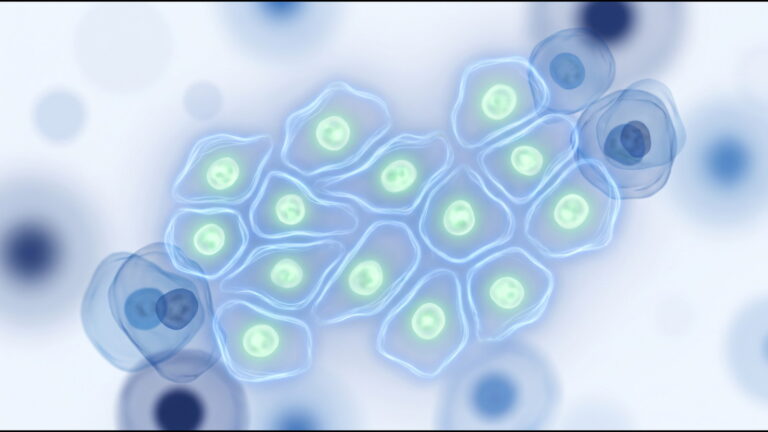
Kotani 2001: peptides with agonist activity at GPR54 were isolated from human placenta and identified as 54-, 14- and 13-residue fragments of the KiSS-1 precursor protein with a common RF-amide C-terminus. Rat and human GPR54 were expressed in CHO-K1 cells. Endpoints were binding affinity, hydrolysis of phosphatidylinositol 4,5-bisphosphate (PIP2), intracellular calcium mobilisation, arachidonic acid release, phosphorylation of ERK1/2 and p38 MAP kinases, stress fibre formation, and cell proliferation. Receptor mRNA distribution in human tissues was also measured.
Muir 2001: a receptor named AXOR12 was cloned from a human brain cDNA library and expressed heterologously in mammalian cells. Agonist peptides were identified by screening; expression of the receptor and of KiSS-1 in human tissues was measured by quantitative RT-PCR; a polyclonal antibody was used for localisation in brain sections.
Ohtaki 2001: the 54-residue C-terminally amidated peptide was isolated from human placenta as the ligand of hOT7T175; chemotaxis and invasion of hOT7T175-transfected CHO cells were measured in vitro. The paper also reports an in-vivo arm in mice that is outside the scope of this summary.
Reported findings
Kotani and colleagues reported that the kisspeptins bound with low nanomolar affinities to rat and human GPR54 expressed in CHO-K1 cells and stimulated PIP2 hydrolysis, calcium mobilisation, arachidonic acid release, ERK1/2 and p38 MAP kinase phosphorylation and stress fibre formation, while inhibiting cell proliferation. Human GPR54 mRNA was reported as highly expressed in placenta, pituitary, pancreas and spinal cord.
Muir and colleagues reported that AXOR12 shows 81 percent homology to rat GPR54, that three agonist peptides with a common C-terminal amidated motif were identified, and that peptides derived from the KiSS-1 gene showed high-potency agonism indicative of a cognate ligand. The highest receptor mRNA levels were observed in brain, pituitary gland and placenta, and the highest KiSS-1 mRNA levels in placenta and brain. Antibody staining localised the receptor to neurons in cerebellum, cerebral cortex and brainstem.
Ohtaki and colleagues reported that the 54-residue amidated peptide, which they named metastin, inhibited chemotaxis and invasion of hOT7T175-transfected CHO cells in vitro.
Binding constants, EC50 values and the concentration-response curves are in the full papers and are not reproduced here.
Limitations
The signalling data were obtained in a hamster cell line engineered to express the receptor, which does not reproduce receptor density or coupling in native cells. The three papers used different peptide lengths; the decapeptide shares the active C-terminus, but values for the longer forms do not transfer directly to kisspeptin-10. In-vivo arms of the cited papers are not summarised here, and no human data are summarised.
References
- Kotani M, Detheux M, Vandenbogaerde A, et al. Journal of Biological Chemistry. 2001;276(37):34631-34636. PMID 11457843. DOI 10.1074/jbc.M104847200.
- Muir AI, Chamberlain L, Elshourbagy NA, et al. Journal of Biological Chemistry. 2001;276(31):28969-28975. PMID 11387329. DOI 10.1074/jbc.M102743200.
- Ohtaki T, Shintani Y, Honda S, et al. Nature. 2001;411(6837):613-617. PMID 11385580. DOI 10.1038/35079135.
This summary describes published research for the information of qualified researchers. It is not a description of any product sold on this site, which are supplied for in-vitro laboratory research only and are not for human or veterinary use.