KPV in intestinal epithelial cell lines: PepT1 transport and NF-kB reporter assays, a published study summary
Summary
This summary describes the cell-culture arm of a 2008 study in Gastroenterology by Dalmasso and colleagues at Emory University. The authors examined whether the tripeptide KPV (Lys-Pro-Val) is taken up by the di/tripeptide transporter PepT1 and whether it changes NF-kB and MAP kinase signalling in cytokine-stimulated human intestinal epithelial cell lines and a human T-cell line. Uptake was measured with radiolabelled substrate competition and tritiated KPV. The same paper also contains experiments in two mouse models; those are outside the scope of this summary.
Peptide
- Name
- KPV
- Sequence
- Lys-Pro-Val
- CAS
- 67727-97-3
- Formula
- C16H30N4O4, approximately 342.4 g/mol
- Class
- Tripeptide corresponding to the C-terminal residues 11 to 13 of alpha-melanocyte-stimulating hormone (alpha-MSH).
Study design
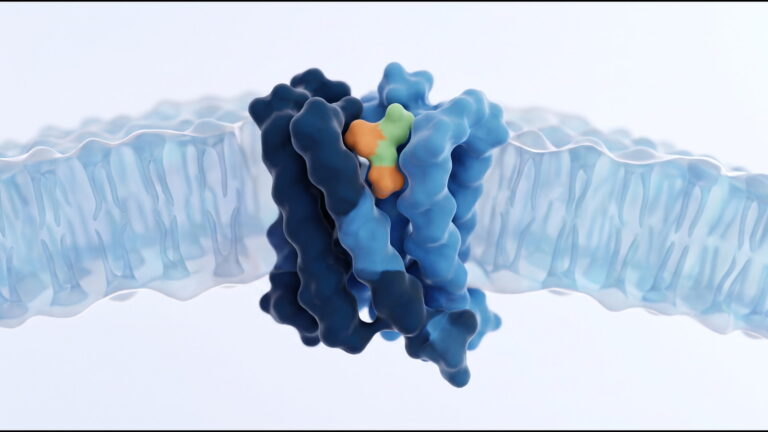
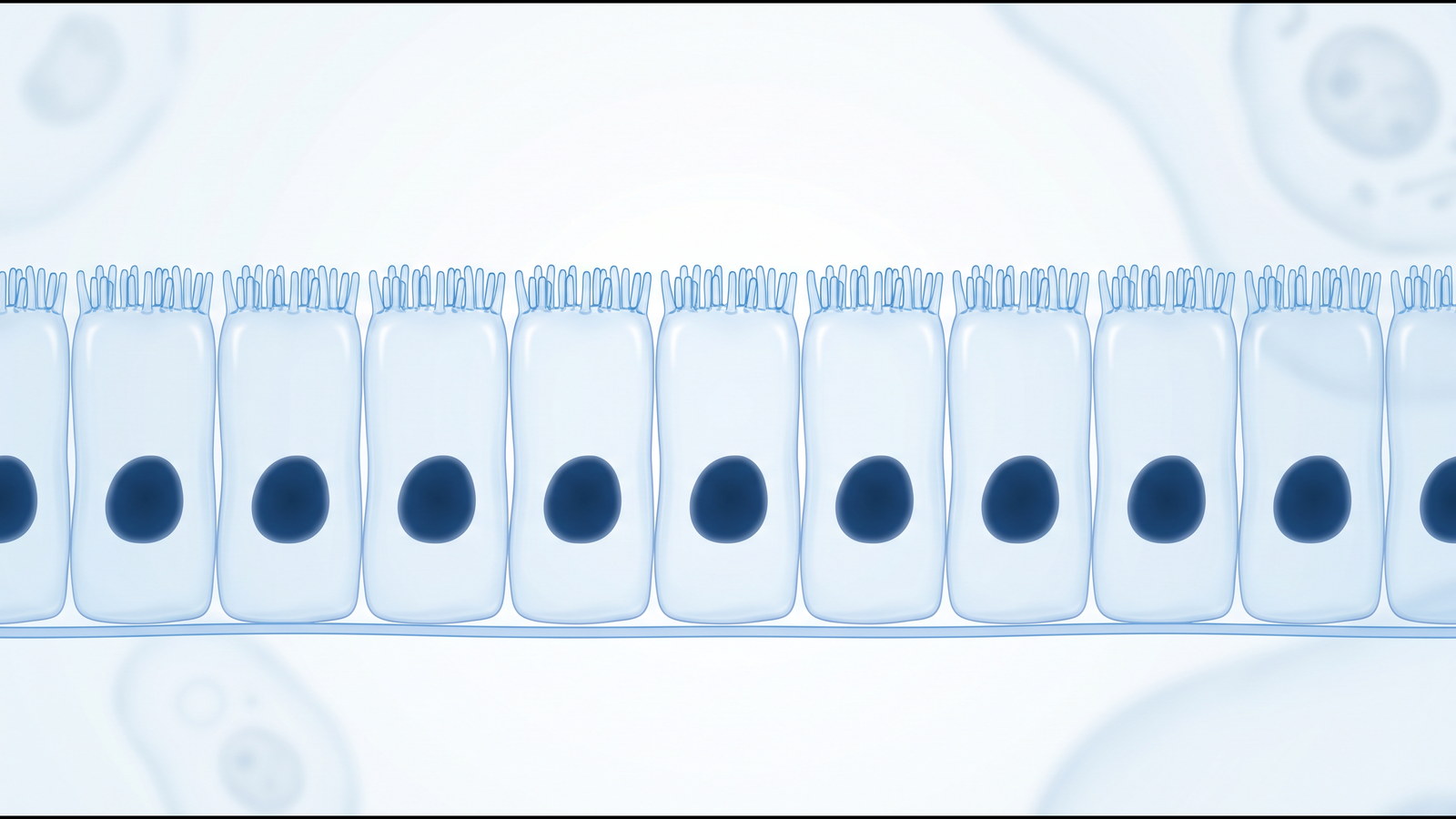
Background to the design: PepT1 is a proton-coupled transporter that carries di- and tripeptides across the apical membrane of intestinal epithelial cells. Because KPV is a tripeptide, the authors asked whether it enters cells through this transporter and whether its effects on signalling depend on that entry. Caco2-BBE cells are a polarised intestinal epithelial line that expresses PepT1, which is why they were chosen as the principal model.
Model system: human intestinal epithelial cell lines Caco2-BBE and HT29-Cl.19A, and the human T-cell line Jurkat.
Groups: cells stimulated with cytokines in the presence or absence of KPV in the culture medium. The peptide was present only in the culture medium.
Endpoints measured:
- NF-kB activation, using a luciferase reporter gene.
- Signalling protein status by western blot.
- Cytokine mRNA by real-time RT-PCR.
- Cytokine secretion by ELISA.
- Uptake: unlabelled KPV was used as a competitor for a radiolabelled PepT1 substrate, and tritiated KPV ([3H]KPV) was used to determine the kinetic characteristics of KPV uptake.
Concentrations: the abstract reports effects at nanomolar concentrations of KPV. Cytokine stimulation of the epithelial lines was used to switch on NF-kB signalling so that an inhibitory effect could be measured; unstimulated cultures served as the baseline. The concentration series and incubation times are given in the full paper.
Reported findings
The authors reported that nanomolar concentrations of KPV inhibited the activation of NF-kB and of MAP kinase signalling in the stimulated cells, and that secretion of the measured cytokines was reduced.
The uptake experiments were reported to show that KPV acts through PepT1 expressed in the epithelial and T-cell lines: unlabelled KPV competed with the radiolabelled PepT1 substrate, and [3H]KPV uptake showed kinetics consistent with transporter-mediated entry. The authors concluded that KPV is transported into cells by PepT1.
Kinetic constants for uptake, the magnitude of reporter inhibition and the p-values are presented in the full paper and are not reproduced here.
In the uptake experiments, competition by unlabelled KPV for the radiolabelled PepT1 substrate was taken as evidence that the two share the transporter, and saturable, concentration-dependent uptake of [3H]KPV was taken as evidence of carrier-mediated rather than passive entry.
The accompanying mouse experiments in the same paper are not summarised on this page.
Limitations
The findings summarised here come from immortalised cell lines in a single laboratory. Reporter and ELISA readouts in culture do not establish what occurs in a tissue. The abstract gives qualitative statements of effect rather than numerical values, so effect sizes cannot be judged from the abstract alone. No human data were reported.
References
- Dalmasso G, Charrier-Hisamuddin L, Nguyen HT, Yan Y, Sitaraman S, Merlin D. Gastroenterology. 2008;134(1):166-178. PMID 18061177. DOI 10.1053/j.gastro.2007.10.026.
- Brzoska T, Luger TA, Maaser C, Abels C, Bohm M. Endocrine Reviews. 2008;29(5):581-602. PMID 18612139. DOI 10.1210/er.2007-0027.
This summary describes published research for the information of qualified researchers. It is not a description of any product sold on this site, which are supplied for in-vitro laboratory research only and are not for human or veterinary use.