Thymosin beta-4 (TB-500) in endothelial cell migration assays: a published study summary
Summary
This summary covers a 1997 study in the FASEB Journal by Malinda, Goldstein and Kleinman at the NIH in Bethesda, together with the 1991 Journal of Biological Chemistry paper by Safer, Elzinga and Nachmias that characterised the actin-binding property of the same peptide. Malinda and colleagues measured the migration of human umbilical vein endothelial cells (HUVECs) toward thymosin beta-4 in Boyden chambers, the rate of migration into a scratch made in a HUVEC monolayer, and the secretion of matrix metalloproteinases. Safer and colleagues showed that a platelet peptide called Fx was identical in sequence to thymosin beta-4 and formed a 1:1 complex with actin monomers.
Peptide
- Name
- Thymosin beta-4. TB-500 is the name under which the synthetic 43-residue peptide is commonly supplied.
- Sequence
- Ac-Ser-Asp-Lys-Pro-Asp-Met-Ala-Glu-Ile-Glu-Lys-Phe-Asp-Lys-Ser-Lys-Leu-Lys-Lys-Thr-Glu-Thr-Gln-Glu-Lys-Asn-Pro-Leu-Pro-Ser-Lys-Glu-Thr-Ile-Glu-Gln-Glu-Lys-Gln-Ala-Gly-Glu-Ser (N-terminally acetylated, 43 residues)
- CAS
- 77591-33-4
- Formula
- C212H350N56O78S, approximately 4963 g/mol
- Class
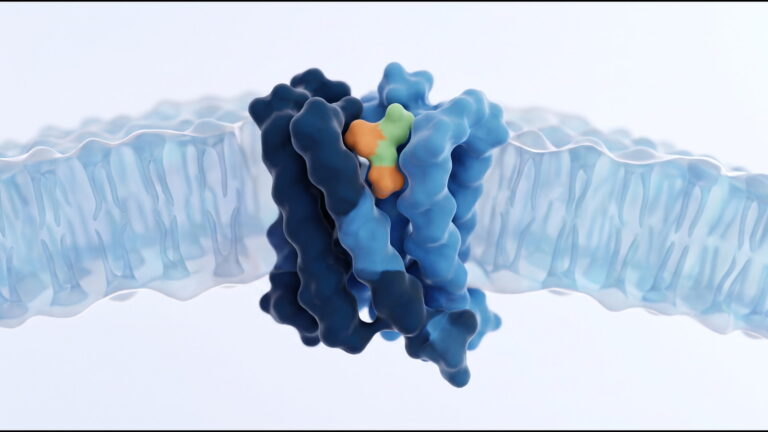
- Acidic, heat-stable beta-thymosin; a G-actin sequestering peptide.
Study design
Model system (Malinda 1997): cultured human umbilical vein endothelial cells. A panel of other primary human cell types was also tested in the chemotaxis assay.
Groups: cells exposed to thymosin beta-4 in the assay medium compared with cells in medium alone. The peptide was present only in the culture medium.
Endpoints measured:
- Directional migration of HUVECs in Boyden chambers, expressed relative to medium alone.
- Response of other primary cell types in the same chemotaxis assay.
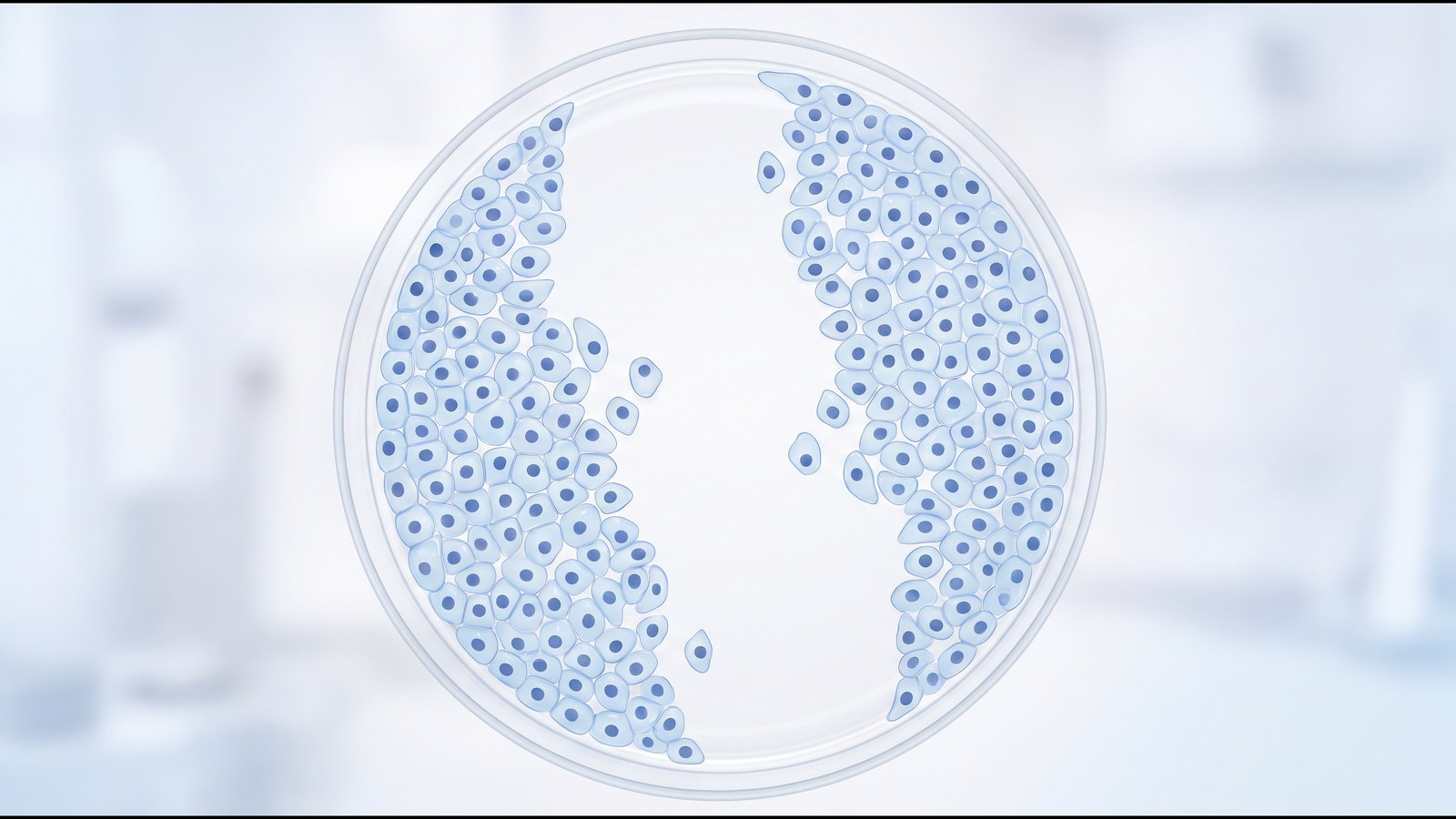
- Rate of migration of HUVECs into a scratch made in a confluent monolayer.
- Secretion of matrix metalloproteinases by the cells.
The paper also reports an implanted-matrix experiment in mice. That arm is outside the scope of this in-vitro summary and is not described here.
Model system (Safer 1991): purified Fx from human platelets, purified G-actin, and authentic thymosin beta-4. Complex formation was examined by non-denaturing polyacrylamide gel electrophoresis and by measuring salt-induced actin polymerisation. The complete amino acid sequence of Fx was determined.
Reported findings
Malinda and colleagues reported that thymosin beta-4 acted as a chemoattractant for endothelial cells, with HUVEC migration in Boyden chambers four- to sixfold higher than with medium alone.
Among the primary cell types tested, only human coronary artery cells responded to the peptide in the chemotaxis assay, which the authors took to indicate an endothelial-cell-specific migration response.
The rate of migration of HUVECs into the scratched area of a monolayer was reported as significantly accelerated by the peptide.
Exposure to the peptide was reported to increase the secretion of matrix metalloproteinases by the cells.
Safer and colleagues reported that at least 50 percent of the actin in resting human platelets is unpolymerised and that the bulk of it is complexed with the 5 kDa peptide Fx. The full amino acid sequence of Fx was found to be identical with that of thymosin beta-4. Authentic thymosin beta-4 was functionally equivalent to Fx, forming a 1:1 complex with actin monomers and inhibiting salt-induced polymerisation of G-actin.
Numerical values for the scratch assay, the metalloproteinase measurements and the binding experiments are given in the full papers and are not reproduced here.
Limitations
The migration experiments were run in one laboratory on cultured endothelial cells; fold-change values are reported for the Boyden chamber assay only. Cell-culture migration assays do not establish events in a whole organism. The 1991 actin work used purified proteins in buffer. No human data were reported in either paper.
References
- Malinda KM, Goldstein AL, Kleinman HK. FASEB Journal. 1997;11(6):474-481. PMID 9194528. DOI 10.1096/fasebj.11.6.9194528.
- Safer D, Elzinga M, Nachmias VT. Journal of Biological Chemistry. 1991;266(7):4029-4032. PMID 1999398.
- Grant DS, Kinsella JL, Kibbey MC, LaFlamme S, Burbelo PD, Goldstein AL, Kleinman HK. Journal of Cell Science. 1995;108(Pt 12):3685-3694. PMID 8719875. DOI 10.1242/jcs.108.12.3685.
- Huff T, Muller CS, Otto AM, Netzker R, Hannappel E. International Journal of Biochemistry and Cell Biology. 2001;33(3):205-220. PMID 11311852.
This summary describes published research for the information of qualified researchers. It is not a description of any product sold on this site, which are supplied for in-vitro laboratory research only and are not for human or veterinary use.