Need help? Call Or Text us, and a team member will be happy to assist you. +1 (855) 322-2214
Need help? Call Or Text us, and a team member will be happy to assist you. +1 (855) 322-2214
Biological Age vs. Chronological Age: What Really Predicts Your Healthspan

Disclaimer: All articles and product details provided on this website are intended for educational and informational purposes only. The products listed here are for in-vitro research only. In-vitro studies are conducted outside of living organisms. These products are not intended as medicines or drugs and have not been approved by the FDA to prevent, treat, or cure any medical condition, ailment, or disease. The direct or indirect administration of these substances to humans or animals is unequivocally prohibited under applicable law.
What’s the Difference?
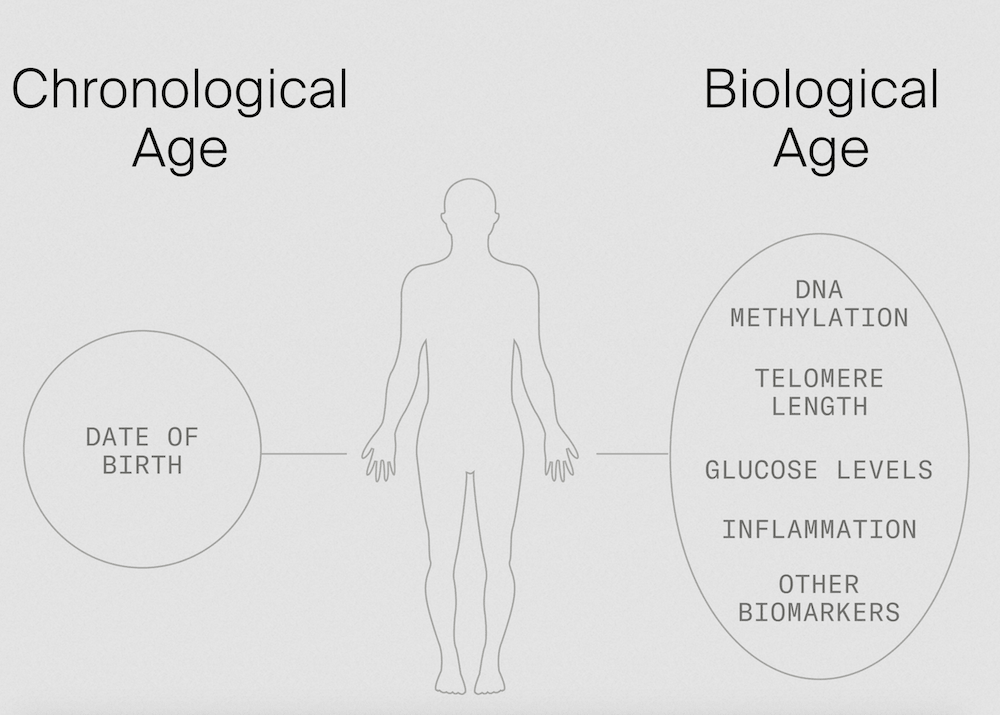
Chronological age is simply the years since your birth. It’s useful for paperwork—not for gauging your body’s condition. Biological age estimates how “old” you are physiologically based on lifestyle, environment, genetics, and stress. Two 50-year-olds can have very different biological ages depending on how they’ve lived.
Crucially, biological age is malleable. Poor sleep, processed food, pollution, chronic stress, and inactivity accelerate it; movement, nutrition, recovery, and stress management can slow—or even reverse—parts of it. Think of biological age as your mileage, not your model year.
Why Biological Age Matters
Biological age outperforms chronological age in predicting chronic disease, disability, and mortality. It often rises years before diagnoses emerge, creating a window to intervene with lifestyle or medical strategies. It’s also tightly linked to healthspan—how long you live in good health. As a risk signal, biological age is now informing public health programs, insurance models, and precision-medicine research.
Bottom line: measuring biological age turns aging from passive countdown to actionable feedback.
Grip Strength: A Small Test with Big Signal
Grip strength—measured with a dynamometer—tracks functional capacity and correlates with mortality, cardiovascular events, frailty, and brain health. Low grip strength often reflects systemic issues like inflammation, mitochondrial dysfunction, and insulin resistance and can outperform traditional metrics in risk prediction.
It’s cheap, quick, and trainable. Resistance training (forearms, hands, shoulders, core), adequate protein, vitamin D, and omega-3s help preserve or improve it. Watch trends over time; a downward drift is a red flag to act.
VO₂ Max: Cardiorespiratory Fitness as a Youthfulness Marker
VO₂ max (ml/kg/min) reflects how well heart, lungs, and muscles use oxygen. Higher values align with better mitochondrial efficiency, vascular function, and metabolic flexibility—hallmarks of youthful physiology—and predict longer life with less chronic disease.
The good news: VO₂ max is highly trainable. Regular aerobic work (running, cycling, swimming, brisk walking) and especially HIIT can lift VO₂ max within weeks—even in older adults. Expect natural decline (~10% per decade after 30) unless you train. Clinical tests are most accurate, while wearables offer useful trend estimates.
Telomere Length: The Original Cellular Aging Readout
Telomeres cap chromosomes and shorten with each cell division. Shorter telomeres associate with higher risks of cardiovascular disease, diabetes, cancer, and mortality. Measurement variability and tissue differences limit precision, but longitudinal tracking and pairing with other markers add value.
Lifestyle strongly influences telomeres: stress, smoking, obesity, and poor diet accelerate loss; exercise, plant-forward nutrition, sufficient sleep, and stress reduction can slow or even reverse shortening in some studies.
Epigenetic Clocks: Today’s Benchmark for Biological Age
Epigenetic clocks estimate biological age from DNA methylation patterns and currently provide the most precise aging readouts. Tools like Horvath, Hannum, PhenoAge, GrimAge, and newer models predict disease risk and mortality better than many standard tests—and they respond to lifestyle change (diet, exercise, sleep, stress management, targeted supplementation).
Kits are increasingly accessible; interpret results alongside functional metrics (e.g., grip strength, VO₂ max) for a comprehensive view.
Putting It Together: A Practical Framework
No single measure defines aging. Combined, these markers create a decision matrix:
- Grip strength → functional capacity & sarcopenia risk
- VO₂ max → cardiorespiratory and mitochondrial fitness
- Telomeres → cumulative cellular stress and regenerative potential
- Epigenetic clocks → integrative, modifiable biological age estimate
Use discrepancies to guide action (e.g., strong epigenetic profile but falling grip strength → prioritize resistance training; high VO₂ max but telomere strain → bolster recovery and stress management).
AI-driven dashboards and multi-omics will soon integrate these signals for real-time coaching. Until then, track, intervene, and retest.
Action Steps: Turn Insight into Change
- Get tested. Start anywhere—fitness, telomeres, or methylation—then build a fuller profile.
- Track trends. Reassess periodically; trends beat snapshots.
- Nail the basics. Exercise (aerobic + resistance), whole-food nutrition, 7–9 hours of sleep, and stress skills (mindfulness, breathwork, social connection).
- Let data steer you. Align training, diet, and recovery with what your markers show.
- Keep perspective. Expect short-term fluctuations; focus on the long arc.
You can’t change your birth year—but you can reshape how old your body functions.
References:
Wu, J. W., et al. (2021). Biological age in healthy elderly predicts aging-related diseases including dementia. Scientific Reports, 11, 15929. (Study showing that higher biological age is associated with greater mortality and morbidity risk in older adults.)
Ho, K. M., et al. (2023). Biological age is superior to chronological age in predicting hospital mortality of the critically ill. Internal and Emergency Medicine, 18(7), 2019–2028. (Used the PhenoAge biomarker to demonstrate biological age predicted ICU outcomes better than chronological age.)
Vaishya, R., et al. (2024). Hand grip strength as a proposed new vital sign of health: a narrative review of evidences. J. of Health, Population and Nutrition, 43, Article 7. (Review summarizing how grip strength correlates with morbidity, mortality, and overall health status.)
Wu, Y., et al. (2017). Association of grip strength with risk of all-cause mortality, cardiovascular diseases, and cancer in community-dwelling populations: a meta-analysis of prospective cohort studies. Journal of the American Medical Directors Association, 18(6), 551.e17–551.e35. (Meta-analysis confirming that low grip strength independently predicts higher mortality and disease risk.)
Leong, D. P., et al. (2015). Prognostic value of grip strength: findings from the Prospective Urban Rural Epidemiology (PURE) study. The Lancet, 386(9990), 266–273. (Large international study showing grip strength was a stronger predictor of death than blood pressure and many other risk factors.)
Kodama, S., et al. (2009). Cardiorespiratory fitness as a quantitative predictor of all-cause mortality and cardiovascular events in healthy men and women: a meta-analysis. JAMA, 301(19), 2024–2035. (Meta-analysis demonstrating that higher VO₂ max (fitness) is associated with substantially lower mortality; low fitness had ~70% higher risk of death than high fitness.)
Myers, J., et al. (2002). Exercise capacity and mortality among men referred for exercise testing. New England Journal of Medicine, 346(11), 793–801. (Found that exercise capacity (VO₂ max) was a more powerful predictor of mortality than traditional risk factors in men – highlighting the importance of fitness age.)
Wang, Q., et al. (2018). Telomere length and all-cause mortality: a meta-analysis. Ageing Research Reviews, 48, 11–20. (Pooled analysis of 25 studies with >120,000 people; concluded that shorter telomeres are associated with higher mortality risk, though with heterogeneity and modest effect size.)
Epel, E. S., et al. (2004). Accelerated telomere shortening in response to life stress. Proceedings of the National Academy of Sciences USA, 101(49), 17312–17315. (Pioneering study linking psychological stress to shorter telomeres, suggesting stress can accelerate cellular aging.)
Horvath, S. (2013). DNA methylation age of human tissues and cell types. Genome Biology, 14(10), R115. (Landmark paper introducing the first multi-tissue epigenetic clock, which could accurately predict chronological age from DNA methylation data.)
Levine, M. E., et al. (2018). An epigenetic biomarker of aging for lifespan and healthspan. Aging (Albany NY), 10(4), 573–591. (Developed the DNAm PhenoAge clock, which predicts mortality, morbidity, and physiological dysregulation better than chronological age.)
Lu, A. T., et al. (2019). DNA methylation GrimAge strongly predicts lifespan and healthspan. Aging (Albany NY), 11(2), 303–327. (Introduced GrimAge, an epigenetic clock that incorporates smoking and plasma protein markers; shown to outperform earlier clocks in predicting time-to-death and disease.)
Quintela, M., & Garma, L. (2023). Are epigenetic clocks reliable? – Inaccuracies in widely used clocks and a new clock model. Genome Medicine, 15(1), 74. (Identified technical mismatches causing variation up to 3–25 years in some epigenetic age results and proposed an updated clock aligned to newer technology, improving accuracy to <1 year variability.)
You, Y., et al. (2025). Relationship between physical activity and DNA methylation-predicted epigenetic clocks. npj Aging, 11, Article 27. (Recent study showing that higher physical activity levels are significantly associated with younger epigenetic ages across multiple DNA methylation clocks in a large adult sample.)
Fitzgerald, K. N., et al. (2021). Potential reversal of epigenetic age using a diet and lifestyle intervention: a pilot randomized clinical trial. Aging (Albany NY), 13(7), 9419–9432. (Small pilot trial where an 8-week healthy lifestyle program led to a 3-year decrease in epigenetic age compared to controls, suggesting lifestyle changes can reverse some epigenetic aging.)
López-Otín, C., et al. (2023). Emerging targets and therapies in aging science. Nature Medicine, 29(6), 979–994. (Review of current and upcoming therapeutic strategies aimed at the aging process, including senolytics, metabolic modulators, and regenerative techniques.)
Tanaka, T., et al. (2020). Plasma proteomic signature of age in healthy humans. Aging Cell, 19(11), e13255. (Identified sets of proteins in blood whose levels change with age, forming the basis of a proteomic age clock; linked proteomic age to functional outcomes and validated in independent cohorts.)
Belsky, D. W., et al. (2022). Quantification of biological aging in young adults. Proceedings of the National Academy of Sciences USA, 119(2), e2016955118. (Used a combination of biomarkers to measure pace of aging in younger adults, highlighting interventions can start early; also introduced the DunedinPACE methylation rate of aging measure.)
Jylhävä, J., Pedersen, N. L., & Hägg, S. (2017). Biological age predictors. EBioMedicine, 21, 29–36. (Review of various aging biomarkers and “biological age” definitions, comparing their validity and applications.)
Puterman, E., et al. (2018). Determinants of telomere attrition over 1 year in healthy older women: stress and health behaviors matter. Molecular Psychiatry, 23(7), 1565–1573. (Showed that higher stress and lower sleep quality were associated with faster telomere shortening over one year, underscoring lifestyle impact on cellular aging.)
Sebastian, C., & Zwaans, B. M. M. (2021). Senolytics: from discovery to translation. Journal of Internal Medicine, 289(5), 562–577. (Overview of senolytic drugs that clear senescent cells, discussing their potential to improve healthspan by targeting an aging mechanism.)
Bell, J. T., & Spector, T. D. (2012). A twin approach to unraveling epigenetics. Trends in Genetics, 28(3), 116–125. (Highlights how twin studies show the balance of genetic vs. environmental contributions to aging, noting that non-genetic factors play a large role – estimated 75% or more in lifespan variation.)
Fries, J. F. (1980). Aging, natural death, and the compression of morbidity. New England Journal of Medicine, 303(3), 130–135. (Classic paper proposing that healthy lifestyle can compress morbidity and improve quality of life in later years, essentially predicting the modern focus on healthspan over just lifespan.)
Moskalev, A., et al. (2019). The epigenetics of aging: Advances, challenges and perspectives. Ageing Research Reviews, 55, 100182. (Comprehensive review of epigenetic changes with aging and the development of epigenetic clocks, as well as interventions that might modify epigenetic aging.)

