Immune/Anti-Inflammatory Peptides
Work on cytokine activity, host-defence peptides and the gut-immune axis draws on a small, well-defined set of compounds, and those are what this category stocks. The five are Thymosin Alpha-1 5mg, LL-37 5mg, KPV 10mg, SS-31 and Epithalon, each supplied as a lyophilised powder in a sealed vial.
Manufacturing takes place in GMP-certified facilities in the United States. Independent testing confirms 99%+ purity by HPLC and identity by mass spectrometry, and no lot ships until its endotoxin and heavy-metal results come back clean. Every batch has a Certificate of Analysis you can read in our testing library before ordering, filed next to the endotoxin report for the same lot. Thymosin Alpha-1 and KPV are also stocked in ten-vial cases for longer protocols. These peptides are provided for research use only and are not intended for human or animal use.
-
2 for 1
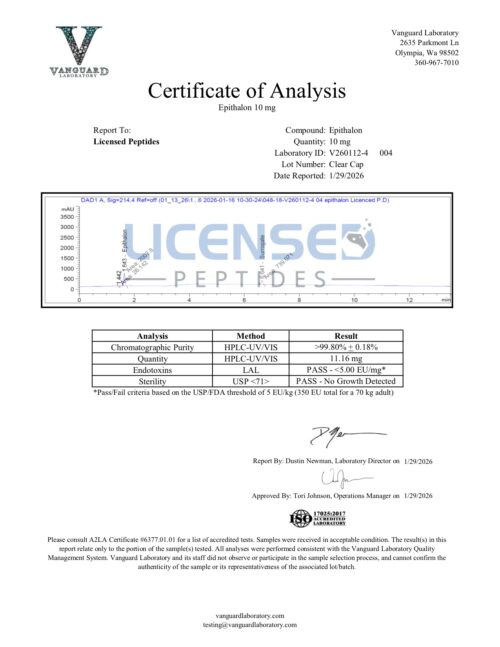
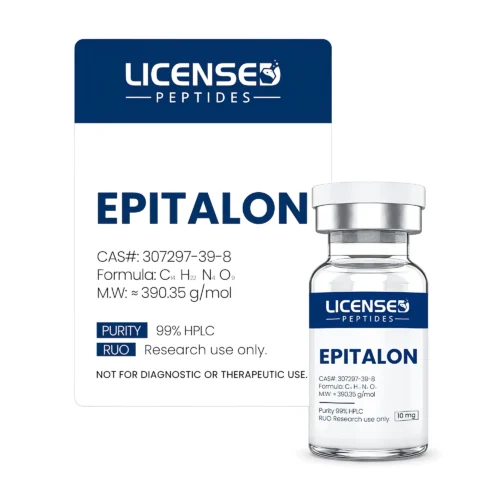 Epithalon (also known as Epitalon) is a synthetic tetrapeptide used in laboratory research to study telomere biology, peptide signaling, and related cellular pathways in controlled experimental systems. This product is supplied strictly for research use only. It is not approved or intended for human or animal use, and any discussion of biological activity refers only to preclinical or in vitro research. Epithalon has attracted significant interest within the fields of aging biology and molecular research due to its observed interactions with telomerase activity and telomere dynamics in controlled experimental models. Telomeres are repetitive nucleotide sequences located at the ends of chromosomes that function as protective structures, maintaining chromosomal stability during successive cellular divisions. Progressive telomere shortening has been consistently associated with cellular senescence and replicative limits in a wide range of in vitro and experimental studies. Experimental investigations involving Epithalon have primarily focused on its molecular signaling properties, gene expression modulation, and chromosomal endpoint behavior under laboratory conditions. These findings are derived from controlled research environments and are intended solely to advance scientific understanding of cellular aging mechanisms and peptide–DNA interactions. Epithalon supplied for research applications is typically manufactured to high purity standards and is characterized as an LPS-free peptide, endotoxin-free peptide, and research peptide endotoxin tested to ensure suitability for sensitive laboratory assays, cellular studies, and biochemical analysis. These quality attributes are critical for minimizing experimental interference and maintaining data integrity in research settings. Importantly, Epithalon is not approved for medical, veterinary, or dietary use. All discussion surrounding this compound pertains strictly to laboratory, cellular, or experimental research settings. No claims are made regarding therapeutic outcomes, enhancement of human health, or clinical efficacy.
 -
2 for 1
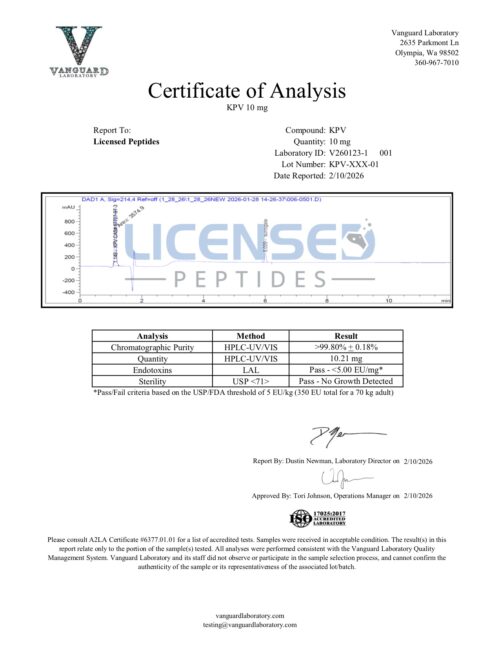
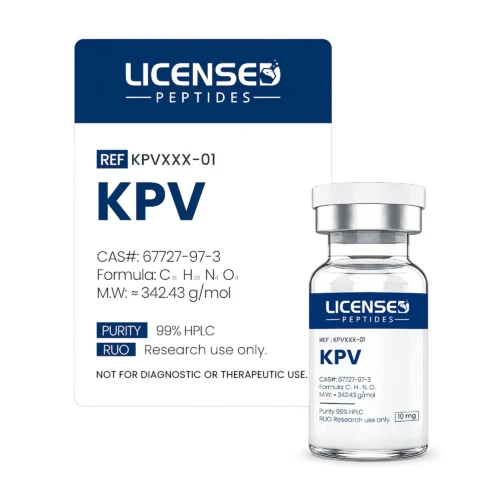 Buy KPV peptide for research use only. Every batch we supply undergoes independent HPLC purity analysis, mass spectrometry identity verification, and screening for endotoxins and heavy metals before release. Certificates of Analysis for every batch are available.
Certified KPV Peptide for Research | 99%+ Purity
At Licensed Peptides™, we supply research-grade KPV made in GMP-certified facilities within the U.S. Our manufacturing team understands the requirements of laboratory and scientific research, and as such, produces each batch under strict quality control. Additionally, we independently verify each batch through accredited laboratories to confirm purity, identity, sterility, and reliability through a 6-point quality verification process. When you buy KPV peptide from Licensed Peptides, you’ll receive a compound that upholds our research-grade standards: • SPPS-Synthesized Peptides: Our KPV peptide is synthesized via solid-phase peptide synthesis (SPPS) to ensure accuracy in its sequence and maximum purity. • Lyophilized KPV Peptide for Stability: Freeze-drying helps preserve its integrity while shipping, storing, and handling in the lab. • 99%+ HPLC-Verified Purity: Third-party labs test every batch of KPV to confirm purity levels of 99%+. • Identity Confirmation Through Mass Spectrometry: We confirm the peptide’s molecular identity and composition. • Heavy-Metal & Endotoxin Screening: We test each batch for bacterial endotoxins, lipopolysaccharides (LPS), and heavy metals. Our KPV is endotoxin-free and LPS-free. • Certificates of Analysis: Every batch of KPV comes with transparent documentation that provides detailed analytical results. • USA GMP Manufacturing: Our peptides are manufactured in GMP-certified facilities in the U.S., upholding the highest standards of quality. • Same-Day Shipping: We ship any order in stock (placed before our daily cutoff) on the same day within the US. • U.S.-Based Expert Support for Researchers: We have a responsive team that understands the needs of researchers. Contact us anytime by phone at +1 (855) 322-2214 or email [email protected] with any questions.What Is KPV Peptide?
KPV is a synthetic peptide that’s made up of three amino acids: Lys-Pro-Val. These three amino acids are the C-terminal fragment (position 11-13) of the alpha-melanocyte-stimulating hormone (α-MSH), which is a naturally occurring melanocortin peptide that’s involved in the regulation of inflammation and immune responses. Researchers use the KPV peptide to study inflammatory signaling, epithelial biology, and communication pathways within the immune system.Licensed Peptides KPV Product Specifications
Peptide Class Synthetic Tripeptide Sequence Lys-Pro-Val (KPV) Quantity Choose from 1, 3, 5 & 10 Vial Options Strength 10mg Per Vial Purity 99%+ HPLC Verified Form Lyophilized Powder Manufacturing USA GMP Facility Testing Third-Party Verified Documentation Certificate of Analysis Available Storage -20°C Long-Term Application Research Use Only Important Notice
Licensed Peptides supplies KPV Peptide exclusively for research. It’s not approved for human or veterinary use. Any discussion concerning the biological activity of KPV refers to preclinical and in vitro studies only. -
2 for 1
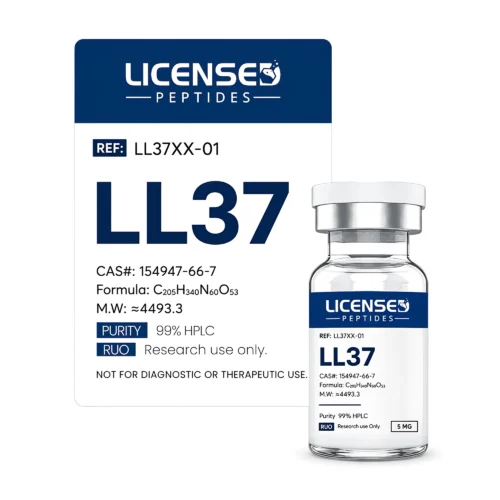 LL-37 is a 37-amino-acid antimicrobial peptide derived from the human cathelicidin precursor hCAP18. As a research peptide, it is studied for its potential roles in antimicrobial activity, immune signaling, inflammation, cell migration, and tissue repair. Its positively charged, amphipathic structure allows it to interact with biological membranes and cellular components, making it a useful subject for research in microbiology, immunology, cell biology, and peptide science. LL-37 remains an experimental research compound, and laboratory findings do not establish clinical use or safety.
 -
2 for 1
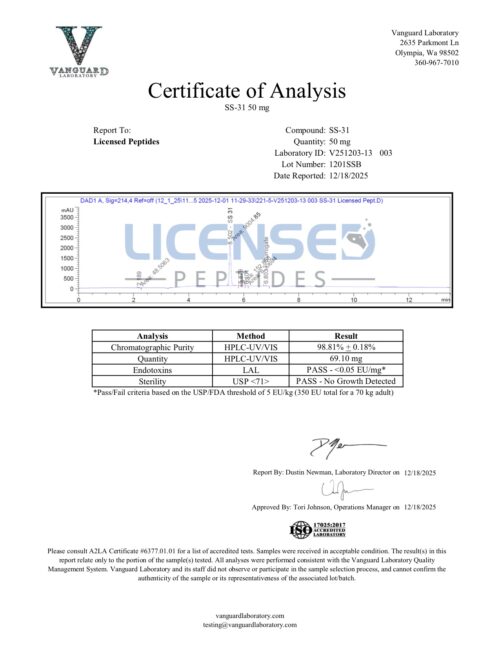
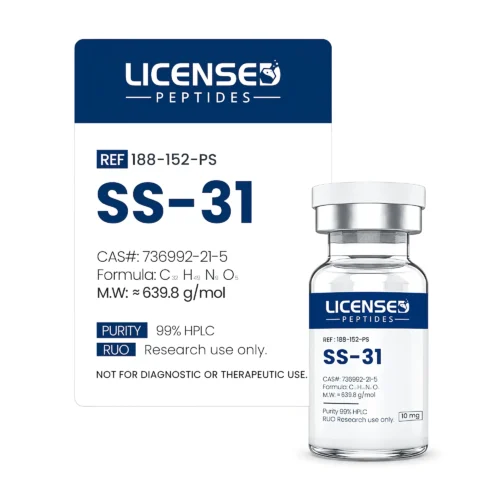 SS-31 is a laboratory research peptide used to study mitochondrial membrane interactions, cardiolipin binding, and cellular signaling pathways in controlled experimental systems. This product is supplied strictly for research use only. It is not approved or intended for human or animal use, and any discussion of biological activity refers only to preclinical or in vitro research. One of the unique aspects of SS-31 is its specific affinity for cardiolipin, a phospholipid located within the inner mitochondrial membrane that is essential for maintaining electron transport chain structure and membrane integrity. Disturbances in cardiolipin stability are commonly examined in research involving oxidative stress, mitochondrial dysfunction, and bioenergetic decline. SS-31’s ability to interact with cardiolipin has therefore made it a recurring subject in studies investigating how mitochondrial membrane condition affects broader cellular behavior. Additionally, research has documented that SS-31 may influence the production of reactive oxygen species (ROS) at the mitochondrial level. Excessive ROS production is commonly evaluated in studies on cellular stress, inflammation, and mitochondrial impairment. By focusing on mitochondria directly, rather than acting as a broad-spectrum antioxidant, SS-31 offers researchers a pathway to study targeted mechanisms of oxidative modulation rather than systemic antioxidant activity. For laboratory use, SS-31 is commonly supplied as a high-purity, LPS-free peptide, manufactured to meet strict research standards. As an endotoxin-free peptide, it is frequently utilized in sensitive in vitro and ex vivo experimental setups where contamination control is critical. Research peptides such as SS-31 are typically endotoxin tested to support reproducibility and reliability across mitochondrial and cellular research applications. This compound is intended strictly for research use only and is not approved for human or animal use.
 -
2 for 1
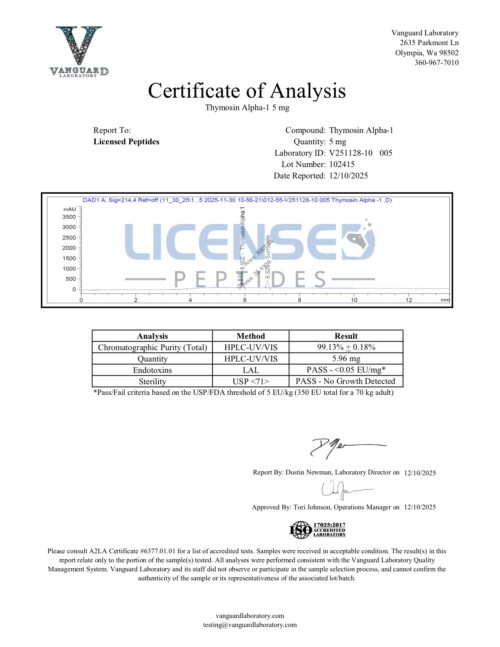
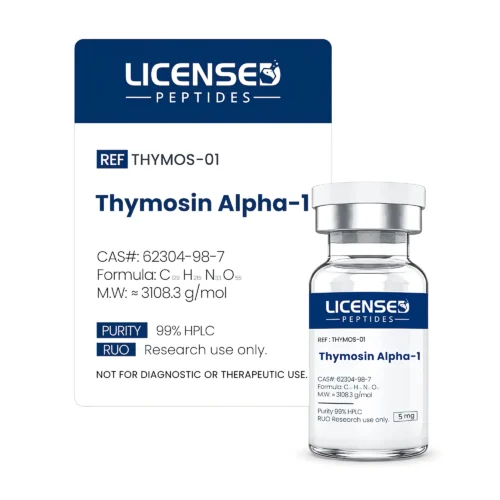 Thymosin Alpha-1 5mg is a laboratory research peptide modeled after a naturally occurring thymic fraction and used to study immune-related signaling pathways in controlled experimental systems. Originally isolated from thymus tissue, it is widely used in research to examine T-cell maturation, cytokine behavior, antigen-presentation mechanisms, and receptor-level interactions. This product is supplied strictly for research use only. It is not approved or intended for human or animal use, and any discussion of biological activity refers only to preclinical or in vitro research. Over the past several decades, Tα1 has been utilized extensively in in-vitro studies and experimental models designed to explore the molecular dynamics of immune regulation. Research teams often employ this peptide to observe changes in cytokine behavior, examine antigen-presentation mechanisms, characterize receptor-level interactions, and assess how immune pathways adapt under conditions of induced stress. These investigations are conducted strictly in research settings and have contributed valuable insights into immune modulation, intracellular communication, and molecular defense organization. Thymosin Alpha-1 5mg supplied for research purposes is manufactured as a high-purity peptide, suitable for laboratory experimentation requiring stringent quality parameters. The material is produced as an LPS-free peptide and an endotoxin-free peptide, helping to reduce confounding variables in immune and cellular signaling studies. All research peptides are endotoxin tested to ensure consistency, reliability, and reproducibility across experimental applications. It is essential to emphasize that Thymosin Alpha-1 is not approved, marketed, or intended for human or animal use. Its role is strictly limited to scientific research and controlled laboratory experimentation. No claims are made regarding therapeutic outcomes, physiological enhancement, or direct biological benefit outside of research observations. Any reference to outcomes pertains solely to experimental models, laboratory systems, or research subjects under controlled study conditions.