99%+ Purity
Guaranteed per batch

4.9 847 verified reviews



4.9 847 verified reviews
99%+ HPLC Purity —
Independently verified by accredited US laboratory
Endotoxin-Screened —
LAL tested, LPS-free, endotoxin report available
GMP-Certified Manufacturing —
USA facility, ISO 9001:2015
Lyophilized for Stability —
Shipped cold-packed, intact for reconstitution
BPC-157, short for Body Protection Compound 157, is a synthetic pentadecapeptide composed of 15 amino acids. It was originally identified as a fragment derived from a larger protein found in human gastric juice, which sparked early scientific interest due to its unusual stability and biological activity under experimental conditions. Over time, BPC-157 has become the subject of extensive preclinical investigation, particularly in laboratory and animal-based experimental models focused on tissue integrity, structural recovery mechanisms, and gastrointestinal physiology.
It is important to emphasize that BPC-157 is not approved for human or animal use. All existing interest and discussion surrounding this peptide exist strictly within experimental and research frameworks. The current understanding of BPC-157 is derived almost entirely from in-vitro studies and controlled laboratory research models, and any findings should not be extrapolated to clinical, therapeutic, or veterinary applications.
Within research settings, BPC-157 is typically handled as a high-purity research peptide, manufactured under controlled conditions to support reproducibility and experimental consistency. Reputable research-grade preparations are commonly described as LPS-free peptides, endotoxin-free peptides, and research peptides endotoxin tested, ensuring suitability for sensitive laboratory assays and minimizing confounding variables in experimental data.
All references to BPC-157 relate solely to research use only, and no information should be interpreted as guidance for human consumption, animal administration, or medical use. Experimental observations are intended exclusively for scientific exploration and hypothesis development within regulated research environments.
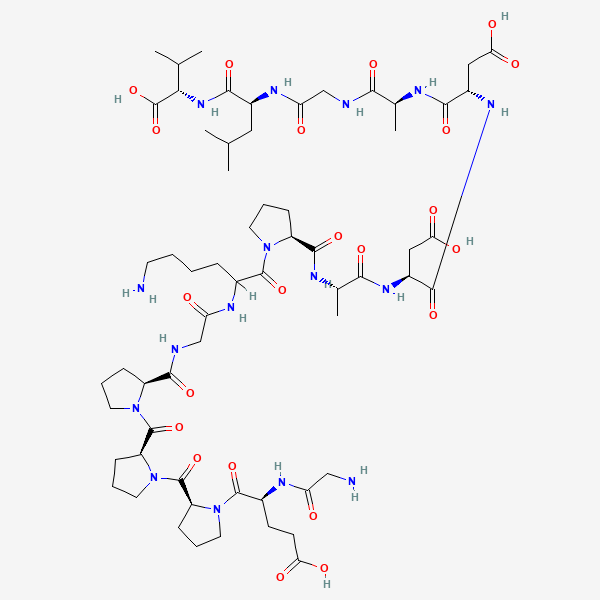
| Sequence | GEPPPGKPADDAGLV |
|---|---|
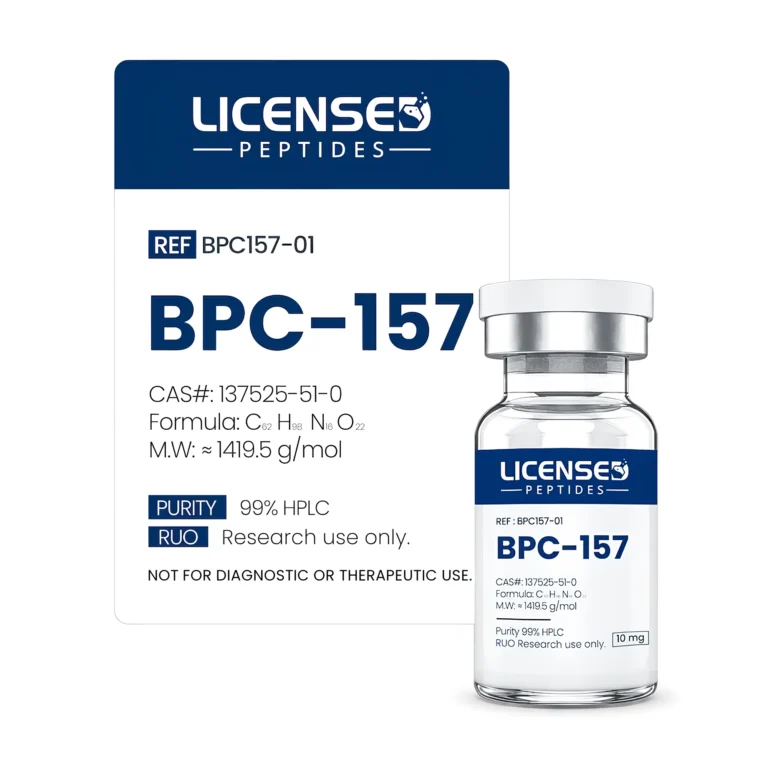
| Molecular formula | C₆₂H₉₈N₁₆O₂₂ |
| Molecular weight | ~1419.54 Da |
| Length | 15 amino acids |
| PubChem CID | 9941957 |
| Form supplied | Lyophilized powder |
| Application | Research use only |
BPC-157 stands for Body Protection Compound-157, a synthetic pentadecapeptide—meaning it’s a chain of 15 amino acids. Discovered in the early 1990s, it was isolated from human gastric (stomach) juice and shows remarkable stability even in the harsh gastric environment
The earliest published investigations into BPC-157 centered around its apparent resistance to enzymatic degradation in gastric environments. Many peptides degrade rapidly in acidic or enzyme-rich conditions, but BPC-157 demonstrated unusual persistence. This characteristic made it a compelling compound for researchers studying gastrointestinal systems and tissue exposure models.
As investigation expanded, scientists began examining BPC-157 across a variety of experimental injury and disruption models. These included mechanical tissue damage simulations, chemically induced gastric lesions, vascular interruption models, and inflammation-driven structural breakdown in animal subjects. Its consistent appearance across multiple research domains contributed to its reputation as a peptide with broad biological engagement, though always within preclinical boundaries.
BPC-157’s small size-15 amino acids, may play a role in its experimental versatility. Short-chain peptides are often easier to work with in controlled research settings due to predictable binding behavior and reduced structural complexity.
In laboratory studies, BPC-157 has been investigated for its potential interaction with:
These interactions are studied for mechanistic understanding only, not for functional outcomes in living organisms beyond research observations.
Though not fully elucidated, evidence suggests:
Preclinical studies across mice, rats, rabbits, and dogs consistently report no significant toxicity, suggesting a favorable safety profile in these models
In animal models, BPC-157 was reported to accelerate healing in tissues such as skin, mucosa, muscle, tendon, ligament, bone and cornea.
One of the most studied applications of BPC-157 is within experimental tissue-disruption frameworks, particularly involving connective tissue. Researchers have applied the peptide in models that simulate disruption to tendons, ligaments, muscle fibers, and bone-adjacent structures.
Within these studies, investigators observe markers such as:
These findings are valuable for understanding how certain peptides may influence biological signaling pathways related to tissue organization, not for drawing conclusions about real-world repair outcomes.
Given its origin from gastric proteins, BPC-157 is frequently examined in gastrointestinal research models. Experimental studies explore how the compound behaves in environments replicating gastric acidity, mucosal damage, and chemically induced erosion.
Key research observations include:
These investigations remain strictly non-clinical and are designed to improve understanding of peptide behavior within digestive-system simulations.
Another prominent area of interest involves how BPC-157 interacts with vascular signaling in test models. Angiogenesis—the formation of new blood vessels—is a critical biological process, and researchers study it to better understand wound response, oxygen distribution, and nutrient flow in tissue models.
Laboratory studies examine whether BPC-157 may influence:
These models help scientists map peptide-pathway relationships without drawing conclusions about functional enhancement.
Inflammation is a complex, multi-pathway biological response, and many peptides are studied for how they interact with inflammatory signaling networks. BPC-157 has been included in studies measuring inflammatory markers following deliberate tissue stress or chemical exposure.
Within these experiments, researchers monitor:
Again, these observations remain descriptive and exploratory rather than outcome-driven.
A smaller but growing body of preclinical literature investigates BPC-157 within neurological and brain–gut communication models. These studies focus on signaling interactions rather than neurological outcomes.
Areas of investigation include:
These early-phase studies are exploratory in nature and not predictive of applied neurological effects.
Researchers continue to examine BPC-157 due to several notable attributes:
These qualities make it a useful reference peptide in mechanistic studies involving tissue signaling and structural response.
Across published rodent and rabbit injury models—skin ulcers, burns, muscle crushes, tendon and ligament tears, and bone defects—BPC-157 was reported to accelerate repair.
Krivic and colleagues reported tendon-to-bone healing outcomes in a rat Achilles-detachment model, including a comparison arm with corticosteroid administration.3
Different laboratory environments require different preparations of BPC-157, depending on the experiment type:
Selection of formulation is determined by the experimental design rather than any intended administration.
Predrag Sikirić, Professor at the University of Zagreb, has been a leading contributor to research on the stable gastric pentadecapeptide BPC-157. He is the primary author of “Novel Cytoprotective Mediator, Stable Gastric Pentadecapeptide BPC-157: Vascular Recruitment and Gastrointestinal Tract Healing” and a co-author of “Stable Gastric Pentadecapeptide BPC-157 in Honeybee (Apis mellifera) Therapy to Control Nosema ceranae Invasions in Apiary Conditions.”
For laboratory research use only. Products on this website are intended solely for in-vitro research. They are not medicines, have not been evaluated by the FDA, and are not intended to diagnose, treat, cure, or prevent any disease. Any administration to humans or animals is strictly prohibited.


Our peptides are produced exclusively for laboratory and scientific research purposes.
Licensed Peptides™ products are developed using industry-standard synthesis and purification protocols, making them suitable for in vitro research, analytical testing, and experimental models.
Strict process controls ensure reproducibility, allowing researchers to work with confidence across experiments.
Our peptides are commonly used in research involving:
All products are intended for research use only and are not for human or animal consumption, therapeutic use, or clinical application.
At Licensed Peptides™, quality isn’t a claim — it’s a controlled, repeatable process.
Every peptide we produce follows a strict, pharma-grade workflow designed to ensure purity, stability, and consistency from synthesis to delivery.
All peptides are synthesized in sterile, controlled environments to eliminate contamination risk and ensure batch consistency.
We use advanced High-Performance Liquid Chromatography (HPLC) to separate and verify peptide purity with precision.
Each batch undergoes heavy metal and endotoxin screening to ensure it is free from hidden contaminants.
We start with rigorously tested amino acids and reagents, ensuring integrity at the molecular level.
Freeze-dried peptides maintain long-term stability, potency, and reliability for research applications.
Every vial is protected from oxygen and moisture, preserving structural integrity during storage and transit.
From synthesis to delivery, every step is engineered to meet the expectations of professionals who require accuracy, consistency, and reliability.
For laboratory research use only. Not for human or veterinary use.
We understand that timing and product integrity are critical for research.
| Ships to | United States (including minor outlying islands) |
|---|---|
| Processing days | Monday to Friday, excluding holidays |
| Daily cut-off | Paid orders placed before 4:00 PM PST are typically shipped the same business day |
| Free shipping | FedEx 2-Day Express on orders over $200 and for VIP members |
| Standard | USPS Ground Advantage, 3–7 business days (not guaranteed) — $8.95 |
| Expedited | FedEx 2-Day $11.95 · UPS 2-Day $19.95 · FedEx Next Day $44.99 |
| Signature | Required on delivery for orders of $1,000 or more |
Products are stored in industrial-grade freezers prior to shipment to maintain stability and purity.
Each order is carefully packed to protect against temperature fluctuations, moisture exposure, and physical damage during transit.
Once your order has shipped you will receive a tracking number by email, so you can monitor delivery progress.
Orders are dispatched domestically from a U.S.-based operation, so there are no international customs steps.
Shipping times are estimates and begin after order processing. Delays may occur due to carrier issues, weather, or other unforeseen factors, and delivery dates are not guaranteed. Full terms are in our Shipping & Delivery Policy.
For laboratory research use only. Not for human or veterinary use.
| pack | 1 pack, 3 pack, 5 pack, 10 pack |
|---|
| Lyophilized, in transit | Stable for shipping for up to 3–4 months |
|---|---|
| Lyophilized, short term | Room temperature is usually adequate for several weeks; refrigeration under 4°C (39°F) is generally acceptable |
| Lyophilized, long term | Freezer at -80°C (-112°F) for several months to years |
| After reconstitution | Refrigerated; stable for up to 30 days |
| Light and moisture | Keep cold and away from light in the original sealed vial |
All of our products are manufactured using the lyophilization (freeze drying) process, which keeps them stable for shipping for up to 3–4 months.
Lyophilization is a unique dehydration process, also known as cryodesiccation, where the peptides are frozen and then subjected to low pressure. This causes the water in the peptide vial to sublimate directly from solid to gas, leaving behind a stable, crystalline white structure known as lyophilized peptide. The puffy white powder can be stored at room temperature until it is reconstituted with bacteriostatic water.
Once peptides have been received, it is imperative that they are kept cold and away from light. If the peptides will be used in the next several days, weeks or months, short-term refrigeration under 4°C (39°F) is generally acceptable. Lyophilized peptides are usually stable at room temperatures for several weeks or more, so if they will be utilized within weeks or months such storage is typically adequate.
For longer term storage (several months to years) it is more preferable to store peptides in a freezer at -80°C (-112°F). When storing peptides for months or even years, freezing is optimal in order to preserve the peptide’s stability.
Once the peptides are reconstituted with bacteriostatic water, they must be stored in the fridge to maintain stability. After reconstitution, the peptides will remain stable for up to 30 days.
For laboratory research use only. Not for human or veterinary use.
BPC-157, short for Body Protection Compound 157, is a synthetic pentadecapeptide composed of 15 amino acids. It was originally identified as a fragment derived from a larger protein found in human gastric juice, which sparked early scientific interest due to its unusual stability and biological activity under experimental conditions. Over time, BPC-157 has become the subject of extensive preclinical investigation, particularly in laboratory and animal-based experimental models focused on tissue integrity, structural recovery mechanisms, and gastrointestinal physiology.
It is important to emphasize that BPC-157 is not approved for human or animal use. All existing interest and discussion surrounding this peptide exist strictly within experimental and research frameworks. The current understanding of BPC-157 is derived almost entirely from in-vitro studies and controlled laboratory research models, and any findings should not be extrapolated to clinical, therapeutic, or veterinary applications.
Within research settings, BPC-157 is typically handled as a high-purity research peptide, manufactured under controlled conditions to support reproducibility and experimental consistency. Reputable research-grade preparations are commonly described as LPS-free peptides, endotoxin-free peptides, and research peptides endotoxin tested, ensuring suitability for sensitive laboratory assays and minimizing confounding variables in experimental data.
All references to BPC-157 relate solely to research use only, and no information should be interpreted as guidance for human consumption, animal administration, or medical use. Experimental observations are intended exclusively for scientific exploration and hypothesis development within regulated research environments.
| Sequence | GEPPPGKPADDAGLV |
|---|---|
| Molecular formula | C₆₂H₉₈N₁₆O₂₂ |
| Molecular weight | ~1419.54 Da |
| Length | 15 amino acids |
| PubChem CID | 9941957 |
| Form supplied | Lyophilized powder |
| Application | Research use only |
BPC-157 stands for Body Protection Compound-157, a synthetic pentadecapeptide—meaning it’s a chain of 15 amino acids. Discovered in the early 1990s, it was isolated from human gastric (stomach) juice and shows remarkable stability even in the harsh gastric environment
The earliest published investigations into BPC-157 centered around its apparent resistance to enzymatic degradation in gastric environments. Many peptides degrade rapidly in acidic or enzyme-rich conditions, but BPC-157 demonstrated unusual persistence. This characteristic made it a compelling compound for researchers studying gastrointestinal systems and tissue exposure models.
As investigation expanded, scientists began examining BPC-157 across a variety of experimental injury and disruption models. These included mechanical tissue damage simulations, chemically induced gastric lesions, vascular interruption models, and inflammation-driven structural breakdown in animal subjects. Its consistent appearance across multiple research domains contributed to its reputation as a peptide with broad biological engagement, though always within preclinical boundaries.
BPC-157’s small size-15 amino acids, may play a role in its experimental versatility. Short-chain peptides are often easier to work with in controlled research settings due to predictable binding behavior and reduced structural complexity.
In laboratory studies, BPC-157 has been investigated for its potential interaction with:
These interactions are studied for mechanistic understanding only, not for functional outcomes in living organisms beyond research observations.
Though not fully elucidated, evidence suggests:
Preclinical studies across mice, rats, rabbits, and dogs consistently report no significant toxicity, suggesting a favorable safety profile in these models
In animal models, BPC-157 was reported to accelerate healing in tissues such as skin, mucosa, muscle, tendon, ligament, bone and cornea.
One of the most studied applications of BPC-157 is within experimental tissue-disruption frameworks, particularly involving connective tissue. Researchers have applied the peptide in models that simulate disruption to tendons, ligaments, muscle fibers, and bone-adjacent structures.
Within these studies, investigators observe markers such as:
These findings are valuable for understanding how certain peptides may influence biological signaling pathways related to tissue organization, not for drawing conclusions about real-world repair outcomes.
Given its origin from gastric proteins, BPC-157 is frequently examined in gastrointestinal research models. Experimental studies explore how the compound behaves in environments replicating gastric acidity, mucosal damage, and chemically induced erosion.
Key research observations include:
These investigations remain strictly non-clinical and are designed to improve understanding of peptide behavior within digestive-system simulations.
Another prominent area of interest involves how BPC-157 interacts with vascular signaling in test models. Angiogenesis—the formation of new blood vessels—is a critical biological process, and researchers study it to better understand wound response, oxygen distribution, and nutrient flow in tissue models.
Laboratory studies examine whether BPC-157 may influence:
These models help scientists map peptide-pathway relationships without drawing conclusions about functional enhancement.
Inflammation is a complex, multi-pathway biological response, and many peptides are studied for how they interact with inflammatory signaling networks. BPC-157 has been included in studies measuring inflammatory markers following deliberate tissue stress or chemical exposure.
Within these experiments, researchers monitor:
Again, these observations remain descriptive and exploratory rather than outcome-driven.
A smaller but growing body of preclinical literature investigates BPC-157 within neurological and brain–gut communication models. These studies focus on signaling interactions rather than neurological outcomes.
Areas of investigation include:
These early-phase studies are exploratory in nature and not predictive of applied neurological effects.
Researchers continue to examine BPC-157 due to several notable attributes:
These qualities make it a useful reference peptide in mechanistic studies involving tissue signaling and structural response.
Across published rodent and rabbit injury models—skin ulcers, burns, muscle crushes, tendon and ligament tears, and bone defects—BPC-157 was reported to accelerate repair.
Krivic and colleagues reported tendon-to-bone healing outcomes in a rat Achilles-detachment model, including a comparison arm with corticosteroid administration.3
Different laboratory environments require different preparations of BPC-157, depending on the experiment type:
Selection of formulation is determined by the experimental design rather than any intended administration.
Predrag Sikirić, Professor at the University of Zagreb, has been a leading contributor to research on the stable gastric pentadecapeptide BPC-157. He is the primary author of “Novel Cytoprotective Mediator, Stable Gastric Pentadecapeptide BPC-157: Vascular Recruitment and Gastrointestinal Tract Healing” and a co-author of “Stable Gastric Pentadecapeptide BPC-157 in Honeybee (Apis mellifera) Therapy to Control Nosema ceranae Invasions in Apiary Conditions.”
For laboratory research use only. Products on this website are intended solely for in-vitro research. They are not medicines, have not been evaluated by the FDA, and are not intended to diagnose, treat, cure, or prevent any disease. Any administration to humans or animals is strictly prohibited.
Our peptides are produced exclusively for laboratory and scientific research purposes.
Licensed Peptides™ products are developed using industry-standard synthesis and purification protocols, making them suitable for in vitro research, analytical testing, and experimental models.
Strict process controls ensure reproducibility, allowing researchers to work with confidence across experiments.
Our peptides are commonly used in research involving:
All products are intended for research use only and are not for human or animal consumption, therapeutic use, or clinical application.
At Licensed Peptides™, quality isn’t a claim — it’s a controlled, repeatable process.
Every peptide we produce follows a strict, pharma-grade workflow designed to ensure purity, stability, and consistency from synthesis to delivery.
All peptides are synthesized in sterile, controlled environments to eliminate contamination risk and ensure batch consistency.
We use advanced High-Performance Liquid Chromatography (HPLC) to separate and verify peptide purity with precision.
Each batch undergoes heavy metal and endotoxin screening to ensure it is free from hidden contaminants.
We start with rigorously tested amino acids and reagents, ensuring integrity at the molecular level.
Freeze-dried peptides maintain long-term stability, potency, and reliability for research applications.
Every vial is protected from oxygen and moisture, preserving structural integrity during storage and transit.
From synthesis to delivery, every step is engineered to meet the expectations of professionals who require accuracy, consistency, and reliability.
For laboratory research use only. Not for human or veterinary use.
We understand that timing and product integrity are critical for research.
| Ships to | United States (including minor outlying islands) |
|---|---|
| Processing days | Monday to Friday, excluding holidays |
| Daily cut-off | Paid orders placed before 4:00 PM PST are typically shipped the same business day |
| Free shipping | FedEx 2-Day Express on orders over $200 and for VIP members |
| Standard | USPS Ground Advantage, 3–7 business days (not guaranteed) — $8.95 |
| Expedited | FedEx 2-Day $11.95 · UPS 2-Day $19.95 · FedEx Next Day $44.99 |
| Signature | Required on delivery for orders of $1,000 or more |
Products are stored in industrial-grade freezers prior to shipment to maintain stability and purity.
Each order is carefully packed to protect against temperature fluctuations, moisture exposure, and physical damage during transit.
Once your order has shipped you will receive a tracking number by email, so you can monitor delivery progress.
Orders are dispatched domestically from a U.S.-based operation, so there are no international customs steps.
Shipping times are estimates and begin after order processing. Delays may occur due to carrier issues, weather, or other unforeseen factors, and delivery dates are not guaranteed. Full terms are in our Shipping & Delivery Policy.
For laboratory research use only. Not for human or veterinary use.
| pack | 1 pack, 3 pack, 5 pack, 10 pack |
|---|
| Lyophilized, in transit | Stable for shipping for up to 3–4 months |
|---|---|
| Lyophilized, short term | Room temperature is usually adequate for several weeks; refrigeration under 4°C (39°F) is generally acceptable |
| Lyophilized, long term | Freezer at -80°C (-112°F) for several months to years |
| After reconstitution | Refrigerated; stable for up to 30 days |
| Light and moisture | Keep cold and away from light in the original sealed vial |
All of our products are manufactured using the lyophilization (freeze drying) process, which keeps them stable for shipping for up to 3–4 months.
Lyophilization is a unique dehydration process, also known as cryodesiccation, where the peptides are frozen and then subjected to low pressure. This causes the water in the peptide vial to sublimate directly from solid to gas, leaving behind a stable, crystalline white structure known as lyophilized peptide. The puffy white powder can be stored at room temperature until it is reconstituted with bacteriostatic water.
Once peptides have been received, it is imperative that they are kept cold and away from light. If the peptides will be used in the next several days, weeks or months, short-term refrigeration under 4°C (39°F) is generally acceptable. Lyophilized peptides are usually stable at room temperatures for several weeks or more, so if they will be utilized within weeks or months such storage is typically adequate.
For longer term storage (several months to years) it is more preferable to store peptides in a freezer at -80°C (-112°F). When storing peptides for months or even years, freezing is optimal in order to preserve the peptide’s stability.
Once the peptides are reconstituted with bacteriostatic water, they must be stored in the fridge to maintain stability. After reconstitution, the peptides will remain stable for up to 30 days.
For laboratory research use only. Not for human or veterinary use.
Guaranteed per batch

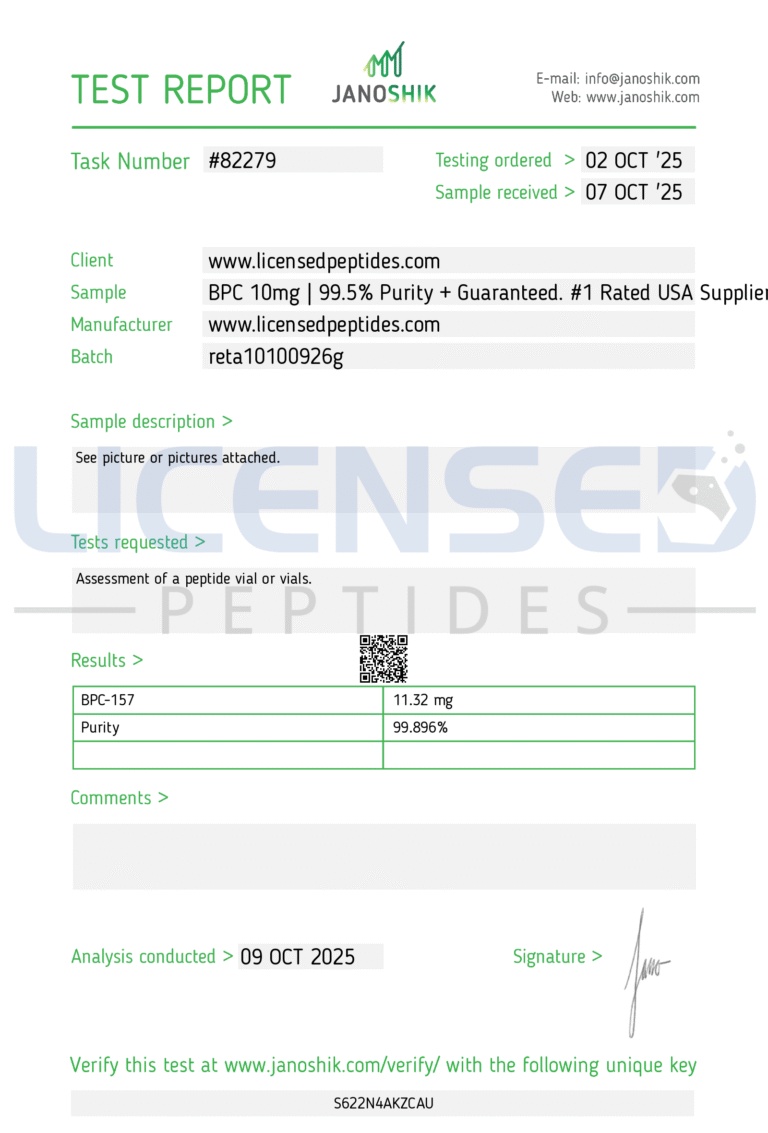
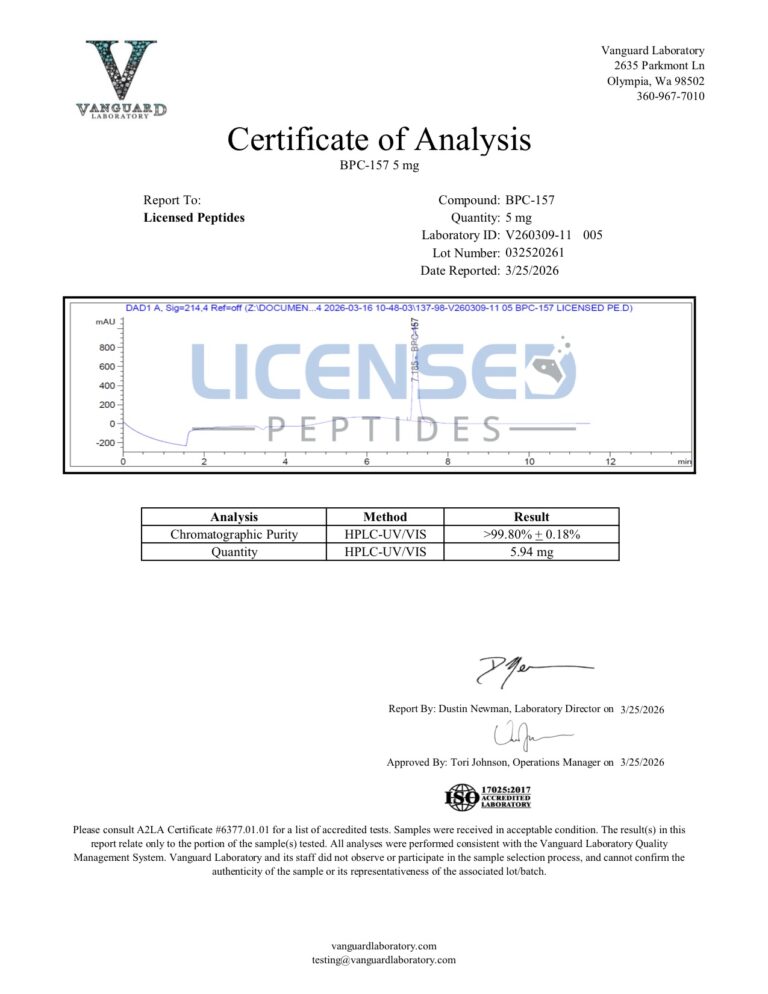
Independent lab verified

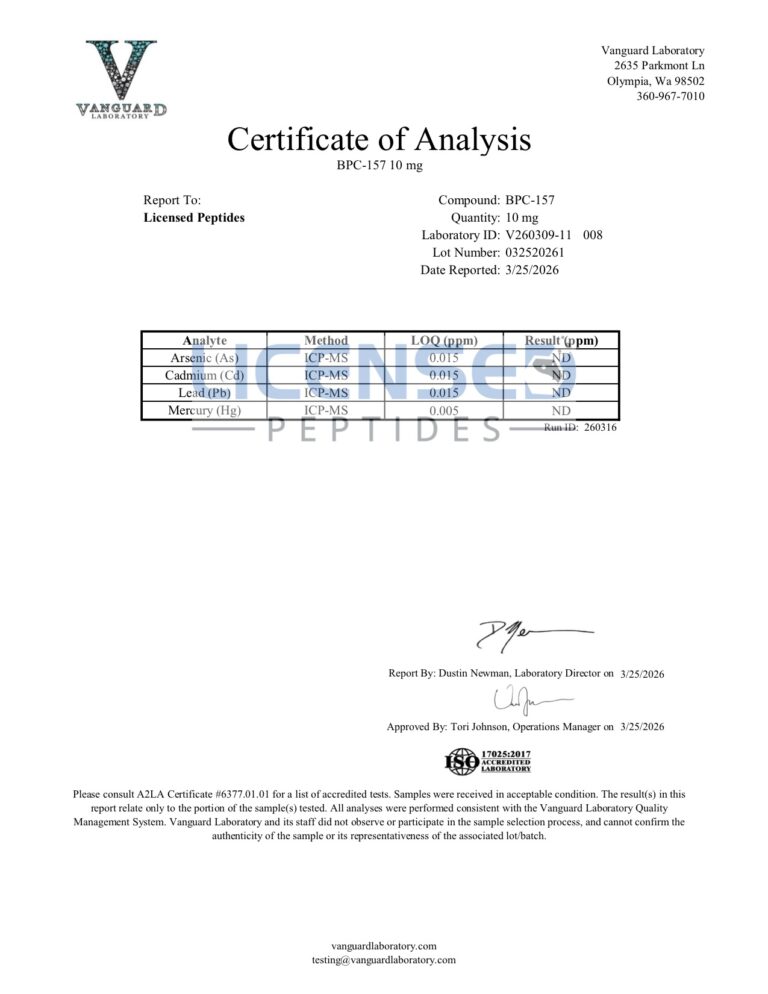
Vanguard Laboratory · ISO/IEC 17025

USA-manufactured

Free FedEx on $200+
Every batch is independently tested before it ships. Full documentation available for every product.
 99%+ — Passes ≥99%
Confirmed — 1419.6 m/z
<1.0 EU/mg — LPS-Free
No growth detected
White lyophilized powder
All 15 residues confirmed
±0.2% — Within spec
Vanguard Laboratory · ISO/IEC 17025 · A2LA #6377.01.01
GMP / ISO 9001:2015
2026
Verified
99%+ — Passes ≥99%
Confirmed — 1419.6 m/z
<1.0 EU/mg — LPS-Free
No growth detected
White lyophilized powder
All 15 residues confirmed
±0.2% — Within spec
Vanguard Laboratory · ISO/IEC 17025 · A2LA #6377.01.01
GMP / ISO 9001:2015
2026
Verified
 Download Full COA / HPLC Report (PDF)

Not all peptide vendors hold themselves to the same verification standards.
| Verification Standard | Licensed Peptides | Generic Vendors |
|---|---|---|
| HPLC Purity Analysis |  99%+ Every Batch 99%+ Every Batch |
 Often Not Disclosed Often Not Disclosed |
| Mass Spectrometry Identity | Sequence Confirmed |
Rarely Available |
| Endotoxin Screening (LAL) | Every Product |
Industry Exception |
| GMP-Certified USA Manufacture | ISO 9001:2015 |
Often Overseas |
| COA Published & Downloadable | Every Lot |
Inconsistent |
| Same-Day USA Fulfillment | Before 4PM PST |
3-10 Day Lead Time |
BPC-157 is a synthetic 15–amino acid peptide based on a fragment identified in gastric proteins. It is studied exclusively in laboratory and animal-based research models.
It is commonly examined in tissue integrity studies, gastrointestinal simulations, vascular signaling experiments, inflammatory pathway research, and exploratory neurological models.
No. BPC-157 is not approved for human or veterinary medical use and is intended strictly for research and educational applications.
Preclinical research indicates it remains structurally intact in acidic and enzymatic environments, making it a reliable subject for degradation and interaction studies.
Its broad engagement with multiple biological pathways and reproducible behavior across experimental models distinguishes it from many short-chain peptides.
Human data is extremely limited. The vast majority of information comes from in-vitro and animal studies.
It is typically stored as a lyophilized powder in cool, dry conditions. Once reconstituted for experiments, storage follows standard laboratory peptide protocols.
Yes. Researchers frequently include it in combination studies to observe signaling interactions or comparative pathway behavior.
Animal studies report minimal adverse reactions, but these findings cannot be extrapolated beyond controlled research environments.
In many jurisdictions, BPC-157 can be purchased for laboratory research purposes. Regulatory requirements vary by location and should always be verified.
Some studies suggest interaction with inflammatory signaling markers in experimental models, though conclusions remain preliminary.
Its stability, versatility, and broad pathway engagement make it valuable for ongoing mechanistic research across multiple biological systems.
An LPS-free peptide indicates that the research material has been tested to ensure minimal lipopolysaccharide contamination. This is important in laboratory studies, as LPS can interfere with experimental outcomes and immune-response measurements in research models.
Endotoxins can introduce variability and confounding effects in in-vitro and laboratory experiments. An endotoxin-free peptide supports cleaner data collection and improves reproducibility in controlled research environments.
Not all peptide vendors hold themselves to the same verification standards.
99.4% HPLC Verified · Endotoxin-Screened · GMP-Certified ·
Free FedEx 2-Day on $200+
You cannot copy content of this page
Third-party tested peptides, shipped cold from the U.S. in 1–2 days.
Shop all peptides