Licensed Peptides: MOTS-C Peptide
-
- ISO-certified cleanroom manufacturing
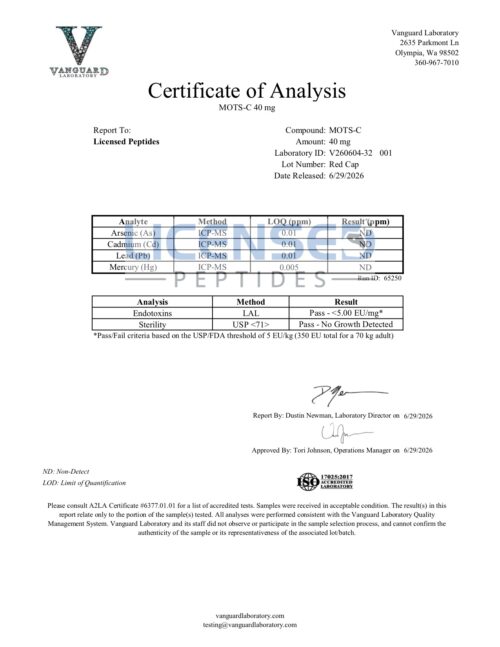
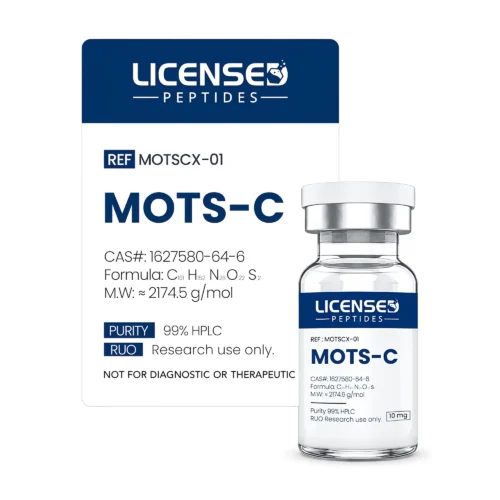
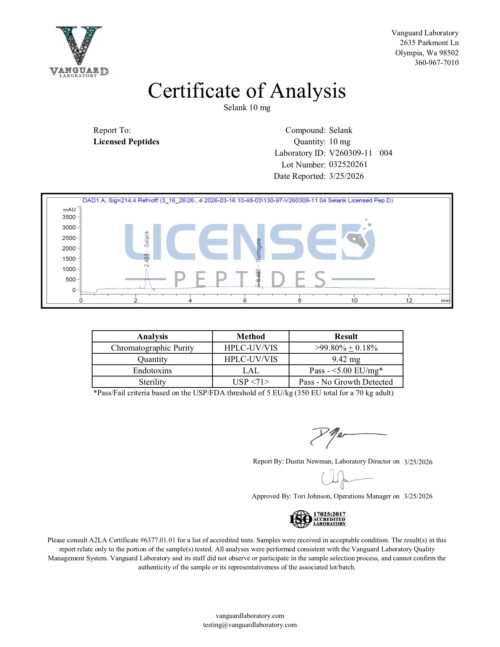
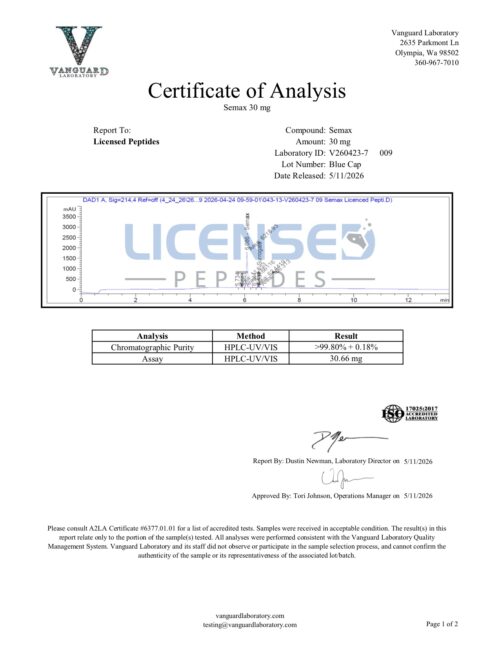
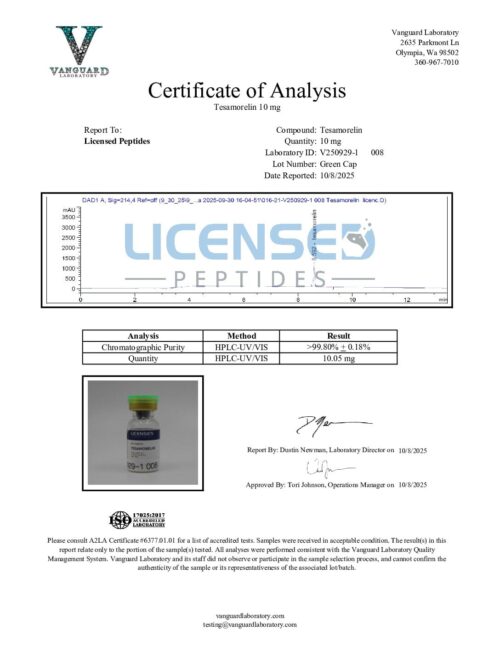
- 99%+ verified purity through HPLC analysis
- Comprehensive batch testing and analytical verification
- Lyophilized for stability during storage and transport
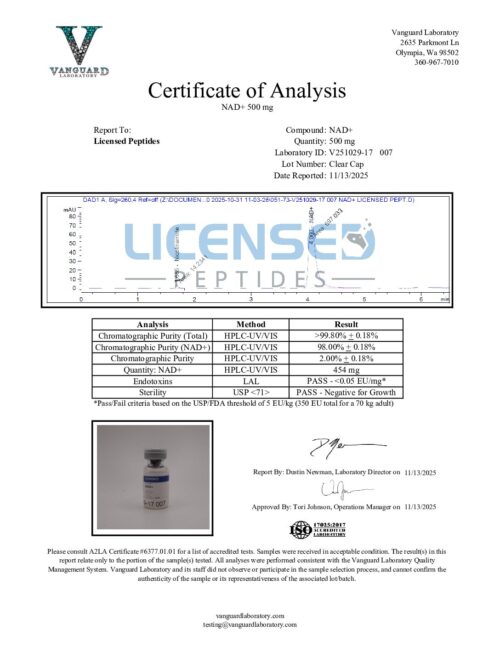
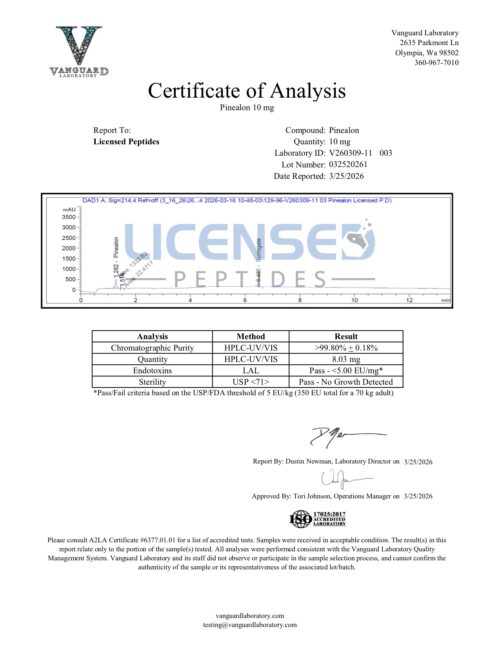
- Batch-specific Certificates of Analysis available
What Is MOTS-C?
MOTS-C is a mitochondrial-encoded peptide that originates from mitochondrial DNA. Unlike many signaling molecules made from nuclear genes, MOTS-C is encoded by the mitochondrial genome.¹
MOTS-C has attracted interest because of its involvement in mitochondrial signaling and cell-to-cell communication pathways.¹² Researchers are still investigating mitochondrion-derived peptides’ roles in broader biological signaling pathways.²³
Why Researchers Study MOTS-C
In a landmark study in Cell Metabolism, Lee and colleagues identified MOTS-C as a mitochondrial-derived peptide. They also reported on its role in cellular metabolic regulation. They found that it supports adaptive stress-response pathways in experimental models.¹
Later research by Kim and others showed that MOTS-C may move into the nucleus. This can happen during certain types of metabolic stress. The authors suggested that this process may support communication between mitochondria and the nucleus. It may also affect gene regulation within cells.²
Current research looks at these mechanisms in lab and preclinical models. However, there are still gaps in understanding how they work in humans.³
Mitochondrial Biology Research
One of the most distinctive characteristics of MOTS-C is its mitochondrial origin.¹
Mitochondrial-derived peptides may act as signals between mitochondria and the nucleus. They may help cells adapt under experimental conditions.²,³
Cellular Signaling Research
Investigations have examined MOTS-C within experimental models that evaluate cellular communication systems. The published studies have explored intracellular signaling pathways and nuclear translocation mechanisms. They also examined gene-regulatory activity and molecular communication networks. These factors may influence cellular adaptation responses.²,³
Current Research Limitations
Most published evidence on MOTS-C originates from laboratory and preclinical animal studies.³⁴ Large human clinical trials haven’t been published in peer-reviewed journals. These trials are still needed to confirm MOTS-C’s safety, efficacy, or therapeutic uses.³⁴
As a result, MOTS-C is a research compound exclusively for scientific investigation. Ongoing studies continue to evaluate its biological mechanisms, signaling pathways, and potential relevance within experimental research settings.³⁴
References
• Lee C, Zeng J, Drew BG, Sallam T, Martin-Montalvo A, Wan J, et al.
The Mitochondrial-Derived Peptide MOTS-c Promotes Metabolic Homeostasis and Reduces Obesity and Insulin Resistance. Cell Metabolism. 2015;21(3):443-454. doi:10.1016/j.cmet.2015.02.009.
• Kim KH, Son JM, Benayoun BA, Lee C.
The Mitochondrial-Encoded Peptide MOTS-c Translocates to the Nucleus to Regulate Nuclear Gene Expression in Response to Metabolic Stress. Cell Metabolism. 2018;28(3):516-524.e7. doi:10.1016/j.cmet.2018.06.008.
• Lu H, Tang S, Xue C, et al. MOTS-c:
An Equal Player in Mitochondrial Function and Aging? Frontiers in Endocrinology. 2023;14:1120533. doi:10.3389/fendo.2023.1120533.
• ClinicalTrials.gov.
A Study of CB4211 (MOTS-c) in Participants With Prediabetes and Overweight or Obesity (Phase 2a). Identifier: NCT07505745.
Important Notice
This product is supplied strictly for research use only. It is not approved or intended for human or animal use, consumption, therapeutic use, clinical application, or diagnostic purposes. Any discussion of biological activity refers solely to laboratory, in vitro, or preclinical research.